Fish in early childhood reduces risk of disease
It doesn’t take that much fish for young children to reap big health benefits. Even eating fish just once a week yields good results.


It doesn’t take that much fish for young children to reap big health benefits. Even eating fish just once a week yields good results.
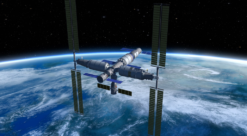
Can weightlessness stop cancer from growing? One of the nine research projects that has been given the go-ahead for the new China Space Station scheduled for 2022 is designed to answer this exact question.
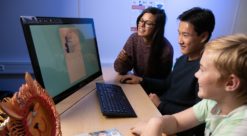
How do children and young people become interested in science? Let them play, create and code, say researchers.

“A very rare and exciting find,” says NTNU University Museum archaeologist Raymond Sauvage.
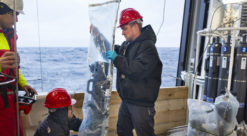
The Arctic’s once impenetrable ice cap is melting away, with profound consequences for everything from ocean circulation patterns to fish numbers and diversity. The Nansen Legacy Project, including NTNU biologists, chemists and engineers, is working to better understand what these changes mean for the Barents Sea and the Arctic Basin
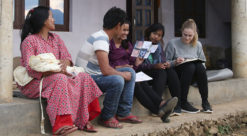
Nepal ranks high in maternal and child mortality statistics. A study trip to the mountain country inspired several NTNU students to help improve the situation of Nepali women.
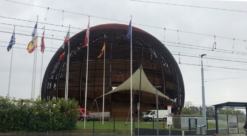
CERN’s two Large Hadron Colliders detectors to get a climate-friendly cooling system upgrade.
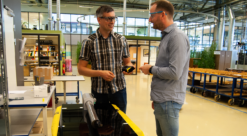
A small machining company in Norway is the first in the world to use digitalised tools for advanced turning. The technology enables the prevention of damage to complex and expensive parts used in the aircraft and gas industries.
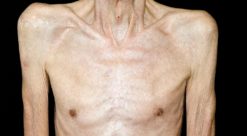
A solid tumour can cause muscle cells in the body to self-destruct. Many cancer patients die from the consequences. Now researchers are discovering more about how cancer cells in a tumour can take control of muscle cell wasting and trigger a chronic, serious condition.
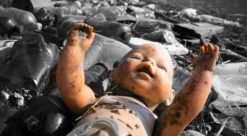
A recent study found that three out of four plastic consumer products contain harmful chemicals. Bioplastics contained toxicants, too.
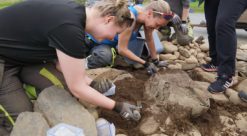
“Vessels like these were imported from the Roman Empire and confirm that this was an area of status and wealth during Roman times,” says archaeologist Merete Moe Henriksen.
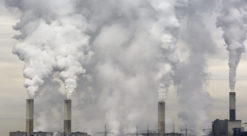
The Norwegian company Arbaflame is intent on persuading the world to abandon polluting coal power. The new technology makes it possible to replace coal with eco-friendly wood pellets.
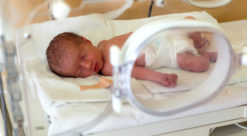
Parents with children in the neonatal intensive care unit want more information, supervision and advice to meet their children’s needs, according to results from a new PhD dissertation.
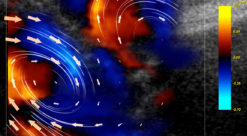
You may not be able to hear them, but they help to diagnose and treat patients every day. In the past 40 years, ultrasound imaging has gone from blurry black-and-white images, to sharp 3D images in real time. And the technology is still developing. Now, artificial intelligence is being tested for aid in interpreting ultrasound images.
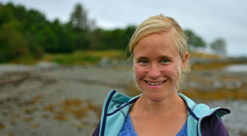
Francesca Verones has been awarded a prestigious grant by the European Research Council of EUR 1 million to study how people affect the oceans.
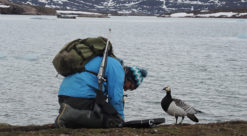
Climate change is the big wild card when it comes to the survival of many Arctic species. A new study shows that climate change will be both good and bad for Svalbard barnacle geese populations — although the balance may tip depending upon the severity of future temperature increases and how other species react.
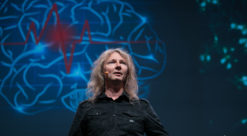
We are approaching the limit for how much more microprocessors can be developed. Gunnar Tufte proposes building computers in a completely new way, inspired by the human brain and nanotechnology.
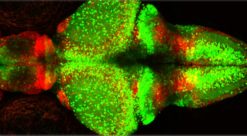
What happens during an epileptic seizure? A recent study suggests that seizures occur after certain defence cells in the brain break down.
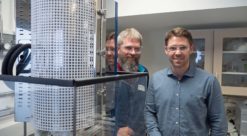
Norwegian scientists have developed a material which can make hydrogen from water vapor, instead of liquid water. It pays off, because heat is cheaper than electricity.
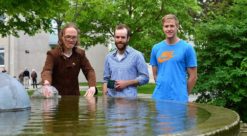
He solved a 127-year-old physics problem on paper and proved that off-centred boat wakes could exist. Five years later, practical experiments proved him right.
Our understanding of how our psyche affects our immune system – and vice versa – has been limited. Until now.
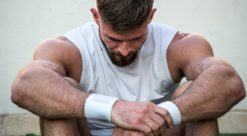
The dreaded condition known as rhabdomyolysis may be much more common after a particularly intense training session than you’d think. But for most people, the only symptom is being slightly more sore than usual.
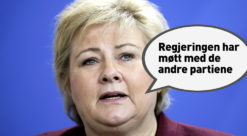
English loan words are easy to recognize. It’s more challenging to see how English influences Norwegian expressions and grammar.
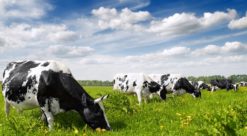
Combatting global warming will require major changes in land use, a new climate change report says. One important change could be decreasing the amount of land used to produce livestock — which means that people would have to eat less meat.