An energy-efficient cleaning robot
State-of-the-art solar cells are efficient – but are even more so when they are kept clean. A cleaning robot developed by Norwegian researchers enables solar panels to deliver at full capacity.


State-of-the-art solar cells are efficient – but are even more so when they are kept clean. A cleaning robot developed by Norwegian researchers enables solar panels to deliver at full capacity.

As a child, Professor Myrheim wondered what the far side of the Moon looked like. Trondheim’s Starmus festival will welcome a trio who has actually been on the moon, and the astrophysicist is excited to hear their lecture. “Perhaps it’s the magic of childhood that lingers on,” he says.
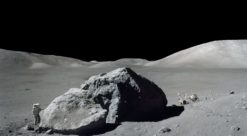
Just 12 Americans have set foot on the lunar surface, and of those, only six are still alive. Three—Buzz Aldrin, Charlie Duke and Harrison “Jack” Schmitt — will be in Trondheim at the Starmus Science Festival to talk about the future of humankind in space.

The plague that is believed to have caused the Black Death still occasionally ravages populations, albeit to a much smaller extent than before. Now we know more about how the bacteria attack us.
Science has made great strides since Svante Arrhenius, the Swedish Nobel Laureate who in 1896 first determined that carbon dioxide from human activity could warm the planet. The same progress hasn’t been made in increasing the number of women in the sciences.
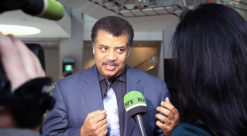
This year’s winners of the Stephen Hawking Medal for Science Communication 2017 were announced yesterday at a press conference in New York. The winner of the science communicator award is astrophysicist Neil deGrasse Tyson. The medal itself will be awarded on 20 June during the Starmus Science Festival in Trondheim.
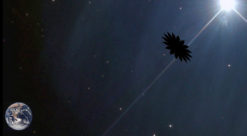
Imagine a firefly fluttering near a floodlight. Can you see it? Not unless you shade the light coming from the glare of the lamp. This is where the sunflower screen enters the picture.
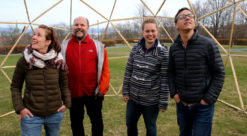
Imagine breathing polluted New Delhi air. It’s a scorching 40 degrees and the humidity is high. But you’re not in New Delhi – you’re in an art installation, during the Starmus festival in Trondheim in June.

Whether you are religious or not does not matter so much. You regret one-night stands about as much as other people do.
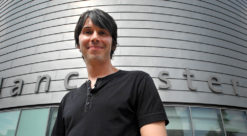
Many of the speakers at the Starmus Festival are superstars in their fields of expertise. But few have as many fans as Brian Cox, the researcher who also feels at home in popular culture.
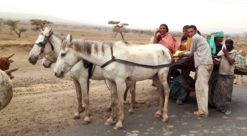
When Jeffrey D. Sachs (62) comes to Norway in June for the Starmus science festival, attendees will need to fasten their seat belts. The economics professor is described as a “battering ram” and a “bully,” who is ploughing his way to a tough goal: the global eradication of extreme poverty.

With practice, children can stand without support even before they are 4 months old. This is much earlier than has been reported in the literature.

Five hundred year ago, Martin Luther’s 95 Theses sparked the Protestant Reformation. He had no idea how quickly his ideas would spread and change Europe.

Imagine a dog owner with a reflective vest and a black dog without one. In the dark we can see how the dog owner moves, but not the dog. That’s how black holes work, too.

Facebook is an important source of not only genuine, but also fake news. But now a new tool has been developed to expose the fakers.

When you notice your partner is less interested than you are, your brain may send out a hormone that can help you fix the relationship.

Children can’t be shielded from all the dreadful news in the media – but we can help them cope with it.

For the first time, researchers have found a way to compare how much alcohol Europeans drink. And Britain, Ireland and Portugal top off the list.

People 65 and older benefit just as much from an operation for a slipped disc in the lower back as do younger patients.
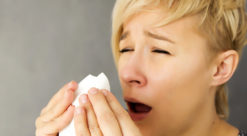
Pollen allergies cause secondary school pupils to do worse on their exams. This can in turn decrease their chances of pursuing their higher education dreams, according to research from NTNU.

Nils Røkke, Director of Sustainability at SINTEF, is the new Chairman of the European Energy Research Alliance.

Researchers from Norway and Singapore are working together to build cities floating at sea and underground universities.
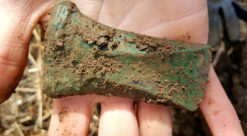
Some 3,000 years ago, 24 axes were cached in Stjørdal municipality, about 44 km east of Trondheim. They’re now seeing the light of day once again.
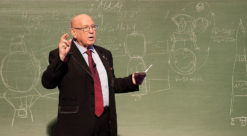
He was the very first person to walk in space. A rescue team on skis brought him to safety after an emergency landing in the Siberian forest. Now, Alexei Leonov is coming to Trondheim.