The Nobel Dance
2014 NOBEL PRIZE: Nobel laureate and NTNU Professor May-Britt Moser was full of joy when she learned she had won the 2014 Nobel Prize in Physiology or Medicine with her husband, Edvard Moser, and their former mentor, John O’Keefe.

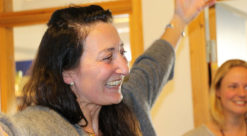
2014 NOBEL PRIZE: Nobel laureate and NTNU Professor May-Britt Moser was full of joy when she learned she had won the 2014 Nobel Prize in Physiology or Medicine with her husband, Edvard Moser, and their former mentor, John O’Keefe.
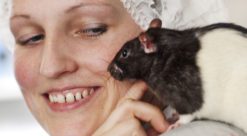
2014 NOBEL PRIZE: Animal welfare is important for Nobel laureates May-Britt and Edvard Moser. Not just because that is how it should be, but also because the researchers get the best results that way.

The production of oil and gas at temperatures between 40 and 60 degrees below zero means that researchers must advance the development of materials that can withstand these harsh conditions.
2014 NOBEL PRIZE — There’s a proverb – the origins of which are hotly disputed – that says “It takes a village to raise a child.” You could almost say the same thing about groundbreaking discoveries in neuroscience, if NTNU’s Kavli Institute for Systems Neuroscience/Centre for Neural Computation (KI/CNC) is any example.
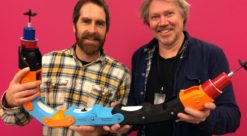
Norwegian researchers and a small company in Tromsø are taking part in a project aimed at preventing between 30 and 50 per cent of Europe’s drinking water being lost due to pipe leakages.
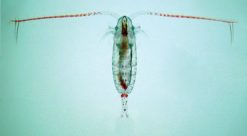
Calanus finmarchicus makes up about 90 per cent of the bottom of the food chain in northern oceans, and is eaten by fish and baleen whales alike, but as the ocean becomes more acidic due to CO2 emissions, populations may decrease dramatically.
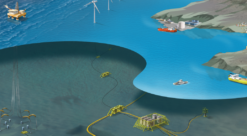
Embryonic faults in subsea high voltage installations are difficult to detect and very expensive to repair. Researchers believe that self-repairing materials could be the answer.
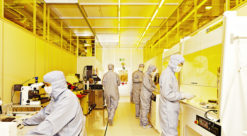
When the oil runs out, Norway will have to depend on nanotechnology as its main source of income. Nanotechnology is all about creating custom materials on a tiny scale that allows for incredible possibilities in the real world.
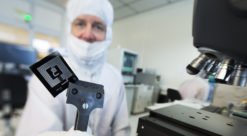
Norwegian researchers are developing electronics that disappear to order.
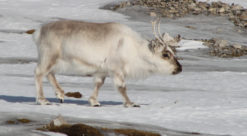
The last week of January 2012 brought wild weather to the Norwegian arctic island archipelago of Svalbard and its largest town, Longyearbyen. A new cross-disciplinary study provides a comprehensive look at the effects of this extreme weather event on everything from town infrastructure to the natural environment.

Women who experience abuse from someone they know have an 80 per cent higher chance of developing postpartum depression as women who have never been abused.

Carlos Alberto Dorao is trying to nail down the mechanisms that will help make processes used in the oil and gas industry more effective. His work may also contribute to making computer processors more powerful.
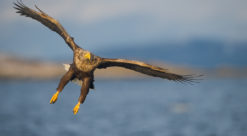
DNA profiles of the sea eagle population from a large island in mid-Norway are providing new and useful information as to how the birds avoid being killed by wind turbines.
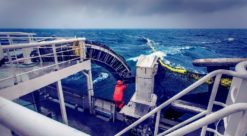
Robots equipped with machine vision enable us to classify catches on board vessels with high levels of accuracy – saving fishing crews time and money.
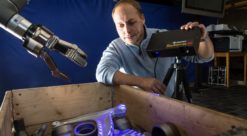
The robots of the future must be able to adapt to changes in their surroundings. Some of them will be in close contact with people. At the very least they must be able to see properly – in three dimensions, just like us.

Women who have complications during pregnancy are at a much higher risk for cardiovascular disease. Now, information from 30 000 women will make a huge contribution to preventing disease and saving lives.
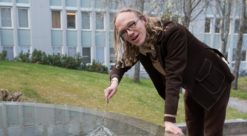
It’s been this way for 127 years— the V-shaped wake pattern behind a ship moving in a straight line always has the same central angle. But a Norwegian armed with a pen and a piece of paper has discovered that in certain situations, a boat’s wake can actually be found in front of the boat.

NTNU researchers have made a discovery that can be key to the development of faster computers that use less energy.
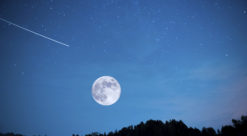
Using devices that look like old-fashioned TV antennae, physicists at NTNU are improving weather forecasts by studying shooting stars in the upper atmosphere.
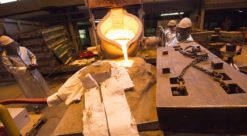
A Norwegian invention is reducing by a third the energy that foundries need to manufacture ship propeller blades.

Six norwegian office buildings were erected outside of Oslo around 1980. Two of these have now been rehabilitated and represent northern Europe’s first zero-emission buildings of their type.

A new method of producing solar cells could reduce the amount of silicon per unit area by 90 per cent compared to the current standard. With the high prices of pure silicon, this will help cut the cost of solar power.
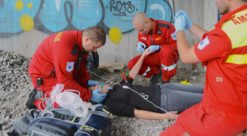
There is a much greater risk of dying from a heroin overdose in Norway than in a car accident. A new nasal spray aims to help save lives and prevent paramedics from being injured by needles used on drug addicts.
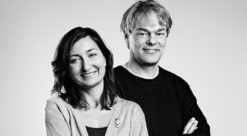
2014 NOBEL PRIZE — Nearly all innovations have founder myths, like the apocryphal garage where Steve Jobs and Steve Wozniak are said to have developed the Apple Computer. But two innovative neuroscientists in Trondheim really did start their research in the university equivalent of a garage – a bomb shelter – and then went on to build a world-class laboratory and win the Nobel Prize.