Mental health study: ChatGPT advice preferred over that of professionals
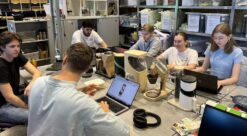
Artificial intelligence provides good answers to mental health questions. Young people even like ChatGPT’s responses better than healthcare professionals’ advice.

Artificial intelligence provides good answers to mental health questions. Young people even like ChatGPT’s responses better than healthcare professionals’ advice.

Artificial intelligence is currently controlled by a number of tech giants in the United States and China. One professor believes Europe can choose to take a smarter and more democratic path.

Edvard Munch used materials that make his paintings vulnerable to the ravages of time. A new digital tool now shows how much The Scream may change over the next 300 years.

When the first large language models were unleashed, it triggered a headache for authorities around the world as they tried to figure out how to satisfy data centres’ endless demand for electricity.

“It’s not the politicians, but Big Tech that now gets to decide how technology should be used,” says Heidrun Åm.
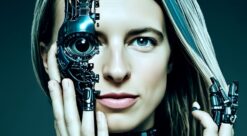
Inga Strümke does not believe artificial intelligence will take over the world with killer robots, but it might kill your spark. This is an area that needs rules, and Europe is about to get them.
Youthful creativity is enhanced by artificial intelligence, but students are also asking valid, critical questions about how the technology affects education and learning.
Norwegian politicians should not be sponsoring the race to expand the use of AI. The process is wasting too much energy.
One of Norway’s biggest achievements to date in the practical application of artificial intelligence is in identifying bone fractures. The secret of this success may be of benefit to many of our business leaders.
If artificial intelligence (AI) is to offer us the societal benefits that many people are dreaming of and believe in, we need to develop technologies that are a lot smarter than those we have today.
Data-driven public administration changes the public sector in a fundamental way. But what does this mean for you as a citizen?
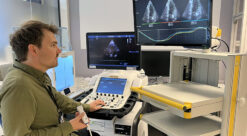
If anything goes wrong with your heart, it is critical to get the right treatment quickly. Artificial intelligence can help with just this – and more lives can be saved.

Some people are very anxious. Others are enthusiastic. But how intelligent is AI, really?
We shouldn’t be too worried that conversational agents such as ChatGPT might be making cheats of our pupils. Schools should be empowering them to try out new technologies.
Artificial intelligence can be of great benefit underwater and SINTEF, in collaboration with the research centre SFI Exposed, is developing systems that will help to boost fish farm safety and security under harsh sea conditions.
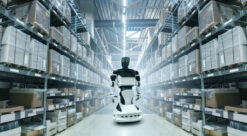
The fourth industrial revolution (Industry 4.0) put automation, digitalisation and robotisation very much in the driving seat. But something was missing. The introduction of Industry 5.0 will hand control back to you and me.

How can we get an artificial hand or foot to communicate with the brain? NTNU researchers want to use the fat layer just under our skin.
New technologies, including artificial intelligence, allow us to study salmon behaviour and their living environment in large-scale commercial sea cages.

The feed cost represents about 50 percent of the costs of farming salmon. But how do we know if the salmon is hungry or still full? Researchers have rethought to find answers. The result is less wastage and pollution – and enough food for the salmon.
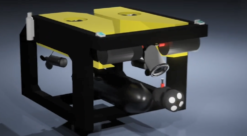
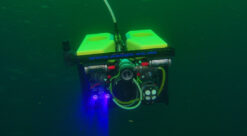
This ROV can fully operate on its own, and follow along with fish’s behaviour and health with its Argus eyes – all while keeping a safe distance. It even inspects the technical standard of the enclosure while it’s at it. Say hi to Mr. CageReporter.

Researcher Marita Skjuve has been interviewing people who have a close relationship with a chatbot called Replika. Her conclusion is that such relationships offer value and meaning to the chatbot’s users, and can even be romantic.

Humans have developed machines that can learn on their own. Machines using artificial intelligence develop “behaviours” based on their interpretation of data. But we know less about how they teach themselves. Professor Harald Martens has created the start-up company Idletechs to develop a technology that will make artificial intelligence more understandable for the rest of us.

A new study confirms the efficacy of a new diagnostic tool that utilises ultrasound to measure intracranial pressure following accidents. The technology will now be provided with artificial intelligence so that ambulance personnel can carry out examinations at accident scenes.