The secret to a happy life?
A new study from NTNU suggests a link between several personality traits and how people feel about their lives.


A new study from NTNU suggests a link between several personality traits and how people feel about their lives.
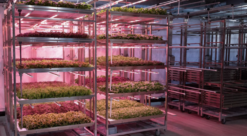
At Avisomo Modular Farming the lettuce is sown, grown, and packaged – all untouched by human hands. Increased food security and fewer imports are the goal.
Rainstorms are increasing in Norway, as is urbanisation. Municipalities must plan differently and are asking how much residents are willing to pay.

Some European shags migrate for the winter. Others stay. What factors cause such variation within the same species?
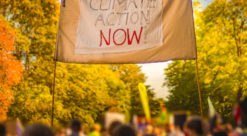
New research reveals that the emotions of anger, hope and compassion, might have less of an effect on pro-environmental behaviour than previously thought

The globe is full of unknown species. But is it really possible to find a completely new animal species in the middle of the largest city in the United States?
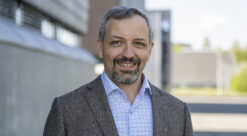
When Norway’s attention turns to Oslo for the King’s funeral on Wednesday, it creates a vulnerable moment in the digital sphere that hostile actors may seek to exploit. NTNU professor Basel Katt advises people to be alert.
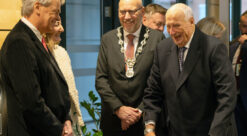
Norway is an old monarchy with a long tradition of continuity. According to history professor Erik Opsahl, the country’s status as a kingdom is central to Norwegian identity and national self-understanding.
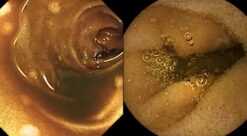
Innovative collaboration between Gjøvik Hospital and NTNU research can speed up diagnosis, save healthcare systems unnecessary costs, and ease patient discomfort.
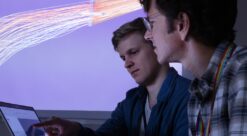
Until now, it has been almost impossible to measure the energy density of hydrogen precisely, but a new sensor can register every single molecule. This could lay the foundation for correct accounting in the hydrogen economy.

Have you had a summer with lots of grey skies and little sunshine? Are you returning to work without feeling as though you’ve had a proper break? Here are some tips that could make your autumn a little better.

AI can trawl vast amounts of health data which is not specifically related to migraines, but which can be used to identify people predisposed to the condition.
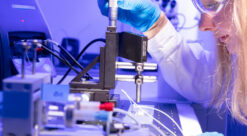
Currently, water samples must be transported to a laboratory to reveal pollution. But new sensor technology is enabling researchers to measure pesticides in the water on site – and get the results right away.
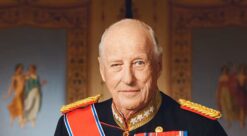
How can the death of a stranger affect us? And why do we care so much about King Harald?
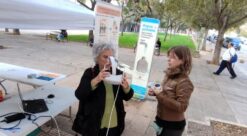
Resident involvement is often described as the weakest link in sustainable urban development. A new study suggests a practical solution to the problem.
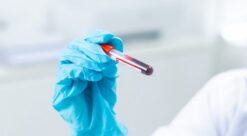
mRNA-based drugs are emerging as the drug of the future for a wide range of diseases, but they are difficult and time-consuming to develop. A new method based on human blood could make this easier.
A Norwegian-developed mobile game could motivate people to take more steps each day.

No, apparently not. New research from NTNU found no evidence that heavy social media use leads to poorer family relationships.
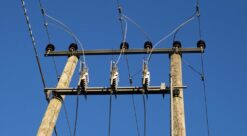
We need more electricity, and the power grid must be expanded significantly. But how much and how quickly? This is how “monster masts” and expensive power expansion can be postponed.
When Meta glasses can turn individuals into surveillance robots that film and identify unsuspecting individuals, consumer power is not enough.
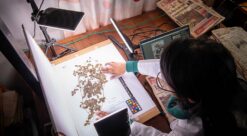
AI and eight million digitized old plant specimens reveal how the climate is changing nature in large parts of the world.

New research shows how the immune system actually behaves throughout pregnancy – cell by cell. In women with lupus, the immunological differences also persist after birth.

A story about honour, war and death – and a cornerstone of Western literature. A new Norwegian adaptation of the famous epic The Iliad is about to be published.
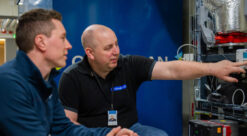
Installing just four percent of Europe’s commercial buildings with a Thermal Box from Norway — about the size of an American industrial refrigerator — would spare Europe the need to build seven nuclear power plants.

Grid cells were supposed to tell the brain only where it was. Now it turns out they also point towards where it wants to go.
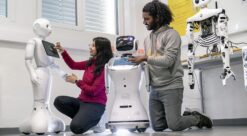
When Pepper the social robot was given the chance to try its hand as a teaching assistant, it showed that it can be even better than a human teacher at motivating pupils and helping them learn.
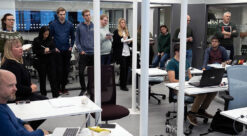
A cyberattack on local government authorities can result in disruption to critical services such as healthcare, water supply, schools and social services.
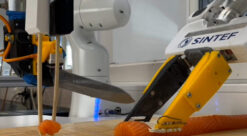
What’s one of the most difficult things for a robot to do that hasn’t already been done? How about a robot that can see, understand, grasp and cut soft, slippery and deformable objects – without destroying them?
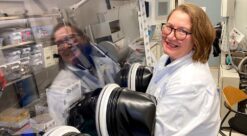
Chinese car manufacturers aren’t the only ones trying to develop new types of batteries. New materials are being tested in Norwegian laboratories to make batteries lighter, cheaper and more environmentally friendly.
Researchers say such a transformation is absolutely doable. A new European research project will no longer treat CO2 as waste, but as a resource in innovative value chains. This has the potential to lead to fewer emissions and completely new products.

The backgrounds of 14-year-olds in Norway have a significant impact on their attitudes and knowledge regarding democracy and citizenship.
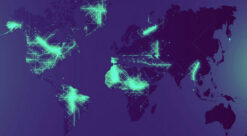
Artificial intelligence in the wrong hands can shape people’s political perceptions by spreading a false picture of reality. Lack of transparency in tech platforms has become a threat, according to researcher.