Early whaling eradicated species from local waters
Several whale species disappeared from Europe long before whaling became a major industry. Two of the most common species are no longer found here, and one of them is almost extinct.

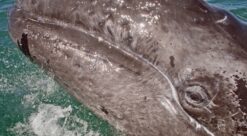
Several whale species disappeared from Europe long before whaling became a major industry. Two of the most common species are no longer found here, and one of them is almost extinct.

In the future, we will see the emergence of local energy communities made up of households and businesses who buy and sell electricity among themselves. But someone will have to work out how to determine the price.
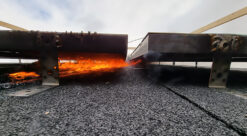
Solar panels installed on roofs and facades increase the fire risk. However, research shows that small changes in construction can make a big difference.
To limit global warming to 1.5 degrees, the EU’s Science Advisory Board on Climate Change recommends that Europe reduce its greenhouse gas emissions by 90-95% by 2040 compared to 1990. Fossil fuels should be phased out as quickly as possible.
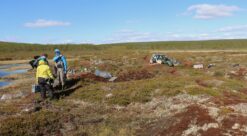
Ever wonder how climate researchers know what they know? 63 Degrees North journeys to 69.5 degrees North to find the answer to that exact question.

NTNU Amos is an expansive ocean research and innovation community that’s composed of both highly honed specialist expertise and an incredibly broad scope of knowledge. It also adheres to a popular Norwegian football strategy: Develop talents by allowing them to do what they do best – and playing to each other’s strengths.
Norwegian hydrogen research laboratories have recently been celebrating breakthroughs that can help heavy industry to achieve climate neutrality. But current Norwegian government policy means that these findings will most likely only benefit our competitors.
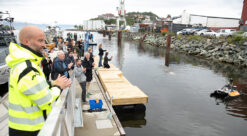
The Nyhavna industrial area in Trondheim, which is being developed into a new mixed-use neighbourhood, has seen significant maritime technology research and innovation. NTNU Nyhavna for autonomous vessels is now officially opened.

Calculations reveal that hydrogen, batteries and solar panels will make it possible to use electric construction machinery on sites where access to the grid is limited.
Norway is often seen as a shining example of how a country can make its transportation greener by encouraging consumers to purchase electric cars. But Norway’s approach isn’t for everyone — and it may be hampering the country’s efforts to make its transport solutions truly climate friendly.
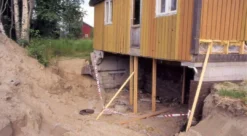
Was your house damaged following the recent ‘Hans’ extreme weather event? SINTEF can advise you about what you can do to limit the extent of the damage.
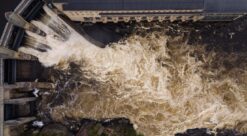
There can be no new, ‘green’ jobs without electricity. So, researchers have three pieces of advice to offer politicians as to what we should be doing to ensure adequate future energy supplies.
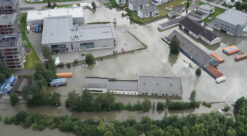
An extreme storm in Norway called Hans has accelerated the debate about how we should build and where we can live. Adapting to wilder and wetter weather also means that engineers are exposed to greater ethical pressure.
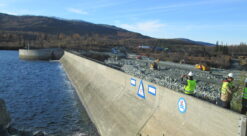
The smarter utilisation of Norwegian hydropower will promote nature conservation, improve access to energy and boost earnings.
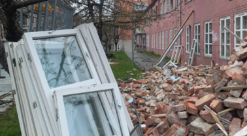
Norway has declared ambitious targets for waste reduction in the building industry. Researchers have been asking sector representatives what needs to be done to achieve them. This article lets you in on some of the answers.
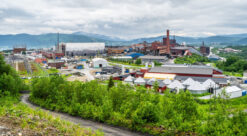
According to researchers, so-called ‘industrial symbioses’ and ‘green hubs’ are offering answers to the challenge of meeting Europe’s climate change mitigation targets.
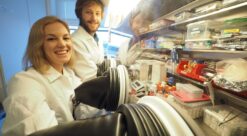
Researchers at NTNU are searching for materials that could be used to make Li-ion batteries with a higher energy density.
Unless we acquire greater knowledge about what happens at the atomic and molecular scale during materials recycling, progress towards a truly circular economy will grind to a halt.
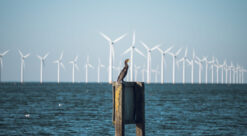
Norwegian researchers are currently developing wind turbines that can adapt their blade rotation speeds to prevent bird strikes.
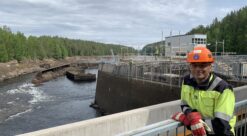
SINTEF researcher Marcell Szabo-Meszaros is the man behind the international study ‘Hydropower and Fish – a Roadmap for Best Practice Management’, which offers guidelines on fish population protection in rivers to companies carrying out hydropower developments.
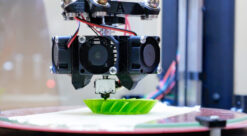
In recent years, 3D printing has exploded in popularity, and may open a new era of faster and more climate-friendly manufacturing. But is it really the manufacturing method of the future?

Solid-state batteries may be the perfect solution for electric cars of the future. Researchers in Norway are making these batteries better.
Increased cooperation between Norwegian industry and universities on quantum physics sensors is a win-win situation for society. Such sensors can provide new opportunities in areas as diverse as mineral extraction and agriculture.
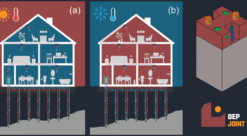
Using a completely new piling joint, geothermal heat can be extracted directly via the piles used to anchor buildings in the ground. The invention makes it easier, quicker, cheaper and safer to use environmentally friendly energy.