Researcher’s heart problems uncover security gap
Marie Moe, who is a SINTEF researcher in cybersecurity, discovered that her heart is being regulated by a pacemaker which can be hacked.

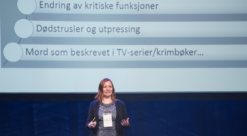
Marie Moe, who is a SINTEF researcher in cybersecurity, discovered that her heart is being regulated by a pacemaker which can be hacked.
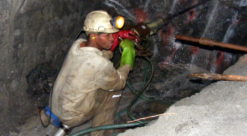
A wireless network of sensors aimed at preventing explosions in mines is an innovation of worldwide significance that is being developed by a Norwegian-African cooperative project.

As the world struggles to make progress to limit climate change, researchers are finding ways to adapt to warmer winter temperatures — by developing environmentally friendly ways of producing artificial snow.
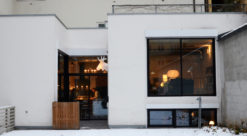
Combining old and new to achieve reduced energy consumption, a better living environment and architectural success. It’s definitely possible and researchers will show you how.

What happens to people’s comfort level when the heating system in a super-insulated building is simplified by installing only one radiator per floor?
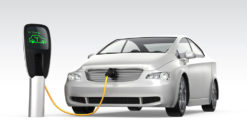
In a few years we’ll be able to charge virtually wherever and whenever we want with only minimal buildout of the power grid, according to electrical engineering professor Magnus Korpås.
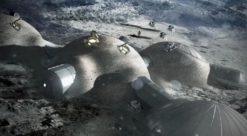
Norwegian researchers are looking into how a snake robot might carry out maintenance work on the International Space Station (ISS), study comets, and explore the possibility of living and working in lava tunnels on the Moon.

Every schoolchild knows about Rudolph the Reindeer and his magic red nose. But Rudolph’s real-life counterparts really do have a magic nose. The colder it is, the better it is in keeping the animals warm and hydrated.
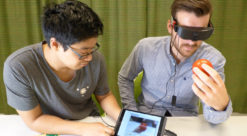
A scientist and a student team have developed the Colorophone system, which translates colour into sound.
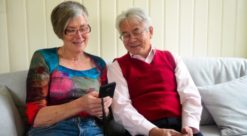
Using a smartphone is not easy for older people who have problems with fine motor skills or mild disabilities. So a resourceful engineer enlisted the help of some researchers and took things into his own hands. Now a completely different type of phone will soon be on the market.
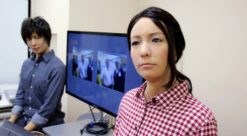
Japan is at the forefront of building all kinds of different robots, from industrial machines to robots that look like humans and can talk to us. The only purpose for these humanoid robots is to make us happy.

Universal adoption of the ISA speed warning system in Norway could reduce both the average speed of vehicles and their emissions, concludes a recent SINTEF report. Lower speeds also lead to fewer fatalities and serious injuries on the roads.

Type size is the most critical factor in being able to read printed text, but it doesn’t have to be as big as you might think.
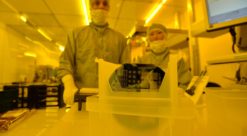
A team of Norwegian, French and Australian researchers is the first in the world to succeed in quantifying the effects of radiation on individual cancer cells. This means that radiation therapies can now be tailored to individual tumours and thus be more effective.
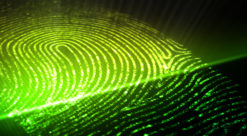
3D fingerprinting can detect forgers. It could also make border crossings and passport controls safer and faster.
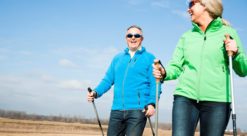
The company Noen AS runs courses for its helpers to enable them to establish close relationships with their dementia patients. The aim is to increase the patients’ quality of life. Researchers have developed an IT tool to help the company demonstrate that its approach is on the right lines.

Fibre optics are at the heart of today’s communication systems, a number of medical devices and more. But when researchers put a silicon-germanium mix at the core of the fibre and treated it, they made something with potential far beyond transmitting light.

Man-made refrigeration gases threaten the Earth’s climate. The use of natural compounds like CO2 is an effective counter-measure.
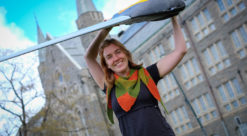
How do you get a plane-like drone to land with no runway? You use math, of course!
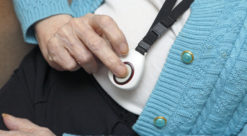
Medical alert systems are going to enable you and I to live longer at home. Researchers have recently been looking closely at these systems with a view to improving them.
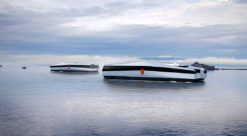
The Trondheim Fjord in Norway will be the world’s first technological playground for pilotless vehicles that move below, on and above the water’s surface.

People with cystic fibrosis (CF) need help to ensure they are getting correct nutrition and the right amount of enzymes. They also need constant reminders. Researchers are now developing a digital support device to promote autonomy, but are finding that this is no easy task.
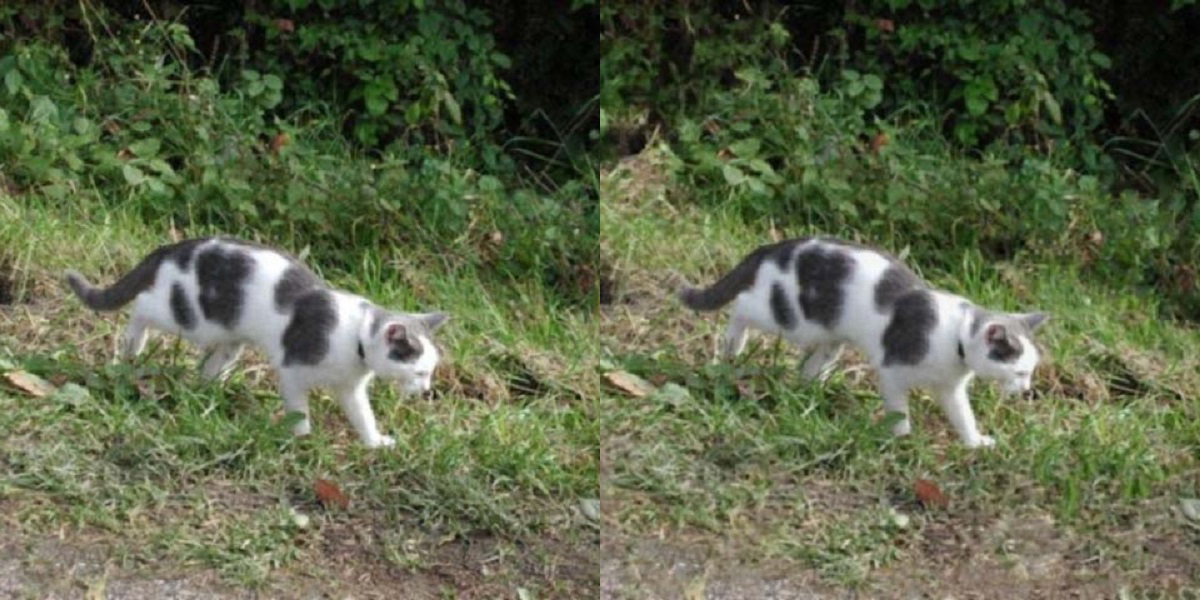
Using algorithms in a computer program, can researchers simulate the processes that happen in our brains when we sift through important and unimportant image information?
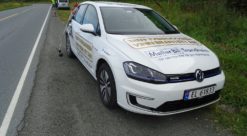
Research shows that fitting tyres with very low rolling resistance, combined with the right road surfacing, can provide just as much noise reduction as traditional noise barriers.