How will a future electricity grid manage the demands of induction cooking, charging electric cars and roof-installed solar panels? The answer is Smart Grids, which involves digitisation of the electricity grid.
Many major European airports are unable to expand. This means that aircraft departures, arrivals and surface movements will have to be speeded up. A Norwegian system designed to make all airport movements more efficient is tested in Hamburg, and at Arlanda in Stockholm and Charles de Gaulle in Paris.
Ocean dumping of munitions from WWII was common in Norway and along the European coast. Some of these bomb dumps offer a natural living laboratory where biologists can study cold-water coral reefs.
Starting today, Hiroshito Matsumoto will work from a base in Toyko on behalf of NTNU and the University of Bergen to build new research partnerships between Japan and Norway.
The polar night descends on the arctic archipelago of Svalbard for more than 100 days a year. But even in the depths of this darkness, the oceans are churning with activity.
The Arctic is set to be a 21st century boomtown, as summer sea ice melts away, opening the area to increased trans-Arctic shipping and oil and gas development. A new understanding of Arctic coastal erosion offers clues to how to best protect the docks and other infrastructure this development will bring.
Sensors, data and analyses all help to give advance warning of critical situations developing on production lines. This can reduce downtime by 50 per cent.
The Kon-Tiki2 expedition aims to both reinforce and challenge Heyerdahl’s theories – and NTNU will gather unique research material from the major oceans that the expedition crosses
Methane hydrates can be seen as a potential energy source or as a dangerous source of methane – a greenhouse gas that is 20 times more potent than CO2. With the help of a supercomputer and an interdisciplinary team, scientists have uncovered important details about their stability if they are disturbed by human-induced or natural forces.
They’re going to build a new road right outside your living room window. The authorities have sent you a ‘noise map’, but what you really need is to hear what the traffic noise will sound like. Well, soon you can.
Norway is evaluating innovative housing options for dementia sufferers. Perhaps small serviced housing projects and dementia ‘villages’ will provide a more normal life than nursing homes and institutions?
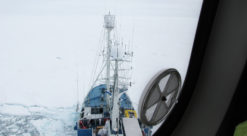
Global warming is upending virtually everything that scientists know about the Arctic ice cap. During the first half of 2015, a multinational team of researchers froze the RV Lance into the Arctic ice to learn more about how this ice has changed. NTNU researchers were among the scientists seeking to learn more about this changing environment.
Producing pure aluminium from ore accounts for as much as 1 per cent of all greenhouse gas emissions worldwide. Recycling is the best way to reduce that carbon footprint – but manufacturers and recycling companies will have to plan carefully to avoid problems with impurities that accumulate in recycled aluminium over time.
People suffering from cystic fibrosis (CF) are unable to absorb sufficient fats and proteins from the food they eat. But an app is on the way that will help them control their illness.
The Privacy Statement is about how this website collects and uses visitor information. The statement contains information that you are entitled to when collecting information from our website, and general information about how we treat personal data.The legal owner of the website is the processing officer for the processing of personal data. It is voluntary for those who visit the web sites to provide personal information regarding services such as receiving newsletters and using the sharing and tip services. The treatment basis is the consent of the individual, unless otherwise specified.
1. Web analytics and cookies (cookies)
As an important part of the effort to create a user-friendly website, we look at the user pattern of those who visit the site. To analyze the information, we use the Google Analytics analysis tool.Google Analytics uses cookies (small text files that the site stores on the user's computer), which registers the users' IP address and provides information about the individual user's online movements. Examples of what the statistics give us answers to are; how many people visit different pages, how long the visit lasts, what websites users come from and what browsers are used. None of the cookies allow us to link information about your use of the site to you as an individual.The information collected by Google Analytics is stored on Google servers in the U.S.. The information received is subject to the Google Privacy Policy.An IP address is defined as a personal information because it can be traced back to a particular hardware and thus to an individual. We use Google Analytics's tracking code to anonymize the IP address before the information is stored and processed by Google. Thus, the stored IP address can not be used to identify the individual user.
2. Search
If the webpage has search function, it stores information about what keywords users use in Google Analytics. The purpose of the storage is to improve our information service. The search usage pattern is stored in aggregate form. Only the keyword is saved and they can not be linked to other information about the users, such as the IP addresses.
3. Share / Tips service
The "Share with others" feature can be used to forward links to the site by email, or to share the content of social networking. Tips for tips are not logged with us, but only used to add the tips to the community. However, we can not guarantee that the online community does not log this information. All such services should therefore be used wisely. If you use the email feature, we only use the provided email addresses to resend the message without any form of storage.
4. Newsletter
The website can send out newsletters by email if you have registered to receive this. In order for us to be able to send e-mail, you must register an e-mail address. Mailchimp is the data processor for the newsletter. The e-mail address is stored in a separate database, not shared with others and deleted when you unsubscribe. The e-mail address will also be deleted if we receive feedback that it is not active.
5. Registration, form
The website may have a form for registration, contact form or other form. These forms are available to the public to perform the tasks they are supposed to do.Registration form is for visitors to sign up or register.Contact form is for visitors to easily send a message to the website's contact person.We ask for the name of the sender and contact information for this. Personal information we receive is not used for purposes other than responding to the inquiry.The form is sent as email via Mailgun as a third party solution. The entire submission will be stored at Mailgun for 24 hours. Between 24 hours and 30 days, only mailheader is stored before the submission is deleted after 30 days. The reason for this storage is to confirm whether emails are sent from the website and forwarded to the correct recipient.Once the email is received by the recipient, it is up to the recipient to determine the data processing needs of the email.
6. Page and service functionality
Cookies are used in the operation and presentation of data from websites. Such cookies may contain language code information for languages selected by the user. There may be cookies with information supporting the load balancing of the system, ensuring all users the best possible experience. For services that require login or search, cookies can be used to ensure that the service presents data to the right recipient.