Plastic, and plastic pollution, are a huge problem for both human health and the environment. An interdisciplinary panel of experts suggests that politicians take three concrete steps to better understand and rein in this growing problem.
Trondheim’s Nidaros Cathedral is full of secrets, messages from the past written in stone. One researcher is now decoding these missives, half hidden in a very special spot in and around the most sacred place in the church.
Despite the effect smoking has on cancer, many people continue to smoke after receiving a cancer diagnosis. A simple test can help predict whether smokers are likely to succeed in quitting.
Youthful creativity is enhanced by artificial intelligence, but students are also asking valid, critical questions about how the technology affects education and learning.
It’s summer in the Northern Hemisphere and peak season for getting lost in the great outdoors. Learning new ways to find our way back can help us stay safe in the wild.
Scientists are searching high and low for markers that can reveal the risk of a heart attack before a patient falls ill. Tiny microRNAs and subgroups of cholesterol may be the solution.
Being young and beautiful can have its risks. The best-looking young people tend to drink and party more – and are more likely to make choices that could lead to problems in adulthood.
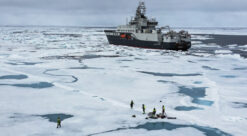
Arctic shipping traffic is on the increase. One day, these ships will be autonomous. New technology that can remove rain, snow and fog from the images produced by the ship’s cameras and sensors will increase safety in extreme conditions.
Is it possible to build greenhouses on the moon without transporting any materials from Earth? Researchers at NTNU Social Research and SINTEF believe it is, and are assisting the European Space Agency (ESA).
Portable ultrasound devices can bring high technology imaging to your doctor’s office, to emergency vehicles, and to lesser-developed countries. A new AI tool helps make these devices easier for a wider range of health professionals to use.
Is teacher-led play really play? New students don’t necessarily think so. One researcher believes that more free play in school could improve classroom dynamics and strengthen relationships.
The Privacy Statement is about how this website collects and uses visitor information. The statement contains information that you are entitled to when collecting information from our website, and general information about how we treat personal data.The legal owner of the website is the processing officer for the processing of personal data. It is voluntary for those who visit the web sites to provide personal information regarding services such as receiving newsletters and using the sharing and tip services. The treatment basis is the consent of the individual, unless otherwise specified.
1. Web analytics and cookies (cookies)
As an important part of the effort to create a user-friendly website, we look at the user pattern of those who visit the site. To analyze the information, we use the Google Analytics analysis tool.Google Analytics uses cookies (small text files that the site stores on the user's computer), which registers the users' IP address and provides information about the individual user's online movements. Examples of what the statistics give us answers to are; how many people visit different pages, how long the visit lasts, what websites users come from and what browsers are used. None of the cookies allow us to link information about your use of the site to you as an individual.The information collected by Google Analytics is stored on Google servers in the U.S.. The information received is subject to the Google Privacy Policy.An IP address is defined as a personal information because it can be traced back to a particular hardware and thus to an individual. We use Google Analytics's tracking code to anonymize the IP address before the information is stored and processed by Google. Thus, the stored IP address can not be used to identify the individual user.
2. Search
If the webpage has search function, it stores information about what keywords users use in Google Analytics. The purpose of the storage is to improve our information service. The search usage pattern is stored in aggregate form. Only the keyword is saved and they can not be linked to other information about the users, such as the IP addresses.
3. Share / Tips service
The "Share with others" feature can be used to forward links to the site by email, or to share the content of social networking. Tips for tips are not logged with us, but only used to add the tips to the community. However, we can not guarantee that the online community does not log this information. All such services should therefore be used wisely. If you use the email feature, we only use the provided email addresses to resend the message without any form of storage.
4. Newsletter
The website can send out newsletters by email if you have registered to receive this. In order for us to be able to send e-mail, you must register an e-mail address. Mailchimp is the data processor for the newsletter. The e-mail address is stored in a separate database, not shared with others and deleted when you unsubscribe. The e-mail address will also be deleted if we receive feedback that it is not active.
5. Registration, form
The website may have a form for registration, contact form or other form. These forms are available to the public to perform the tasks they are supposed to do.Registration form is for visitors to sign up or register.Contact form is for visitors to easily send a message to the website's contact person.We ask for the name of the sender and contact information for this. Personal information we receive is not used for purposes other than responding to the inquiry.The form is sent as email via Mailgun as a third party solution. The entire submission will be stored at Mailgun for 24 hours. Between 24 hours and 30 days, only mailheader is stored before the submission is deleted after 30 days. The reason for this storage is to confirm whether emails are sent from the website and forwarded to the correct recipient.Once the email is received by the recipient, it is up to the recipient to determine the data processing needs of the email.
6. Page and service functionality
Cookies are used in the operation and presentation of data from websites. Such cookies may contain language code information for languages selected by the user. There may be cookies with information supporting the load balancing of the system, ensuring all users the best possible experience. For services that require login or search, cookies can be used to ensure that the service presents data to the right recipient.