Hip protector saves you when you slip
Are you well used to wearing studded shoes in winter? If so, you’re probably ready for yet another step towards tackling the eternally icy winter streets.

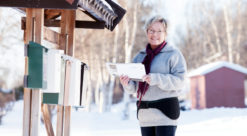
Are you well used to wearing studded shoes in winter? If so, you’re probably ready for yet another step towards tackling the eternally icy winter streets.
What happens in the brain of an infant during its first year of life? Are premature babies able to keep up with normal development targets?
The Ebola outbreak continues to claim lives in West Africa. Capacare.org, a programme that offers surgical training to community medical officers in Sierra Leone, has lost two of its students to the virus.
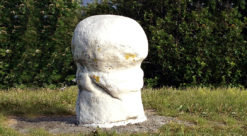
Fertility cults were common throughout Europe in pre-Christian times, and Norway also still has signs of them.
A recently published study reveals that the more time students spend on Facebook, the worse their grades. But Facebook is not the problem.
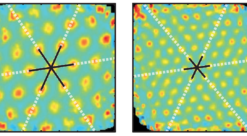
The brain’s GPS would be worthless if it simply contained maps of our surroundings that were not aligned to the real world. But we now know how this is done.
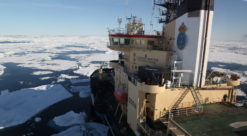
Researchers with NTNU’s Sustainable Arctic Marine and Coastal Technology centre don’t just study health, safety and environment (HSE) issues in their research in the High Arctic – they live HSE first hand. That first-hand experience makes industry safer, and protects the Arctic’s fragile environments.

More than 90 percent of Brazil’s petroleum reserves are found in deep water or ultra-deep water areas offshore. Researchers at SINTEF’s Brazil office are using advanced modelling and testing, including neural networks, to improve the lifespan and safety of a key component used to exploit these deep water reserves.
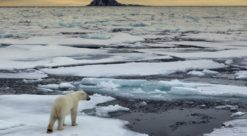
Norway needs its own climate laws, but these laws will only be effective if they are good. Bad climate policies may be worse than none at all, according to NTNU researchers and policy makers.
Firewood is a key energy resource. Norway has about two million wood-burning stoves, with a little over half in regular use. For this reason, it’s important that they are efficient and environmentally-friendly.
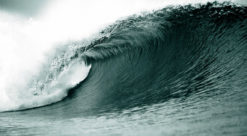
Is it possible for a redundant fishing vessel to be used as a power plant? Absolutely! The first vessel of its kind is now anchored offshore in the Stadthavet area west of Ålesund, Norway, with the aim of generating electricity from the natural forces of the sea.
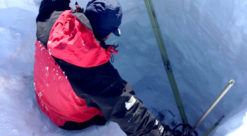
Climate change is about to wipe out snowfields that have survived in the Norwegian mountains for 5,000 years.
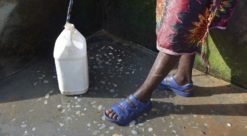
Climate change will lead to water scarcity in large parts of Africa. But there is hope – on African rooftops.
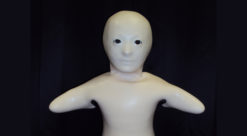
How would you feel about robots taking over elder care? It may seem odd to you, but most Japanese wouldn’t even think twice about robots caring for their grandparents.
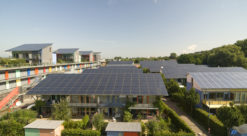
Norway’s wealth and prosperity over the last four decades has been built on oil, but Jeremy Rifkin, a futurist and social and economic thinker, says it’s time for the country to change. The Third Industrial Revolution is coming, and Norway needs to abandon fossil fuels and move towards a greener future that relies on renewable energy, shared transport and ultra-efficient housing.

Women and men misunderstand each other’s signals of friendliness and sexual interest. But these misinterpretations are no surprise to evolutionary psychologists.
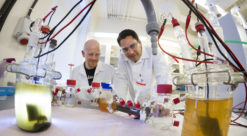
Researchers in Trondheim have succeeded in getting bacteria to power a fuel cell. The “fuel” used is wastewater, and the products of the process are pure water droplets and electricity.
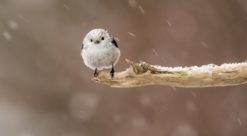
Mature birds are better at surviving the winter than young birds. Older birds have learned a few tricks along the way.
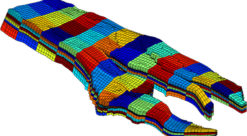
Researchers have developed an entirely new language for faster programming and simulations.

Talented junior football players train so much that they may decrease their chances of making it into the adult leagues.
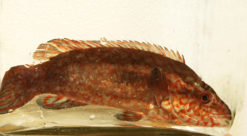
The best weapon in the battle against salmon lice in the Norwegian aquaculture industry has proved to be the use of what are called “cleaner fish”, fish that eat salmon lice. But these fish often die during breeding. Now, researchers have found a way to help the young fish survive.
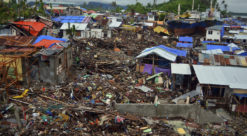
Four NTNU architecture students spent their autumn semester working on rebuilding Streetlight, an orphanage in the Philippines that was destroyed by a typhoon before Christmas last year.
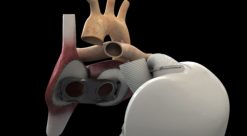
France is going to test an artificial heart on patients. The heart will contain a Norwegian pressure sensor.
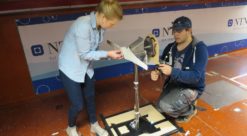
Engineering students at the Norwegian University of Science and Technology (NTNU) are learning about more than just theory. A competition to build the best wind turbine also gives them the chance to put their practical skills to the test.

A new study shows that periods of high UV radiation can affect a population over several generations.
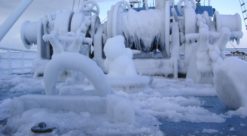
The production of oil and gas at temperatures between 40 and 60 degrees below zero means that researchers must advance the development of materials that can withstand these harsh conditions.
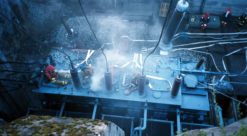
Technology used in the crumple zones of cars can avert serious explosions in transformers, believe researchers.
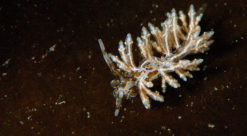
Scientists have recently found a species of sea slug that has apparently made its way north from the Mediterranean Sea. Sometimes called sea slugs or sea butterflies, these mobile nudibranchs are carnivores that eat coral and jellyfish.
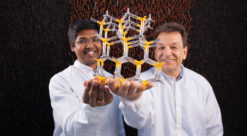
Atomic level changes in nanomaterials are contributing to incredible advances in solar cell and LED technology. NTNU researchers have found a way to design nanowires with a built-in current that will make them even more effective in solar cells.

Archaeological findings show that Vikings from mid- and western Norway were among the first to make the trip to the British Isles.
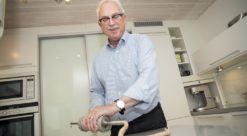
Making sausages is not just a question of good ingredients and skill. There’s a little science involved, too. Professor Trygve Magne Eikevik makes his own sausages, and is willing to share his technique and his recipes, especially for Norwegian Christmas sausage.
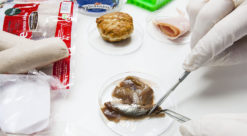
During Christmas you may begin to wonder if the patties really contain pork, the herring in the tomato sauce really is herring, if the sausages contain beef, or if the Christmas anchovies have anchovies in them. No need to fret, DNA barcoding can confirm the identity of what you’re eating this Christmas.