Seeks to capture 1 million tons of CO2 from the air per year
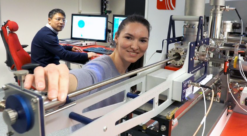
In collaboration with SINTEF, the industrial company Removr aims to become a world leader in direct CO2 capture from air.


In collaboration with SINTEF, the industrial company Removr aims to become a world leader in direct CO2 capture from air.
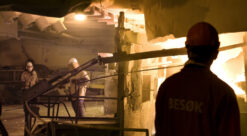
Most people know that metals are made from ore, but how do we make gold from gravel? That’s the process we must understand to be able to make the metal industry climate friendly. Here are some alternatives for CO2-free metal production.
It is difficult to recycle artificial turf and there are no obvious deposit-return systems for these plastics on the market. But researchers are now looking to find a solution to the problem.
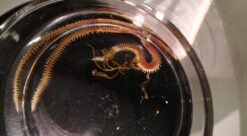
Researchers had the crazy idea of feeding ragworms with locally-cultivated seaweeds. The results were as gold-edged as the worms themselves – a high-quality, locally-sourced and sustainable feed for farmed salmon.

A team of Norwegian researchers has succeeded in producing hydrogen using a far more efficient method than is currently in use. The technology was ready as early as in 2017. The team has also demonstrated that the process can be scaled up for commercial application.
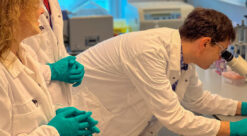
Researchers have discovered a new method of activating enzymes that may make it possible to repair proteins that have been damaged as a result of hereditary diseases, such as some types of skin cancer.
Very soon, there will be enormous numbers of used EV batteries available, but we have yet to work out how we will be organising the reuse of this massive resource.
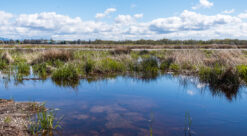
At the boundary between the land and sea, there exists an ecosystem that has been overlooked by Norwegians for so long that it was only recently given an official name. But studies are revealing that it has some very desirable properties.
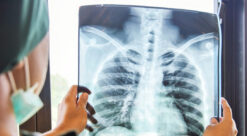
Lung cancer is one of the most dangerous forms of cancer. Treatments are available, but they are demanding on patients and less than 30 percent survive. But mRNA technology is offering new hope for higher survival rates because treatments target the malignant cells in an entirely new way.
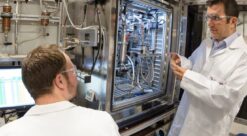
As part of a six-year research project, researchers have succeeded in developing a membrane that captures CO2 in an entirely innovative way. Their work has resulted in an article published in the prestigious research periodical Science Magazine.
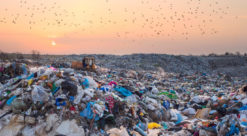
Using non-recyclable plastic waste as an alternative to coal may prevent huge volumes of plastic from being discarded into the oceans – and will also reduce CO2 emissions. This is the conclusion of a recently completed pilot project headed by SINTEF in Vietnam.
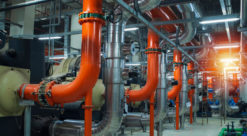
High-temperature heat pumps are no longer simply for idealists. They’re contributing to more than just climate accounting, and industrial companies are standing in line to learn more.

The idea behind batteries is to make the planet greener, but they all start their lives as energy-demanding environmental liabilities. Research scientists at SINTEF have succeeded in making batteries cheaper and simpler using a process that requires much less energy consumption.

What if a concrete building could heat itself – while being built? Research scientists are about to make this dream a reality.
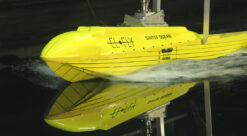
With this seaplane you will be able to take off from Trondheim Fjord or Flesland Airport in Bergen, Norway, and land in the Geiranger Fjord one hour later.

Electrification of the Norwegian continental shelf is a long-standing political issue. Now research scientists believe this can be done using fuel cells installed on the platforms. This will reduce CO2 emissions and remove the need to lay new subsea cables.
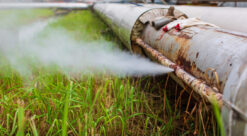
High energy prices highlight the importance of the thousands of kilometres of insulated pipe networks and equipment in industrial plants. However, corrosion under the pipes’ insulation is hard to detect and can have severe consequences. New surveillance technology being developed by SINTEF can help combat this looming threat.
Speedy work carried out for free in Norway resulted in an IT system that protects refugees against human traffickers at the Polish-Ukrainian border. This type of aid work may become financially self-supporting.

Is it possible to identify signs of depression by analysing the content young people post online and in chat rooms? The answer is yes!
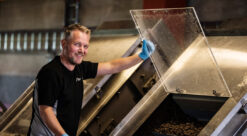
A shortage of phosphorous is driving the price of artificial fertilisers through the roof. But a new and eco-friendly wastewater decontamination process has enabled a company in Hamar in Norway to kill two birds with one stone.

According to science, women feel the cold more than men. But how do women respond to heat stress compared with men? The answer to this question may help us to make better protective clothing for firefighters of both sexes.
Norwegian industry is shifting towards a greener future. But what does the transition to a greener economy really mean for industry and for consumers?
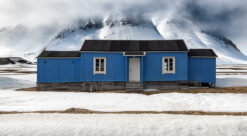
The cultural heritage of Svalbard is unique. It reflects human life and activity in a harsh and fragile environment. Researchers are now working to preserve it for posterity.

The world is crying out for rare minerals for the manufacture of electric cars, wind turbines and other technologies that we simply need more of. But how can we guarantee access to these resources without threatening the natural world and mankind as we know it?