What makes a concrete wall attractive or ugly?
Smooth and shiny. And without big pores. So much for the ideal concrete wall.


Smooth and shiny. And without big pores. So much for the ideal concrete wall.
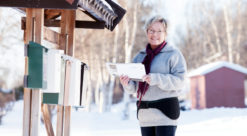
Are you well used to wearing studded shoes in winter? If so, you’re probably ready for yet another step towards tackling the eternally icy winter streets.

More than 90 percent of Brazil’s petroleum reserves are found in deep water or ultra-deep water areas offshore. Researchers at SINTEF’s Brazil office are using advanced modelling and testing, including neural networks, to improve the lifespan and safety of a key component used to exploit these deep water reserves.
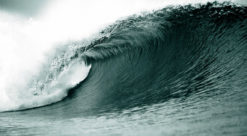
Is it possible for a redundant fishing vessel to be used as a power plant? Absolutely! The first vessel of its kind is now anchored offshore in the Stadthavet area west of Ålesund, Norway, with the aim of generating electricity from the natural forces of the sea.
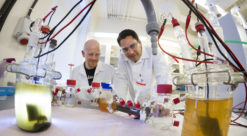
Researchers in Trondheim have succeeded in getting bacteria to power a fuel cell. The “fuel” used is wastewater, and the products of the process are pure water droplets and electricity.
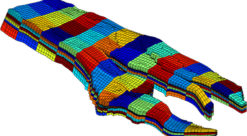
Researchers have developed an entirely new language for faster programming and simulations.
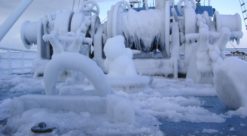
The production of oil and gas at temperatures between 40 and 60 degrees below zero means that researchers must advance the development of materials that can withstand these harsh conditions.
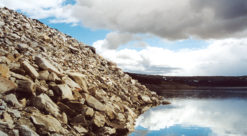
Norwegian hydropower is the most cost-efficient source of energy that Germany could adopt as back-up for solar cells and wind-power, new calculations show.
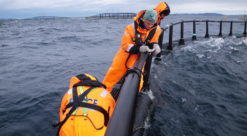
Fish husbandry workers have played an active part in developing work clothing tailor-made for their wet, windy and messy working conditions.
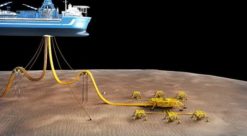
Oil companies are having problems finding out how much each of their wells is producing. Researchers believe this can be solved by providing each well with its own frequency.
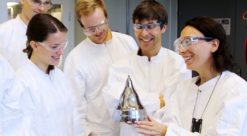
The solar cell industry is headed into clean-room labs to better understand and improve the materials that they are working with.
The production of oil and gas at temperatures between 40 and 60 degrees below zero means that researchers must advance the development of materials that can withstand these harsh conditions.
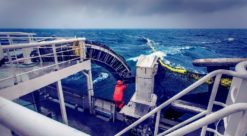
Robots equipped with machine vision enable us to classify catches on board vessels with high levels of accuracy – saving fishing crews time and money.
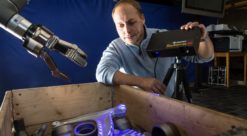
The robots of the future must be able to adapt to changes in their surroundings. Some of them will be in close contact with people. At the very least they must be able to see properly – in three dimensions, just like us.
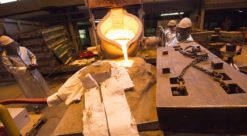
A Norwegian invention is reducing by a third the energy that foundries need to manufacture ship propeller blades.

Six norwegian office buildings were erected outside of Oslo around 1980. Two of these have now been rehabilitated and represent northern Europe’s first zero-emission buildings of their type.

We don’t just want the best. We want the very best.
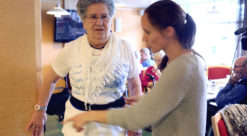
If scientists get their way, we will soon be able to measure grandma’s acceleration. If she has a fall, that is.

People of all ages get excited hearing stories about their home town’s cultural heritage. And finding them on an app is just about as cool as it gets.

A new window on the world of atoms will make future vehicles safer in collisions.
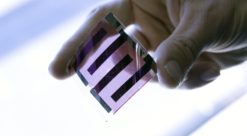
In the future, you may be able to buy solar cells for your roof from a roll, by the metre.
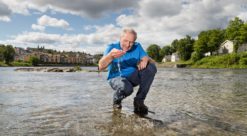
They damage our ability to reproduce, and they pollute the natural environment. Yet chemicals known as hormone mimics can be found in consumer goods. Eventually they end up in our water. But we now have a way of capturing them.
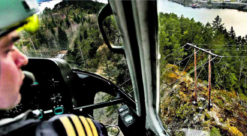
A Norwegian, satellite-based system aims to ensure that helicopters and light aircraft are prevented from colliding with power lines and other obstacles.

Contract workers in Norway often face the worst and most unpredictable working conditions. But good management and support from colleagues makes these workers more robust.