
Experienced therapists can give psychology students an extra boost
Psychology students who will work with patients during supervised professional training can benefit from observing experienced therapists at work.

Psychology students who will work with patients during supervised professional training can benefit from observing experienced therapists at work.

A major problem with quantum computers is memory, as the information they contain can be quickly lost. We can now see how fast this happens, and much more precisely than before.

The stockpile of German ammunition left in Norway in 1945 could have been cleared and dismantled by the Germans. Norway declined the offer and began dumping it in Lake Mjøsa and other lakes instead.
Bjørn Karlstad was a young man when he went out with his grandfather to dump old WWII ammunition into Lake Mjøsa.

Pupils who believe they can improve through practice enjoy their subjects more and achieve better academic outcomes.
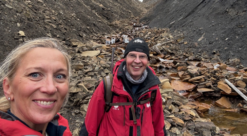
With increased pressure on the Arctic, a secure water supply is becoming a critical part of emergency preparedness in Svalbard. Now researchers are investigating how Longyearbyen’s only source of drinking water can be better secured.

Scientists are working to understand how magnetic currents from the sun spread beneath the Earth’s crust when the northern lights dance across the sky. Their goal is to tame its “dark twin” and prevent damage to our power grid.
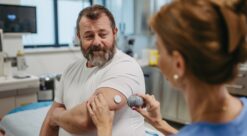
Some people have a greater genetic risk than others of developing type 2 diabetes. Now, more of these at-risk people are actually developing diabetes than previously.

More than 4000 ageing bridges in Norway need to be secured with new railings. NTNU researchers are now crash testing new railings to see if it is safe to install them directly on to the old bridges.
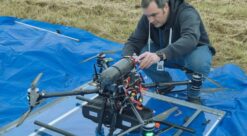
Researchers have built a drone that runs on hydrogen. This technology will enable us to fix power outages faster and replace dangerous helicopter missions with the new drones.

Edvard Munch used materials that make his paintings vulnerable to the ravages of time. A new digital tool now shows how much The Scream may change over the next 300 years.

A newly developed plastic material of the same type as is used in baby diapers can collect clean and safe drinking water from the air.
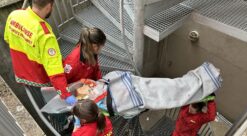
How do you talk to a colleague who is obviously making work-related mistakes? And how would you yourself want this kind of feedback?

A new AI-based sound metre can distinguish between excavators and seagulls. This is not that easy for artificial intelligence to understand.
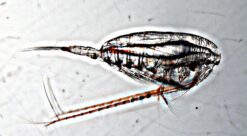
As ocean temperatures continue to rise, one of the smallest but most important organisms may be starting to struggle.
Many large circuit breakers are filled with sulphur hexafluoride (SF₆) – a greenhouse gas that is 24 300 times more powerful than CO₂. But an ingenious Norwegian solution could offer us a climate-friendly alternative.
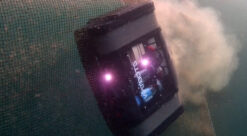
The fishing and aquaculture industries are major consumers of plastic. Feed hoses, nets and ropes all contain plastic – and even washing fish farming nets can be a culprit. But research shows that simple methods can reduce emissions.
The security policy landscape has changed. We are at increasing risk because we are so dependent on large US technology companies.

Despite its long history as a maritime nation, Norway is struggling to recruit enough seafarers. Increased automation and autonomous ships have been hailed as a solution to this crisis, but seafarers themselves are concerned about safety. A recent study shows that there are 12 specific reasons why confidence in automation is low.
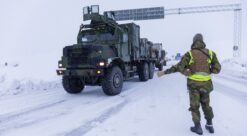
Roughly 25000 soldiers from 14 nations are gathering in northern Norway this month for a biannual NATO joint training exercise called Cold Response. But the changing US attitude towards NATO under the Trump administration raises questions about its future, one researcher says.
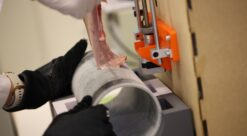
You’ve done it too, haven’t you? Or maybe you know someone who has? Stuck their tongue to a piece of frozen metal in the winter, even though they know it’s cold? But is it dangerous?
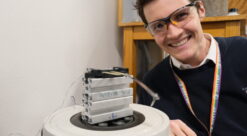
Vibrations in the ground are found everywhere. They occur when cars pass by, when machines are operating, or when the earth’s crust moves. For most of us, these are invisible forces. For researchers, however, they represent something far more exciting: an untapped source of clean energy.
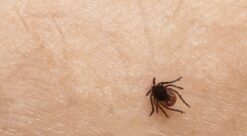
When researchers studied Norwegians who blamed tick bites for their chronic health problems, they found no objective evidence that ticks were the cause.
Their job is to protect, promote, and restore human health and lives, but healthcare workers believe that their own use of alcohol and illegal drugs reduces the quality of care they provide to patients. A recent study suggests that more doctors and nurses struggle with substance use than we are aware of.