Power ball on transmission wires lowers electricity bills
The Norwegian-developed sensor node detects where transmission lines have available space. It also means that grid companies could avoid building new, expensive and controversial power lines.


The Norwegian-developed sensor node detects where transmission lines have available space. It also means that grid companies could avoid building new, expensive and controversial power lines.

You are less likely to be murdered in a democracy than in an undemocratic country, but the reason is not democracy itself. Quite the opposite.

World-famous treasures crafted from walrus ivory are on their way to Norway, including chess pieces from the Isle of Lewis in Scotland. Were they originally from Norway? And why did the walrus trade disappear?
A box the size of a refrigerator that supplies a home – and perhaps ten neighbouring houses – with electricity. That’s Ole Martin Løvvik’s dream at SINTEF.
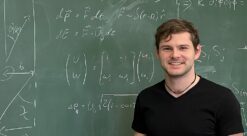
The transport of dense gases and liquids is becoming increasingly relevant in relation to carbon capture. New research is helping us understand more about how this can be done most efficiently.
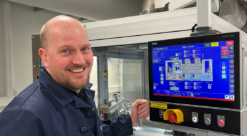
The goal is to eliminate both charging anxiety and environmental concerns. Now researchers have created the “recipe” to do it.
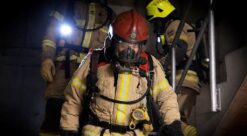
Firefighters do hard physical work while being exposed to great heat strain. Now we know more about what happens to their body temperature during a smoke dive.
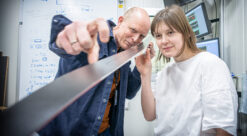
They won’t feature at this year’s World Championships in Trondheim, but NTNU researchers believe the world’s fastest and most flexible cross-country skis will be ready for the 2027 World Championships in Falun.
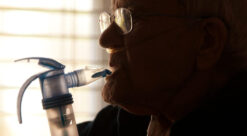
SINTEF experts on microchip technology are working on a method to detect biomarkers in our breath and to miniaturize a monitoring device. The project can help to discover symptoms of COPD earlier and change the lives of millions of people suffering from this disease.
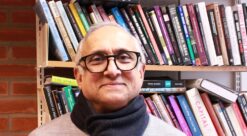
The climate benefits if only a few people have a lot of power and money. So, should the rest of us be held back because of this fact?

“It would be boring if you could never have a party! The challenge is to do it in a way that the cost is in a reasonable proportion to the benefit to society,” says researcher Denis Becker about the 2025 World Ski Championships in Trondheim.
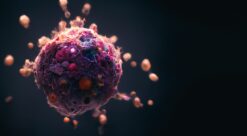
Nanomedicines save lives, but they don’t reach the market or the patient’s body fast enough. Researchers have now come up with a recipe to accelerate and improve the process.
Short strands of genetic material called microRNA have implications for human health – but they could also revolutionize species identification, and perhaps even allow monitoring of wildlife health. Here’s how they work and the potential they offer.
Greenhouse gas (GHG) accounting for buildings is an effective tool for achieving climate targets. The requirements must now be followed up with policy in Norway as well.
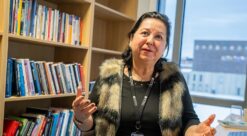
New technology aims to enable us to always do even more. A researcher has issued a warning about what this ‘efficiency hysteria’ is doing to us and our workplaces.
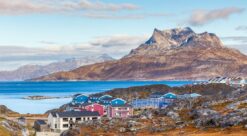
Donald Trump used a 2018 survey on Greenlandic preferences for national independence to bolster his argument for annexing the autonomous territory.
Digital technologies are creating many opportunities for the industry, but how can you ensure that you take advantage of these opportunities in practice? Researchers examine how and why in the new book “Digitalization and Sustainable Manufacturing – Twin Transition in Norway”.

These man-made toxic substances are often referred to as ‘forever chemicals’. There are thousands of different variants, and researchers are finding more and more of them.

Will we be able to trust text and images in the future? Deepfake is being used not just for innocent fun, but also to influence voters in the world’s most powerful countries.
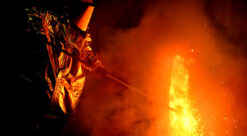
It’s been a mystery for many years: Every day, tonnes of ferromanganese – an important additive in steel – are “locked” in slag on their way out of the furnaces. We are now getting close to solving this problem.
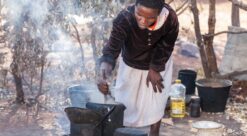
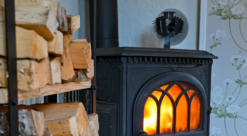
Despite decades of innovation, more than a billion people in sub-Saharan Africa still don’t have access to clean cooking. Low-tech, affordable cookers exist, yet firewood remains the go-to fuel. Why?
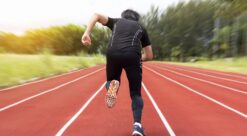
A recent study shows that a new programme can increase ‘grit’ and self-efficacy in adolescents. Approximately 16,000 young people will soon have access to this programme each year.

What was it like as a Jewish Holocaust survivor returning to Trondheim, a city where many inhabitants had been involved in the genocide?

How can we increase our understanding and commitment to environmentally friendly architecture? There is much evidence to suggest that visualisation using AR can help us.