You’re looking at one of the oldest pieces of cloth in the world
What did people make clothes from in the Neolithic? Çatalhöyük, the world’s largest known Stone Age settlement, gives us answers after 60 years of debate.

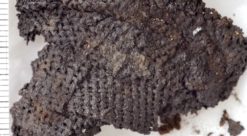
What did people make clothes from in the Neolithic? Çatalhöyük, the world’s largest known Stone Age settlement, gives us answers after 60 years of debate.

A new method using nanowires can make solar panels much more efficient and much cheaper than today.
New research confirms that fluorinated compounds in ski waxes affect organs in mice.
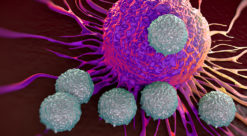
Even the toughest “soldiers” in our immune system are not tenacious enough to knock out cancerous tumours. NTNU professor Øyvind Halaas aims to do something about that.

Lower secondary school means grades, more tests and more freedom. On top of all that you have the major physical developments that the body is undergoing. Yet the vast majority of pupils find the transition to lower secondary school positive, according to research from NTNU.
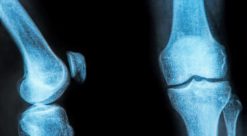
After conducting the largest study on osteoarthritis in the world, researchers are now on track to develop a medicine that can slow it down.

Many people have been robbed of a very basic need during the pandemic: physical contact. Human touch triggers hormones like serotonin, dopamine and oxytocin. Hormones that make us feel good flourish when we touch each other.
An assessment tool can make it easier for healthcare professionals to identify pain in residents with dementia. The right treatment can improve residents’ quality of life.
For the first time, raw data on Norwegian coronavirus genes will be freely available through the open gene bank ENA.
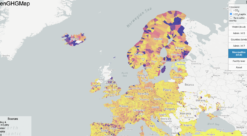
Cutting greenhouse gas emissions to meet climate goals won’t be easy, to put it mildly. But the job just got a little simpler for 34 European countries with the creation of a new interactive map that pinpoints emissions at a local level.
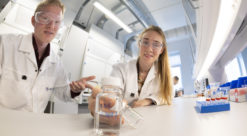
These research scientists are studying Nature’s own nanomaterials – applying tools and methods that are normally used for something quite different. Their work has provided us with knowledge that may revolutionise everything from medical treatments to building constructions.
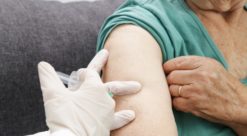
Several commonly prescribed medications used for completely different illnesses can enhance or reduce the activity of the influenza virus.
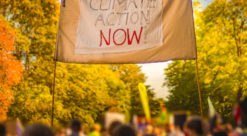
Just over two months after UN Secretary-General António Guterres described a new climate report on the state of the planet as “code red for humanity”, the nations of the world have the chance to do something about it. But will they?
The University of Bergen and the Kavli Institute at NTNU are joining forces on brain research with support from the Trond Mohn Foundation.
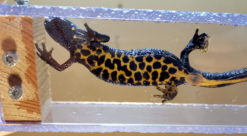
The stomach patterns of salamanders are as unique as human fingerprints. This feature will be used in an app to record salamander numbers.

An abrupt halt to oil activities in the North Sea is not the solution to the climate crisis. The way forward is to establish alternatives to oil.
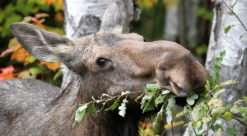
With the warming climate, forests are growing faster than before, and deciduous species are growing the fastest. Recent research illustrates just how much moose foraging limits this growth.
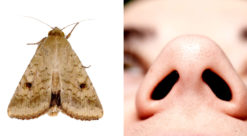
Scientists find remarkable similarities in the olfactory pathways of such diverse creatures as humans and insects.
Shorebirds burn a lot of fat during their long migrations. This can release toxic chemicals that accumulate in fat cells.

Code red for humanity, says the IPCC. Fortunately, there’s still a lot we can do, but we have no time to lose, says NTNU climate researcher Edgar Hertwich.

The fight against COVID-19 is far from over. A new combination of drugs could help save lives.
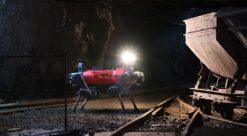
Team Cerberus has won an international competition with their subterranean robots, competing against top-ranked challengers. The group is headed by an NTNU professor.

Digital teaching and meeting places can work. But some approaches make students feel more connected and improve results.
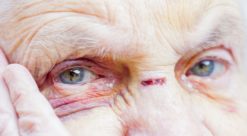
A majority of employees in Norwegian nursing homes have committed abuse or neglect of the elderly, a comprehensive report shows.