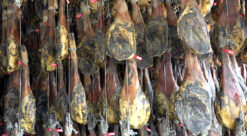
How a black pig created an entire industry
Black Iberian pigs rooting for acorns under an idyllic grove of trees in a sunny landscape. This is the myth of the Spanish Ibérico ham.

Black Iberian pigs rooting for acorns under an idyllic grove of trees in a sunny landscape. This is the myth of the Spanish Ibérico ham.
Many insect species are struggling. But all of us can help them, whether we live in an apartment or in a house with a garden.
People who choose to emigrate are those with the best education, new research shows. This flies in the face of popular opinion.

The higher a person’s BMI, the greater the chance of getting psoriasis. But researchers are still uncertain as to why.
Ultraviolet light is used to kill bacteria and viruses, but UV lamps contain toxic mercury. A newly developed nanomaterial is changing that.
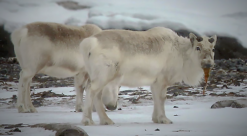
The arctic archipelago of Svalbard is already experiencing dramatic effects from climate change. A new study shows how these changes can force wild reindeer to graze on seaweed, a strategy that increases their likelihood of survival— and is recorded in their poop.
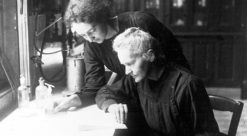
Textbooks and media can give the impression that the periodic table was the work of one man, but did you know that many of the contributors behind nature’s most important system were women?
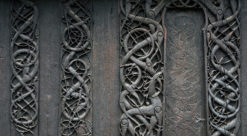
The richly decorated portal at Urnes stave church has often been interpreted in light of paganism. That’s wrong, according to a new stave church study.
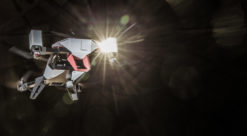
Inspecting ship tanks and storage spaces underwater is a challenging task for humans. A start-up company that originated at NTNU is manufacturing autonomous drones that can take over the job – and do it more cheaply.

In a new study, women said they acted a little more interested in sex than they really were. Men are the ones who apparently play cool most often.
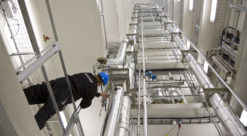
According to a new report, many years of research effort have resulted in significant reductions in the cost of full-scale carbon capture and storage.
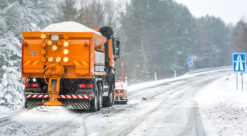
It’s springtime in much of the northern hemisphere, although spring snowstorms are still possible. When that happens, salt trucks and ploughs help make roads safe. But road salt can be bad for the environment, and can rust cars, bicycles and other metal. New research shows that salt use can be safely — and substantially — cut in certain circumstances.
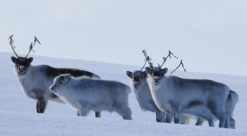
Climate change is increasing the likelihood of extreme winter rain events in the Arctic. These kinds of winter storms on Norway’s Svalbard archipelago can cause a thick cap of ice to cover the forage that reindeer eat. You’d think that more frequent rain-on-snow events would spell the end for these arctic animals — but you’d be wrong.
Researchers at NTNU’s Kavli Institute for Systems Neuroscience have found specialized brain cells that help us navigate in space.
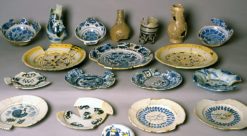
Norway conserves archaeological finds from 1537, but not when they’re from 1538 or later. That means we know less about people’s everyday lives during the last 481 years.
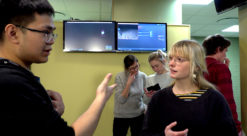
In the virtual world, inaccessible places become accessible. NTNU uses virtual reality – or VR – technology to create new teaching methods.
A sixth of all emissions resulting from the typical diet of an EU citizen can be directly linked to deforestation of tropical forests. Two new studies shed light on this impact, by combining satellite imagery of the rainforest, global land use statistics and data of international trade patterns.
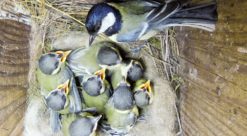
Several fish species can change sex as needed. Other species adapt to their surroundings by living long lives — or by living shorter lives and having lots of offspring. The ability of animals and plants to change can sometimes manifest in apparently extreme ways.
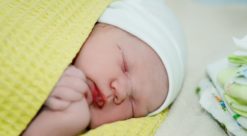
Metformin significantly reduces the risk of late miscarriages and preterm births for women with PCOS. But the drug does not work to prevent gestational diabetes, according to a large Nordic study from NTNU and St. Olavs hospital.
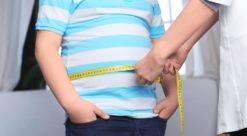
Metformin has several benefits when the mother has PCOS. But children are at greater risk for obesity later in life.
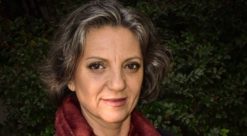
Ecology professor Sandra Myrna Díaz is the winner of the 2019 Gunnerus Award in Sustainability Science.
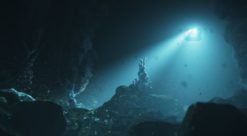
For the first time ever, researchers have been able to peek deep into the mantle of the Earth under an ultraslow mid-ocean ridge, where they have been able to observe mantle melting and growth of the Earth’s crust.
A Swedish-Norwegian research project will be looking into the possibilities and costs of transporting CO2 captured in Sweden for storage on the Norwegian shelf. This is the first project ever to look into this possibility.
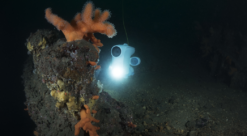
Blueye is an underwater drone that got its start at NTNU. The drone can be used for serious purposes – such as when it mapped damage to the Norwegian frigate Helge Ingstad – or for entertainment, such as showing cruise passengers the underwater landscape.