Several fish species can change sex as needed. Other species adapt to their surroundings by living long lives — or by living shorter lives and having lots of offspring. The ability of animals and plants to change can sometimes manifest in apparently extreme ways.
Metformin significantly reduces the risk of late miscarriages and preterm births for women with PCOS. But the drug does not work to prevent gestational diabetes, according to a large Nordic study from NTNU and St. Olavs hospital.
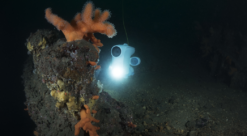
For the first time ever, researchers have been able to peek deep into the mantle of the Earth under an ultraslow mid-ocean ridge, where they have been able to observe mantle melting and growth of the Earth’s crust.
A Swedish-Norwegian research project will be looking into the possibilities and costs of transporting CO2 captured in Sweden for storage on the Norwegian shelf. This is the first project ever to look into this possibility.
Blueye is an underwater drone that got its start at NTNU. The drone can be used for serious purposes – such as when it mapped damage to the Norwegian frigate Helge Ingstad – or for entertainment, such as showing cruise passengers the underwater landscape.
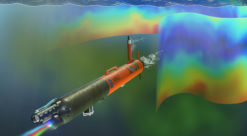
Phytoplankton form the base of the marine food chain but are notoriously difficult for scientists to account for — a little like trying to identify and count motes of dust in the air. A truly independent underwater vehicle shows it can do the job.
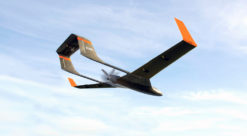
Comedian Stephen Fry is coming. So is the man who created the drone show that Metallica takes on tour, and a cyborg artist who had an antenna surgically implanted in the back of his head so he can hear colours.
The themes of the tenth edition of the Trondheim CCS Conference are technology that is absolutely necessary to combat climate change: CO2 capture, transport and storage.
What has to happen to facilitate more effective rescues from tunnel fires? Researchers have been investigating how 80 research subjects wearing VR glasses reacted in a virtual tunnel fire. Their conclusion is that basic measures can save lives.
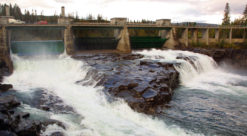
What is the best timing for the various hydroelectric plants to produce power? NTNU and SINTEF have developed an efficient and profitable simulation tool to make the most of hydropower generation.
Humans have developed machines that can learn on their own. Machines using artificial intelligence develop “behaviours” based on their interpretation of data. But we know less about how they teach themselves. Professor Harald Martens has created the start-up company Idletechs to develop a technology that will make artificial intelligence more understandable for the rest of us.
Sierra Leone has few doctors and even fewer surgeons to serve its seven million people. Since 2011, a non-profit group called CapaCare has been training community health officers to perform basic lifesaving surgeries. A new study shows the programme is working well when it comes to the most common surgery in the country — Caesarean sections.
Do we have a dominant brain hemisphere? Do we use our whole brain? Can we train our brains to be smarter? Does our ability to learn depend only on our genetic inheritance?
The Privacy Statement is about how this website collects and uses visitor information. The statement contains information that you are entitled to when collecting information from our website, and general information about how we treat personal data.The legal owner of the website is the processing officer for the processing of personal data. It is voluntary for those who visit the web sites to provide personal information regarding services such as receiving newsletters and using the sharing and tip services. The treatment basis is the consent of the individual, unless otherwise specified.
1. Web analytics and cookies (cookies)
As an important part of the effort to create a user-friendly website, we look at the user pattern of those who visit the site. To analyze the information, we use the Google Analytics analysis tool.Google Analytics uses cookies (small text files that the site stores on the user's computer), which registers the users' IP address and provides information about the individual user's online movements. Examples of what the statistics give us answers to are; how many people visit different pages, how long the visit lasts, what websites users come from and what browsers are used. None of the cookies allow us to link information about your use of the site to you as an individual.The information collected by Google Analytics is stored on Google servers in the U.S.. The information received is subject to the Google Privacy Policy.An IP address is defined as a personal information because it can be traced back to a particular hardware and thus to an individual. We use Google Analytics's tracking code to anonymize the IP address before the information is stored and processed by Google. Thus, the stored IP address can not be used to identify the individual user.
2. Search
If the webpage has search function, it stores information about what keywords users use in Google Analytics. The purpose of the storage is to improve our information service. The search usage pattern is stored in aggregate form. Only the keyword is saved and they can not be linked to other information about the users, such as the IP addresses.
3. Share / Tips service
The "Share with others" feature can be used to forward links to the site by email, or to share the content of social networking. Tips for tips are not logged with us, but only used to add the tips to the community. However, we can not guarantee that the online community does not log this information. All such services should therefore be used wisely. If you use the email feature, we only use the provided email addresses to resend the message without any form of storage.
4. Newsletter
The website can send out newsletters by email if you have registered to receive this. In order for us to be able to send e-mail, you must register an e-mail address. Mailchimp is the data processor for the newsletter. The e-mail address is stored in a separate database, not shared with others and deleted when you unsubscribe. The e-mail address will also be deleted if we receive feedback that it is not active.
5. Registration, form
The website may have a form for registration, contact form or other form. These forms are available to the public to perform the tasks they are supposed to do.Registration form is for visitors to sign up or register.Contact form is for visitors to easily send a message to the website's contact person.We ask for the name of the sender and contact information for this. Personal information we receive is not used for purposes other than responding to the inquiry.The form is sent as email via Mailgun as a third party solution. The entire submission will be stored at Mailgun for 24 hours. Between 24 hours and 30 days, only mailheader is stored before the submission is deleted after 30 days. The reason for this storage is to confirm whether emails are sent from the website and forwarded to the correct recipient.Once the email is received by the recipient, it is up to the recipient to determine the data processing needs of the email.
6. Page and service functionality
Cookies are used in the operation and presentation of data from websites. Such cookies may contain language code information for languages selected by the user. There may be cookies with information supporting the load balancing of the system, ensuring all users the best possible experience. For services that require login or search, cookies can be used to ensure that the service presents data to the right recipient.