A Madonna figure from Grong municipality is one of the best preserved and special church sculptures in Norway from the Middle Ages. She looks like a sweet, friendly girl who’s been asked to model for the sculpture.
A lot of birdwatchers like the bullfinch. They’ve probably noticed that the female can chase off the more colourful male from the bird feeder. That makes this species different.
Only a small percentage of medical students become full-time researchers. But university research tracks have increased the proportion of doctoral degrees taken tenfold.
No, this question isn’t only for people who’ve smoked a lot. Seven factors, including two new ones, can predict whether you have a high risk of developing lung cancer.
When China wants to exploit its hydropower resources, they can ask Norwegian researchers for advice. It is now possible for hydropower companies in China to read the handbook for environmental design of regulated rivers in their own language.
Broad-spectrum antiviral drugs work against a range of viral diseases, but developing them can be costly and time consuming. Testing existing anti-viral drugs for their ability to combat multiple viral infections can help.
One of Scandinavia’s finest collections of church art from the Middle Ages lay hidden and forgotten in Norwegian churches for centuries. Indeed, this long forgetting is precisely what preserved the unique church art.
Choose from 77 mother tongues and 6 Norwegian dialects. A new app offers customized Norwegian language exercises based on your native language. The newly launched app could prove a useful tool in adult education, too.
Almost all research on plastic contamination in water systems focuses on oceans. But the biggest problem is plastic that ends up in freshwater ecosystems, according to an NTNU biologist.
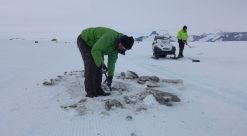
When your airport runway is located at 72 degrees south latitude and more than 4000 kilometres from the nearest major city, it better be in tiptop shape. But in Antarctica, where most runways are made of snow or ice, holes can be a big problem.
Norwegian research scientists are contributing to the development of the world’s hottest geothermal well in a non-volcanic area. The goal is to exploit the inexhaustible supply of heat from the interior of the Earth, and this calls for equipment that can withstand the most extreme conditions.
When companies like Cambridge Analytica use our data for political and commercial interests, it raises concerns about privacy and the integrity of democratic politics. But what exactly do our social media posts say about what we really think?
Every day people are whisked into Norwegian hospital emergency rooms with concussions. A new study shows that even mild head trauma can cause major problems in daily life.
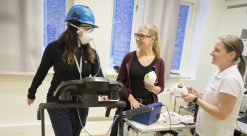
The smelting industry needs to promote the availability of dust masks of more than one size, according to the research scientists behind a recent working environment study at Norwegian smelting plants.
Excess CO2 in the atmosphere is making the oceans more acidic. Some studies show that’s bad news for fish, including commercially important species. But not all fish respond the same way.
Some people may have heard about the magical phenomenon of gand. When life seems to be against you or you’re plagued by one misfortune after another, you might jokingly say that you’ve been ‘ganda’ if you’re Norwegian. But what did gand really look like and why do we associate it with the Sami people?
Women who work on ships have to take responsibility for not being sexually harassed. This is the message according to a new book on gender, sexuality and power structures in large organizations.
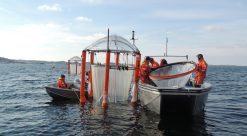
Aquaculture used to be a secondary income source for Norwegians. Now it’s become big business. Occupational safety has made steady advances, but some areas clearly still need to improve.
Many people have tried to find ways of preventing hurricanes before they make landfall, resulting in the loss of human lives. Norwegian researchers believe that the answer lies in cold bubbles.
The Privacy Statement is about how this website collects and uses visitor information. The statement contains information that you are entitled to when collecting information from our website, and general information about how we treat personal data.The legal owner of the website is the processing officer for the processing of personal data. It is voluntary for those who visit the web sites to provide personal information regarding services such as receiving newsletters and using the sharing and tip services. The treatment basis is the consent of the individual, unless otherwise specified.
1. Web analytics and cookies (cookies)
As an important part of the effort to create a user-friendly website, we look at the user pattern of those who visit the site. To analyze the information, we use the Google Analytics analysis tool.Google Analytics uses cookies (small text files that the site stores on the user's computer), which registers the users' IP address and provides information about the individual user's online movements. Examples of what the statistics give us answers to are; how many people visit different pages, how long the visit lasts, what websites users come from and what browsers are used. None of the cookies allow us to link information about your use of the site to you as an individual.The information collected by Google Analytics is stored on Google servers in the U.S.. The information received is subject to the Google Privacy Policy.An IP address is defined as a personal information because it can be traced back to a particular hardware and thus to an individual. We use Google Analytics's tracking code to anonymize the IP address before the information is stored and processed by Google. Thus, the stored IP address can not be used to identify the individual user.
2. Search
If the webpage has search function, it stores information about what keywords users use in Google Analytics. The purpose of the storage is to improve our information service. The search usage pattern is stored in aggregate form. Only the keyword is saved and they can not be linked to other information about the users, such as the IP addresses.
3. Share / Tips service
The "Share with others" feature can be used to forward links to the site by email, or to share the content of social networking. Tips for tips are not logged with us, but only used to add the tips to the community. However, we can not guarantee that the online community does not log this information. All such services should therefore be used wisely. If you use the email feature, we only use the provided email addresses to resend the message without any form of storage.
4. Newsletter
The website can send out newsletters by email if you have registered to receive this. In order for us to be able to send e-mail, you must register an e-mail address. Mailchimp is the data processor for the newsletter. The e-mail address is stored in a separate database, not shared with others and deleted when you unsubscribe. The e-mail address will also be deleted if we receive feedback that it is not active.
5. Registration, form
The website may have a form for registration, contact form or other form. These forms are available to the public to perform the tasks they are supposed to do.Registration form is for visitors to sign up or register.Contact form is for visitors to easily send a message to the website's contact person.We ask for the name of the sender and contact information for this. Personal information we receive is not used for purposes other than responding to the inquiry.The form is sent as email via Mailgun as a third party solution. The entire submission will be stored at Mailgun for 24 hours. Between 24 hours and 30 days, only mailheader is stored before the submission is deleted after 30 days. The reason for this storage is to confirm whether emails are sent from the website and forwarded to the correct recipient.Once the email is received by the recipient, it is up to the recipient to determine the data processing needs of the email.
6. Page and service functionality
Cookies are used in the operation and presentation of data from websites. Such cookies may contain language code information for languages selected by the user. There may be cookies with information supporting the load balancing of the system, ensuring all users the best possible experience. For services that require login or search, cookies can be used to ensure that the service presents data to the right recipient.