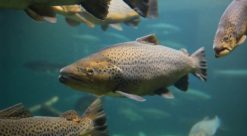
Making beer super fast from ancient Norwegian yeast
The distinctly Norwegian beer-brewing yeast kveik reduces fermentation time drastically. That’s a huge advantage, according to NTNU PhD candidate Christian Schulz.

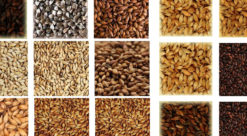
The distinctly Norwegian beer-brewing yeast kveik reduces fermentation time drastically. That’s a huge advantage, according to NTNU PhD candidate Christian Schulz.
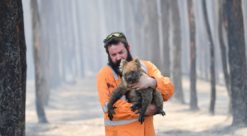
Bushfires are a normal part of the cycle of nature in Australia. But not like this. And it is going to get worse.
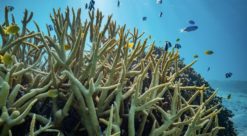
Several high-profile studies report that ocean acidification will affect coral reef fish behaviour enough to jeopardize their survival. One research team looked more deeply at this assertion — and found it is simply not true.
Cybernetics professor Kristin Ytterstad Pettersen has been awarded the BODE prize for her groundbreaking research in underwater robotics. It is one of the most prestigious technology prizes in the world.
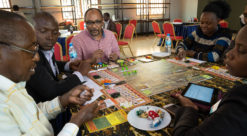
Researchers wanted to involve local people living around Kenya and Tanzania’s Serengeti-Mara parks in developing a sustainable future for them and the parks. They developed a board game to get people talking to the researchers — and to each other. That game has now won an international award.
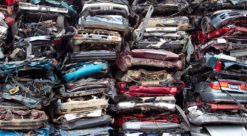
Lithium from Norwegian electric car batteries isn’t recycled that often. Instead, it ends up as waste when other metals it’s mixed with are recycled. But this may change.
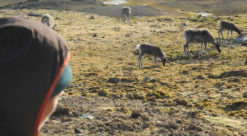
As reindeer go, the animals living on Svalbard might not be Santa’s first choice. They’re a smaller subspecies of their common mainland relatives, and to save energy they basically never run. But because they were nearly exterminated from Svalbard around 1900 — and were then protected in 1925 — the animals provide unique insights into how conservation can help species thrive.
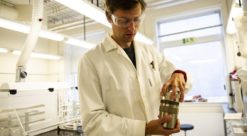
What if we could create artificial bees that helped us with food production? Ola Gjønnes Grendal cooks up the materials needed to do just this.

Do you have a phone or a car that always runs out of juice? Ingeborg Treu Røe is studying batteries that can store more energy and triple the range of your EV.
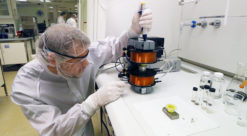
Materials scientists who work with nano-sized components have developed ways of working with their vanishingly small materials. But what if you could get your components to assemble themselves into different structures without actually handling them at all?
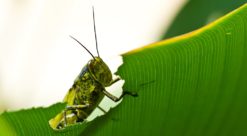
How can plants defend against different threats to their cell walls?
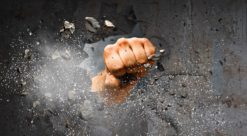
It sounds a bit strange, but some materials become stronger when subjected to stress. Why is that, and why do they eventually fail anyway?
A new study confirms the role of the aquaculture industry in the spread of resistant salmon lice in Norway.
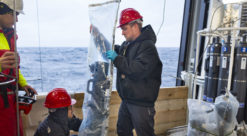
The Arctic’s once impenetrable ice cap is melting away, with profound consequences for everything from ocean circulation patterns to fish numbers and diversity. The Nansen Legacy Project, including NTNU biologists, chemists and engineers, is working to better understand what these changes mean for the Barents Sea and the Arctic Basin
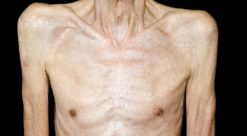
A solid tumour can cause muscle cells in the body to self-destruct. Many cancer patients die from the consequences. Now researchers are discovering more about how cancer cells in a tumour can take control of muscle cell wasting and trigger a chronic, serious condition.
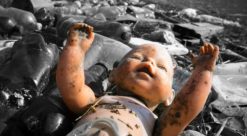
A recent study found that three out of four plastic consumer products contain harmful chemicals. Bioplastics contained toxicants, too.
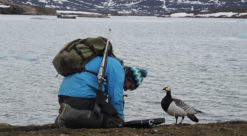
Climate change is the big wild card when it comes to the survival of many Arctic species. A new study shows that climate change will be both good and bad for Svalbard barnacle geese populations — although the balance may tip depending upon the severity of future temperature increases and how other species react.
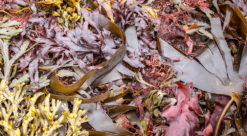
Algae cultivation is popular, but good uses for the raw material are still lacking. Researchers in Norway are set to do something about this, with the goal of fully using this resource.
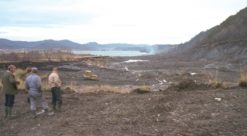
In theory, PoreLab studies porous media. But the research team dreams of being able to predict quick clay landslides as part of their results.
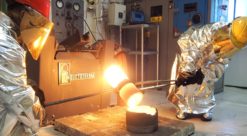
Renewable energy is fine, but often it’s needed at times other than when the wind is blowing or the sun makes an appearance. The energy needs to be stored – and a new method is on the horizon.
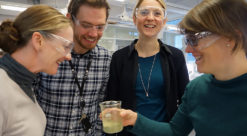
We need batteries that can store more energy. Algae may be a solution.
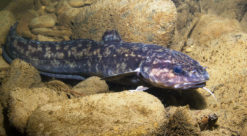
The discharge of pharmaceutical drugs is a major problem around the world, but a new study of the freshwater fish burbot shows that there is hope.
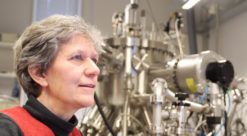
Fibre optic research can give us better medical equipment, improved environmental monitoring, more media channels – and maybe better solar panels.
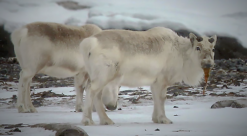
The arctic archipelago of Svalbard is already experiencing dramatic effects from climate change. A new study shows how these changes can force wild reindeer to graze on seaweed, a strategy that increases their likelihood of survival— and is recorded in their poop.