By listening to electric machines’ magnetic fields, faults can be detected that could prevent potential disasters with electric vehicles. The new method could also save power producers large sums of money.
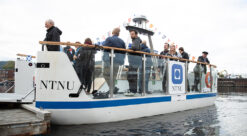
In earlier times, cities like Trondheim and Bergen had a ferryman who rowed people from place to place. They were the taxi drivers of the waterways. Now, a new, future-oriented form of water transport will be available to the public.
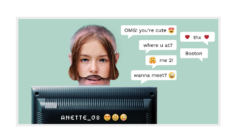
The number of abuse cases against children via the internet has increased by almost 50 per cent in five years, according to the Norwegian Broadcasting Corporation. Researchers at NTNU in Gjøvik have developed algorithms that can help detect planned online grooming by analysing conversations.
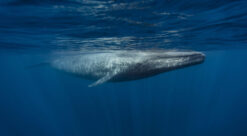
The Earth’s oceans are crisscrossed with roughly 1.2 million km of fibre optic telecommunication cables — enough to girdle the planet 30 times. Researchers have now succeeded in using fibre in a submarine cable as a passive listening system, enabling them to listen to and monitor whales.
Detecting colon cancer early is the key to survival and quality of life. Researchers at NTNU are working to make it easy for people to check their intestines from home.
Many buildings with solar cells produce more electricity than they consume themselves, but current legislation prevents surplus power from being sold to neighbouring consumers. A pilot project in Trondheim will be the first in the world to test a system that makes this possible.
Unauthorized people who break into an organization’s computer system can create a serious crisis. It’s critical that businesses, organizations and governments practise for possible attacks. The Norwegian Cyber Range at NTNU offers full-scale simulations of handling cyber and information security incidents.
Researchers have gained a first insight into how the brain structures higher-level information. By extracting and analysing data from a neural network of grid cells, they found that the collective neural activity is shaped like the surface of a doughnut. The study, from NTNU’s Kavli Institute for Systems Neuroscience and collaborators, is published in Nature.
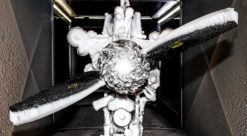
An airplane with significant ice build-up on its wings or propellers will sooner or later crash. Researchers at NTNU have come up with several findings that could enable drones to de-ice their wings automatically.
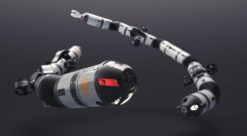
In the new Norwegian-produced disaster film North Sea, the snake robot Eelume plays a crucial role. Norwegian researchers and a Norwegian company are behind the newly released film.
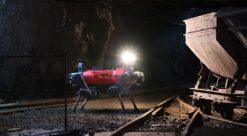
Team Cerberus has won an international competition with their subterranean robots, competing against top-ranked challengers. The group is headed by an NTNU professor.
A new report from the Intergovernmental Panel on Climate Change (IPCC) describes with unnerving detail just what can happen if nations fail to limit greenhouse gas emissions. But rapid international action will keep the worst consequences at bay, the panel said.
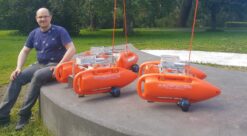
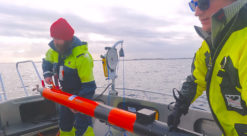
The microscopic, free-floating algae called phytoplankton — and the tiny zooplankton that eat them — are notoriously difficult to count. Researchers need to know how a warming climate will affect them both. A new kind of smart, lightweight autonomous underwater vehicle (LAUV) can help.
If you’ve ever wondered about the importance of shipping and navigation, think back to the grounding of the Ever Given container ship in the Suez Canal in March this year. The ship, stuck fast for six days, crippled shipping worldwide at the costs of billions of US dollars. A new edition of a popular textbook looks at marine guidance, navigation and control.
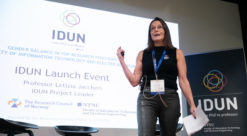
Letizia Jaccheri has won a Norwegian award recognizing her efforts to bring more women into the tech industry. She’s been instrumental in helping increase the number of women in leadership positions at the Norwegian University of Science and Technology (NTNU), where she herself is a professor of computer science.
What’s needed to be able to safely send a vessel to sea with no crew? How will these vessels detect a kayaker or a recreational boat that drifts into the course of the unmanned vessel? A new Centre for Research-Based Innovation, SFI AutoShip, will look for answers to these questions – and more.
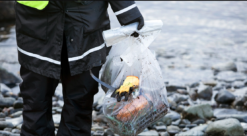
Plastic trash gets cleaned up along our beaches. But it’s also important to find out where the plastic comes from. A Norwegian app will soon be able to do this.
The Privacy Statement is about how this website collects and uses visitor information. The statement contains information that you are entitled to when collecting information from our website, and general information about how we treat personal data.The legal owner of the website is the processing officer for the processing of personal data. It is voluntary for those who visit the web sites to provide personal information regarding services such as receiving newsletters and using the sharing and tip services. The treatment basis is the consent of the individual, unless otherwise specified.
1. Web analytics and cookies (cookies)
As an important part of the effort to create a user-friendly website, we look at the user pattern of those who visit the site. To analyze the information, we use the Google Analytics analysis tool.Google Analytics uses cookies (small text files that the site stores on the user's computer), which registers the users' IP address and provides information about the individual user's online movements. Examples of what the statistics give us answers to are; how many people visit different pages, how long the visit lasts, what websites users come from and what browsers are used. None of the cookies allow us to link information about your use of the site to you as an individual.The information collected by Google Analytics is stored on Google servers in the U.S.. The information received is subject to the Google Privacy Policy.An IP address is defined as a personal information because it can be traced back to a particular hardware and thus to an individual. We use Google Analytics's tracking code to anonymize the IP address before the information is stored and processed by Google. Thus, the stored IP address can not be used to identify the individual user.
2. Search
If the webpage has search function, it stores information about what keywords users use in Google Analytics. The purpose of the storage is to improve our information service. The search usage pattern is stored in aggregate form. Only the keyword is saved and they can not be linked to other information about the users, such as the IP addresses.
3. Share / Tips service
The "Share with others" feature can be used to forward links to the site by email, or to share the content of social networking. Tips for tips are not logged with us, but only used to add the tips to the community. However, we can not guarantee that the online community does not log this information. All such services should therefore be used wisely. If you use the email feature, we only use the provided email addresses to resend the message without any form of storage.
4. Newsletter
The website can send out newsletters by email if you have registered to receive this. In order for us to be able to send e-mail, you must register an e-mail address. Mailchimp is the data processor for the newsletter. The e-mail address is stored in a separate database, not shared with others and deleted when you unsubscribe. The e-mail address will also be deleted if we receive feedback that it is not active.
5. Registration, form
The website may have a form for registration, contact form or other form. These forms are available to the public to perform the tasks they are supposed to do.Registration form is for visitors to sign up or register.Contact form is for visitors to easily send a message to the website's contact person.We ask for the name of the sender and contact information for this. Personal information we receive is not used for purposes other than responding to the inquiry.The form is sent as email via Mailgun as a third party solution. The entire submission will be stored at Mailgun for 24 hours. Between 24 hours and 30 days, only mailheader is stored before the submission is deleted after 30 days. The reason for this storage is to confirm whether emails are sent from the website and forwarded to the correct recipient.Once the email is received by the recipient, it is up to the recipient to determine the data processing needs of the email.
6. Page and service functionality
Cookies are used in the operation and presentation of data from websites. Such cookies may contain language code information for languages selected by the user. There may be cookies with information supporting the load balancing of the system, ensuring all users the best possible experience. For services that require login or search, cookies can be used to ensure that the service presents data to the right recipient.