Several studies have demonstrated that tiny biological particles called exosomes may carry important information about diseases. We are currently searching for these tiny particles in cooperation with our project partners. If we succeed, we can use the exosomes to predict diseases before they occur.
The new vaccines designed to combat the Covid-19 virus have been developed in record time, causing some people to be sceptical of taking them. Should we be worried about side effects? Norwegian SciTech News has been talking to two research scientists about this issue.
Many low and middle-income countries, particularly in sub-Saharan Africa, don’t have enough surgeons to perform vital surgeries, such as groin hernia repairs. Training non-doctor associate clinicians in this procedure provides a safe and effective solution, a new study shows.
It’s easy to believe that society’s treatment of difficult, violent and criminally mentally ill people has become more humane over time. But that’s not the case. How patients at the end of the 19th century actually felt is difficult to say, but they were at least less exposed to mechanical coercion, according to an NTNU historian.
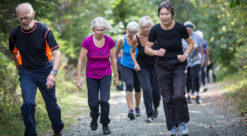
High-intensity interval training strengthens the heart even more than moderate exercise does. Now researchers have found several answers to what makes hard workouts so effective.
Gene therapy is the most effective method to be able to provide health benefits you normally gain through physical exercise. This means of “training” could be helpful for folks who can’t exercise in the usual ways.
The 2020 ISI/Web of Science Highly Cited Researchers list includes seven researchers affiliated with NTNU. The list includes authors who have multiple articles ranked in the top 1 per cent by citation in their field over the last decade.
Pfizer has recently announced that it is ready with a Covid-19 vaccine that is 90 percent effective. The vaccine is a so-called mRNA vaccine that has been developed jointly by Pfizer and BioNTech. But what is mRNA technology, and how does it work?
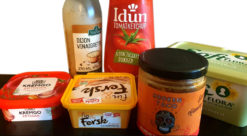
To reduce the fat content in food products, starch has to be added to achieve a good consistency. Cellulose might be able to take over this role in reduced-fat products. And it’s calorie free, too!
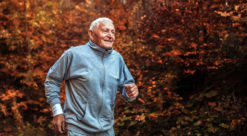
Have you passed your supposed prime and feel like it takes more to get fired up? The good news is you’re far from alone. And you can do something about it.
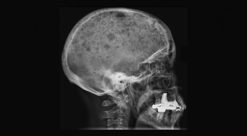
A sizable research consortium coordinated by NTNU and St. Olavs Hospital will analyse large amounts of MRI exam data from around the world. The data will help researchers gain important new understanding about brain injuries in people who have had trauma to the head. The goal is to improve patient health care.
Bone marrow cancer is currently an incurable disease that affects about 400 people in Norway every year. Professor Therese Standal at NTNU has now found an important reason for bone destruction in people with this disease.
Five years of high-intensity interval training increased quality of life, improved fitness and might very well have extended the lives of participants in the Generation 100 study.
Tricia Larose is a cancer researcher who did her PhD and a postdoc at NTNU. But her research interests went beyond studying cancer — to writing about the disease for children.
The Norwegian University of Science and Technology (NTNU) has signed agreements to deliver as many as one million COVID-19 test kits to DTU, the Technical University of Denmark, and APS LABS, an Indian biotech company. “It is very positive that this technology can now also be useful internationally,” says Bent Høie, Norway’s Minister of Health and Care Services.
Every third child in the world has too much lead in their body, according to a report from UNICEF and Pure Earth. Norwegian children are also affected.
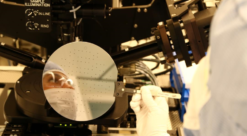
Currently, ultrasound machines are operated primarily by specialists because it requires extensive experience to interpret the images. Norwegian researchers are aiming to tackle this issue.
Children who show signs of addiction-like gaming are not more susceptible to mental health problems than their non-gaming peers. Some even experience less anxiety than others.
The coming wave of ageing Westerners could turn into a tsunami, but new technology is available to help. What kind of technology is needed? And do urban and rural areas need the same solutions?
The Privacy Statement is about how this website collects and uses visitor information. The statement contains information that you are entitled to when collecting information from our website, and general information about how we treat personal data.The legal owner of the website is the processing officer for the processing of personal data. It is voluntary for those who visit the web sites to provide personal information regarding services such as receiving newsletters and using the sharing and tip services. The treatment basis is the consent of the individual, unless otherwise specified.
1. Web analytics and cookies (cookies)
As an important part of the effort to create a user-friendly website, we look at the user pattern of those who visit the site. To analyze the information, we use the Google Analytics analysis tool.Google Analytics uses cookies (small text files that the site stores on the user's computer), which registers the users' IP address and provides information about the individual user's online movements. Examples of what the statistics give us answers to are; how many people visit different pages, how long the visit lasts, what websites users come from and what browsers are used. None of the cookies allow us to link information about your use of the site to you as an individual.The information collected by Google Analytics is stored on Google servers in the U.S.. The information received is subject to the Google Privacy Policy.An IP address is defined as a personal information because it can be traced back to a particular hardware and thus to an individual. We use Google Analytics's tracking code to anonymize the IP address before the information is stored and processed by Google. Thus, the stored IP address can not be used to identify the individual user.
2. Search
If the webpage has search function, it stores information about what keywords users use in Google Analytics. The purpose of the storage is to improve our information service. The search usage pattern is stored in aggregate form. Only the keyword is saved and they can not be linked to other information about the users, such as the IP addresses.
3. Share / Tips service
The "Share with others" feature can be used to forward links to the site by email, or to share the content of social networking. Tips for tips are not logged with us, but only used to add the tips to the community. However, we can not guarantee that the online community does not log this information. All such services should therefore be used wisely. If you use the email feature, we only use the provided email addresses to resend the message without any form of storage.
4. Newsletter
The website can send out newsletters by email if you have registered to receive this. In order for us to be able to send e-mail, you must register an e-mail address. Mailchimp is the data processor for the newsletter. The e-mail address is stored in a separate database, not shared with others and deleted when you unsubscribe. The e-mail address will also be deleted if we receive feedback that it is not active.
5. Registration, form
The website may have a form for registration, contact form or other form. These forms are available to the public to perform the tasks they are supposed to do.Registration form is for visitors to sign up or register.Contact form is for visitors to easily send a message to the website's contact person.We ask for the name of the sender and contact information for this. Personal information we receive is not used for purposes other than responding to the inquiry.The form is sent as email via Mailgun as a third party solution. The entire submission will be stored at Mailgun for 24 hours. Between 24 hours and 30 days, only mailheader is stored before the submission is deleted after 30 days. The reason for this storage is to confirm whether emails are sent from the website and forwarded to the correct recipient.Once the email is received by the recipient, it is up to the recipient to determine the data processing needs of the email.
6. Page and service functionality
Cookies are used in the operation and presentation of data from websites. Such cookies may contain language code information for languages selected by the user. There may be cookies with information supporting the load balancing of the system, ensuring all users the best possible experience. For services that require login or search, cookies can be used to ensure that the service presents data to the right recipient.