Mini2P – an open-source miniature brain microscope
Meet Mini2P – a tiny brain explorer that allows us to discover completely new landscapes in the live and active brain.

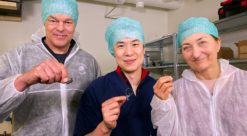
Meet Mini2P – a tiny brain explorer that allows us to discover completely new landscapes in the live and active brain.

You may think that they’re random movements, but they’re not: The way you use your eyes when perceiving the world around you reveals something significant about you and how you engage with the world. It can even be a diagnostic of brain disease.
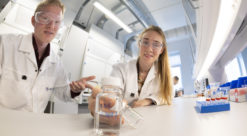
These research scientists are studying Nature’s own nanomaterials – applying tools and methods that are normally used for something quite different. Their work has provided us with knowledge that may revolutionise everything from medical treatments to building constructions.
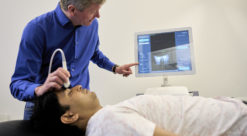
A new invention may be on the verge of replacing a costly cranial surgical procedure currently being performed on some traffic accident victims and other patient groups. The ultrasound-based technology has now been granted CE approval for the European market.
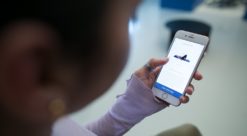
Back pain is very common. But a new app called selfBACK can help us get better.
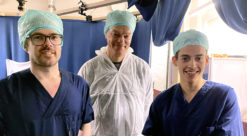
Nobel laureate and Kavli Institute for Systems Neuroscience founding director and professor Edvard Moser says a new technology “opens doors to experiments we could only dream about 5 years ago.” The technology in question is called Neuropixels 2.0, a new favourite in the neuroscientists’ toolbox.
It’s been 20 years since the first draft sequence of the human genome was published in the journals Nature and Science. The result led then-President Bill Clinton to state that we are now learning the language in which life was written, and that “doctors will increasingly be able to cure diseases like Alzheimer’s, Parkinson’s, diabetes, and cancer by attacking their genetic roots.”
Sequencing 30 000 genes has changed the world, but in a different way than expected.
NTNU researchers have started testing a COVID-19 test strategy developed in house: saliva samples you take yourself, without involving health personnel. This means that researchers may be able to knock back the coronavirus epidemic faster, more easily and much more cheaply than today. The method is now being tested on NTNU students.
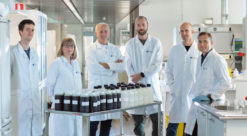
The Norwegian University of Science and Technology (NTNU) has signed agreements to deliver as many as one million COVID-19 test kits to DTU, the Technical University of Denmark, and APS LABS, an Indian biotech company. “It is very positive that this technology can now also be useful internationally,” says Bent Høie, Norway’s Minister of Health and Care Services.

Chronic intestinal inflammation requires special individualized treatment. Finding the right treatment for each person may soon become easier.
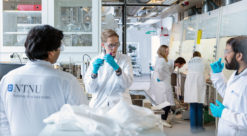
NTNU researchers recently figured out a whole new method for testing people for the coronavirus. The university is now producing tests on a continuous basis, under the auspices of the Norwegian Directorate of Health. Currently 100 000 tests a day are being manufactured, with production soon likely to be scaled up dramatically.
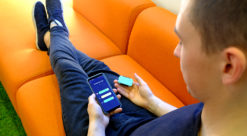
A daily 10-minute training session using an app could reduce migraine attacks for many sufferers, according to researchers.
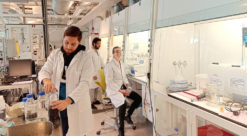
Two weeks ago, doctors at St. Olavs Hospital in Trondheim were running out of reagents needed to do COVID-19 tests. They asked colleagues at NTNU to develop a backup solution. Now, Norway is gearing up to use the new approach to test 150,000 people a week after Easter.
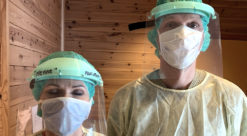
NTNU in Gjøvik has developed a better design for face shields, which are part of the personal protection equipment used by medical professionals. Major production of the new shields – up to 250 per day – is starting on the university’s 3D printers this week.
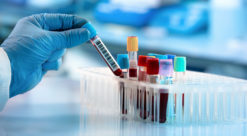
An analysis of 5 000 proteins from a blood sample is providing valuable information on a variety of diseases we might get or be at risk for. “Sensational” is the word from Christian Jonasson at the HUNT Research Centre about the US-British-Norwegian study.
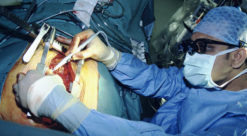
Cholesterol crystals form from “bad” cholesterol and are found in plaques that line blood vessels. When these plaques rupture, they can cause heart attacks or strokes. New research suggests that cholesterol crystals in plaques can actually trigger strokes and heart attacks.

You may not be able to hear them, but they help to diagnose and treat patients every day. In the past 40 years, ultrasound imaging has gone from blurry black-and-white images, to sharp 3D images in real time. And the technology is still developing. Now, artificial intelligence is being tested for aid in interpreting ultrasound images.

For children who need help from so-called welfare technology in order to manage their day-to-day lives, it is important that the assistance they get is invisible to others. Many obtain effective help from an app installed on their phones.
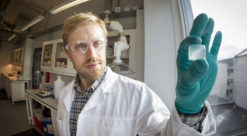
A Norwegian-Swiss research team has succeeded in growing cartilage tissue cells using algae. Moreover, the new cells can reduce joint inflammation. This news gives hope for people suffering from arthrosis, also known as osteoarthritis.

Omega-3 supplements may help slow the development of diseases like cancer, Alzheimer’s and multiple sclerosis.
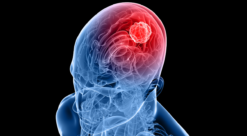
The fluid, which resembles brain tissue, makes ultrasound images easier to interpret during an operation. This will make it easier for surgeons to remove brain tumours more accurately.
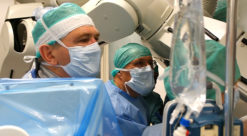
A knitted rag sock inspired this professor and MD to develop a stent that can be removed.
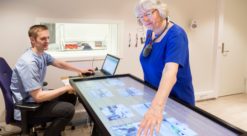
More than 20 per cent of people with hearing aids use their devices for less than one hour a day because of problems they encounter with tuning the settings. But now users can participate in fine-tuning their devices themselves.
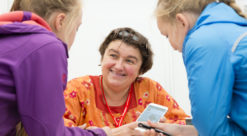
People suffering from cystic fibrosis (CF) are unable to absorb sufficient fats and proteins from the food they eat. But an app is on the way that will help them control their illness.