Simulating her way to better batteries
Do you have a phone or a car that always runs out of juice? Ingeborg Treu Røe is studying batteries that can store more energy and triple the range of your EV.

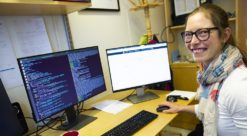
Do you have a phone or a car that always runs out of juice? Ingeborg Treu Røe is studying batteries that can store more energy and triple the range of your EV.
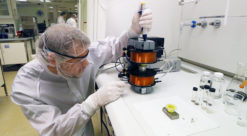
Materials scientists who work with nano-sized components have developed ways of working with their vanishingly small materials. But what if you could get your components to assemble themselves into different structures without actually handling them at all?
Nature has long been an inspiration for materials engineers and designers — just think of Velcro, the ubiquitous stick-to-itself tape that was created by a Swiss engineer after he picked burs out of his dog’s coat. Now a team of NTNU researchers has looked in more detail at how tiny conical structures on a lotus leaf or insect’s wing repel water and help keep it clean.

It sounds a bit strange, but some materials become stronger when subjected to stress. Why is that, and why do they eventually fail anyway?

One way to reduce flight shame may lie in a ring of flames. And in the gas that’s generated in an outhouse.
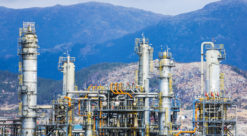
Why is there so much talk about storing CO2 underground? Doesn’t it cost more than it’s worth? Here we provide the research scientists’ answers and explanations of why CCS is climate technology that we are completely dependent on. And yes, this can be performed in a safe manner.
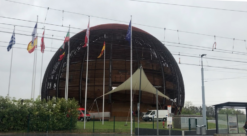
CERN’s two Large Hadron Colliders detectors to get a climate-friendly cooling system upgrade.
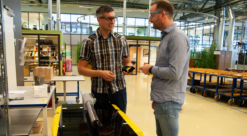
A small machining company in Norway is the first in the world to use digitalised tools for advanced turning. The technology enables the prevention of damage to complex and expensive parts used in the aircraft and gas industries.
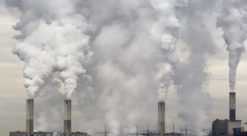
The Norwegian company Arbaflame is intent on persuading the world to abandon polluting coal power. The new technology makes it possible to replace coal with eco-friendly wood pellets.
Through the Research Centre on Zero Emission Neighbourhoods (FME ZEN) in Smart Cities, NTNU has received funding from the EU to research sustainable plus energy neighbourhoods in Europe. SINTEF and OBOS are partners.
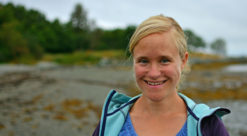
Francesca Verones has been awarded a prestigious grant by the European Research Council of EUR 1 million to study how people affect the oceans.
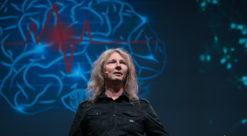
We are approaching the limit for how much more microprocessors can be developed. Gunnar Tufte proposes building computers in a completely new way, inspired by the human brain and nanotechnology.
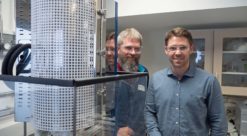
Norwegian scientists have developed a material which can make hydrogen from water vapor, instead of liquid water. It pays off, because heat is cheaper than electricity.
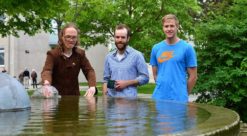
He solved a 127-year-old physics problem on paper and proved that off-centred boat wakes could exist. Five years later, practical experiments proved him right.
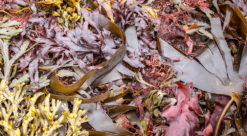
Algae cultivation is popular, but good uses for the raw material are still lacking. Researchers in Norway are set to do something about this, with the goal of fully using this resource.

A new tool will make it easier and cheaper to train individuals who defend us from computer attacks.
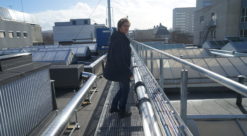
When energy researchers carry out experiments to investigate safe and efficient CO2 transport on the roof of the thermal power engineering laboratories at Gløshaugen, Trondheim, the noise they make will be like a jet engine.
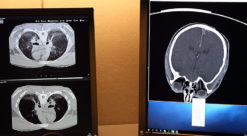
Sometimes it’s hard to know what a person has actually died from. But post-mortem CT scans may provide a useful tool.
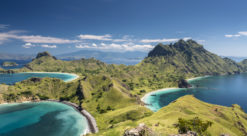
How can we supply renewable energy to Indonesia, whose large population is spread over more than 6,000 islands?
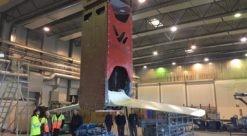
The boat wings started as an unfinished idea in Eirik Bøckmann’s head. Now they’re being mounted on a ferry in the Faroe Islands.
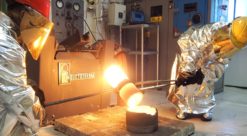
Renewable energy is fine, but often it’s needed at times other than when the wind is blowing or the sun makes an appearance. The energy needs to be stored – and a new method is on the horizon.
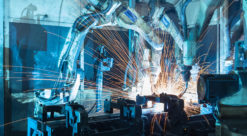
Some Norwegian companies have moved industrial production home from low-cost countries. Could reshoring become a trend?
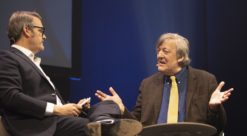
“We may be a mere 20 years away from creating artificial life,” says Stephen Fry. He warns that these new life forms won’t see any need to keep us, and may instead look at us as pests.

A recently developed app with an in-built “enzyme calculator” reduces stomach pains and intestinal problems among patients with cystic fibrosis – a disease of the lungs and intestinal tract.