New research supports what trade unions have always claimed: unionization pays off. Unions contribute to higher wages for both genders, and because women are the main winners, helps close the wage gap between the sexes.
Pablo Picasso’s painting ‘Science and Charity’ from 1897 depicts a meek and compliant patient lying placidly in bed between the doctor and the nurse. Picasso would hardly recognize the modern-day patient.
Marine microplastics affect algae’s ability to grow and photosynthesize. Researchers have now calculated what impact this has on the greenhouse effect and the ocean’s ability to absorb carbon dioxide.
Maternal mortality in Sierra Leone used to be among the highest in the world. A 15-year-old non-profit programme that trains community health officers to do life-saving surgeries has helped slash that risk by two-thirds.
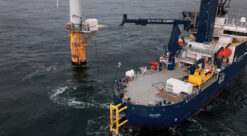
The substructures for fixed offshore wind turbines weigh thousands of tonnes. If you are planning to install them at sea, only about five vessels in the world can lift that much weight. So now researchers are testing a completely new alternative.
In light of recent events, it is time for consumers to start wielding their power to influence the AI giants. Replace ChatGPT with Claude, and do not use the Microsoft Copilot chatbot.
Salmon usually go about their lives quietly, unless they are stressed. Their clicking sound is so unusual that researchers don’t even know if they make the sound with their heads or – yes, the other end.
Don’t have time to exercise because of a busy schedule? Or are you simply not very motivated? You’ll be pleased to learn that just 10 minutes of exercise every other day is all it takes. However, you really need to exert yourself during those 10 minutes.
This past winter, people in Trondheim have caught glimpses of a boat that seems to fly over the water out on the fjord. Many have also taken part in test trips. NTNU researchers have investigated what it will take for people to trust a boat that runs almost without a crew on board.
Artificial intelligence provides good answers to mental health questions. Young people even like ChatGPT’s responses better than healthcare professionals’ advice.
Connecting ships to charging stations is a bit of a hassle when you are out at sea. But with a new magnetic charging plug for boats – it is about as easy as putting a cup in a cup holder.
High-speed passenger vessels with diesel engines are currently the least environmentally friendly form of passenger transport – but they do not have to be.
Artificial intelligence is currently controlled by a number of tech giants in the United States and China. One professor believes Europe can choose to take a smarter and more democratic path.
Concrete has never had to meet such high standards. Deviations cannot exceed millimetre level. Even the curvature of the Earth must be taken into account in building the world’s most advanced laboratories.
The stockpile of German ammunition left in Norway in 1945 could have been cleared and dismantled by the Germans. Norway declined the offer and began dumping it in Lake Mjøsa and other lakes instead.
Scientists are working to understand how magnetic currents from the sun spread beneath the Earth’s crust when the northern lights dance across the sky. Their goal is to tame its “dark twin” and prevent damage to our power grid.
More than 4000 ageing bridges in Norway need to be secured with new railings. NTNU researchers are now crash testing new railings to see if it is safe to install them directly on to the old bridges.
The Privacy Statement is about how this website collects and uses visitor information. The statement contains information that you are entitled to when collecting information from our website, and general information about how we treat personal data.The legal owner of the website is the processing officer for the processing of personal data. It is voluntary for those who visit the web sites to provide personal information regarding services such as receiving newsletters and using the sharing and tip services. The treatment basis is the consent of the individual, unless otherwise specified.
1. Web analytics and cookies (cookies)
As an important part of the effort to create a user-friendly website, we look at the user pattern of those who visit the site. To analyze the information, we use the Google Analytics analysis tool.Google Analytics uses cookies (small text files that the site stores on the user's computer), which registers the users' IP address and provides information about the individual user's online movements. Examples of what the statistics give us answers to are; how many people visit different pages, how long the visit lasts, what websites users come from and what browsers are used. None of the cookies allow us to link information about your use of the site to you as an individual.The information collected by Google Analytics is stored on Google servers in the U.S.. The information received is subject to the Google Privacy Policy.An IP address is defined as a personal information because it can be traced back to a particular hardware and thus to an individual. We use Google Analytics's tracking code to anonymize the IP address before the information is stored and processed by Google. Thus, the stored IP address can not be used to identify the individual user.
2. Search
If the webpage has search function, it stores information about what keywords users use in Google Analytics. The purpose of the storage is to improve our information service. The search usage pattern is stored in aggregate form. Only the keyword is saved and they can not be linked to other information about the users, such as the IP addresses.
3. Share / Tips service
The "Share with others" feature can be used to forward links to the site by email, or to share the content of social networking. Tips for tips are not logged with us, but only used to add the tips to the community. However, we can not guarantee that the online community does not log this information. All such services should therefore be used wisely. If you use the email feature, we only use the provided email addresses to resend the message without any form of storage.
4. Newsletter
The website can send out newsletters by email if you have registered to receive this. In order for us to be able to send e-mail, you must register an e-mail address. Mailchimp is the data processor for the newsletter. The e-mail address is stored in a separate database, not shared with others and deleted when you unsubscribe. The e-mail address will also be deleted if we receive feedback that it is not active.
5. Registration, form
The website may have a form for registration, contact form or other form. These forms are available to the public to perform the tasks they are supposed to do.Registration form is for visitors to sign up or register.Contact form is for visitors to easily send a message to the website's contact person.We ask for the name of the sender and contact information for this. Personal information we receive is not used for purposes other than responding to the inquiry.The form is sent as email via Mailgun as a third party solution. The entire submission will be stored at Mailgun for 24 hours. Between 24 hours and 30 days, only mailheader is stored before the submission is deleted after 30 days. The reason for this storage is to confirm whether emails are sent from the website and forwarded to the correct recipient.Once the email is received by the recipient, it is up to the recipient to determine the data processing needs of the email.
6. Page and service functionality
Cookies are used in the operation and presentation of data from websites. Such cookies may contain language code information for languages selected by the user. There may be cookies with information supporting the load balancing of the system, ensuring all users the best possible experience. For services that require login or search, cookies can be used to ensure that the service presents data to the right recipient.