Norway has been given a floating ocean laboratory
The OceanLab will contribute to research on underwater robotics, aquaculture, autonomous shipping and environmental research.
The OceanLab will contribute to research on underwater robotics, aquaculture, autonomous shipping and environmental research.
Intelligent food handling by robots can boost productivity and reduce waste in the production chain. Meet the robot with visual and tactile sensing, capable of handling compliant food objects.
Researchers working with industrial partners have developed the world’s first heat pump producing temperatures of up to 180 degrees celcius. Such record high temperatures will enable one fifth of European industry to reduce its energy consumption by up to 70 percent, and become entirely climate neutral.
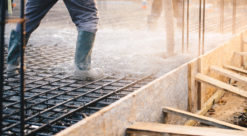
Ten cubic kilometres of concrete, equivalent to the volume of Mount Everest, are used in construction projects every year, resulting in huge volumes of emissions. But a new eco-friendly cement may help to reduce our global climate footprint.

A team of researchers studying our footprint in the Arctic has taken samples of marine animals and wastewater linked to tourism. Their findings have revealed surprising levels of pharmaceutical drugs.
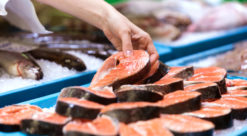
The rest raw materials left after a salmon has been filleted are equivalent to more than 60 percent of its slaughtered weight. It will soon be possible to convert these into a high-quality fish oil, taste-neutral fish proteins, fish gelatin and flame-retardant materials. Ensuring that not a single gramme goes to waste.
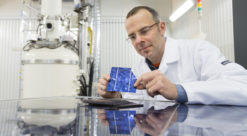
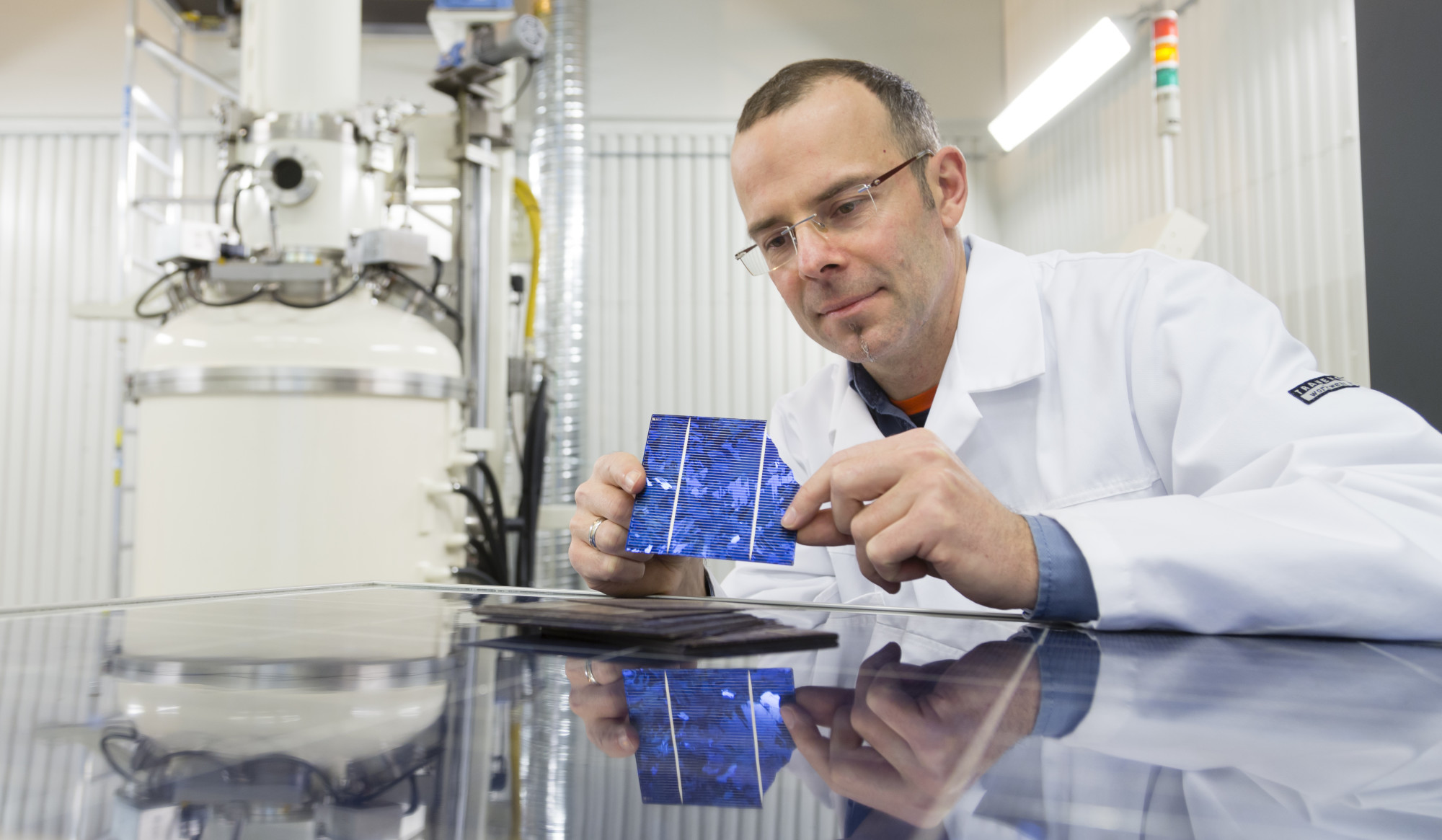
The search for the perfect solar cell is not yet over. Norwegian researchers are now adopting a new approach to the cells’ raw material, crystalline silicon, with the aim of making the electricity-generating cells even more efficient.
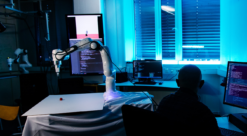
Newly developed technology has given robots the ability to learn new skills, enabling them to perform complex tasks and work alongside humans. This innovation can benefit many crucial societal functions, such as food production
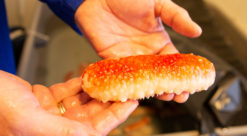
Sea cucumbers are internationally known as a superfood, as they contain many healthy substances. They are highly sought after by both Chinese restaurants and health food manufacturers. However, many sea cucumber species are threatened with extinction, so researchers want to farm them commercially – on land.
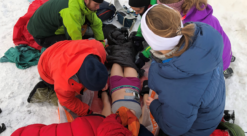
It is very likely that the human body develop hypothermia following an accident. Maintaining a patient’s body temperature on the way to hospital can be crucial to survival. The prototype of a new and improved solution is now ready.

If this solar and wind-based hydrogen project succeeds, it may become a model for many thousands of other small island communities worldwide.
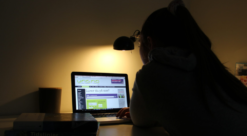
An analysis of almost 300,000 unsolicited questions written by young Norwegians on the website ung.no, has provided major insights into what they’re really interested in today. Their bodies, health and identity are among the topics heading the list.
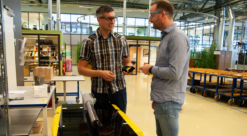
A small machining company in Norway is the first in the world to use digitalised tools for advanced turning. The technology enables the prevention of damage to complex and expensive parts used in the aircraft and gas industries.
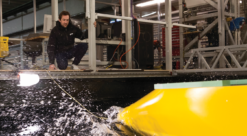
We need to cut both global and local emissions from shipping. The picture is complex, but research is showing that there are many ways to meet this goal.

Cement manufacture accounts for as much as seven per cent of global greenhouse gas emissions. A new hybrid technology makes it easier and less expensive to capture and purify CO2 produced by the industry. And the technology can be retrofitted to existing plants.
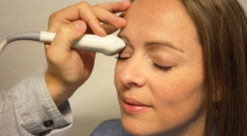
A new study confirms the efficacy of a new diagnostic tool that utilises ultrasound to measure intracranial pressure following accidents. The technology will now be provided with artificial intelligence so that ambulance personnel can carry out examinations at accident scenes.

The problem is global, say researchers, and caused primarily by ignorance and a lack of understanding.
A new EU project will provide greener cities through cheaper and simpler solar cell systems.

The filter will first be used to recover aircraft de-icing chemicals. In the future it will also be used in urban areas to remove environmental toxins, pollution and probably microplastics.

Waste heat and locally-produced renewable energy can be generated by compact, “urban power plants” that are efficient enough to supply heat to entire housing estates.
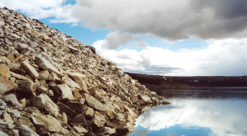
An international team of researchers has concluded that operational funding should continue to be provided for the production of renewable energy in Europe, provided that such support is progressively reduced over time.
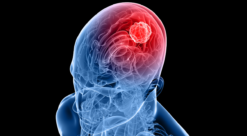
The fluid, which resembles brain tissue, makes ultrasound images easier to interpret during an operation. This will make it easier for surgeons to remove brain tumours more accurately.

As the world struggles to make progress to limit climate change, researchers are finding ways to adapt to warmer winter temperatures — by developing environmentally friendly ways of producing artificial snow.

A crackling log fire is pure HYGGE. But what’s actually the best way to have log fires in our modern, well-sealed and fully-insulated homes?

Universal adoption of the ISA speed warning system in Norway could reduce both the average speed of vehicles and their emissions, concludes a recent SINTEF report. Lower speeds also lead to fewer fatalities and serious injuries on the roads.

Norwegian cities are expanding very rapidly and in the areas surrounding many of them, naturally-occurring aggregates for asphalt and concrete production are becoming scarce. The solution may lie in local rock outcrops.
A district heating grid supplying low temperature heat is set to boost surplus and renewably-sourced heat utilisation.

Warmer weather and more rain have made surface water an environmental problem.

Blue clay from Norway is emerging as a climate-friendly alternative to cements used to make concrete – turning a waste material into a resource.

Pressure measurements enable a newly developed fall detector to “observe” falls that current sensors do not register, thus improving safety for older people who live at home.
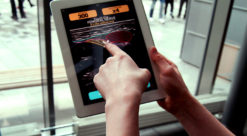
Ultrasound is coming into ever more widespread use, and an app that trains health personnel to interpret ultrasound images has just been developed.