NTNU cools down CERN
CERN’s two Large Hadron Colliders detectors to get a climate-friendly cooling system upgrade.

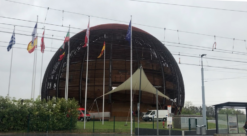
CERN’s two Large Hadron Colliders detectors to get a climate-friendly cooling system upgrade.
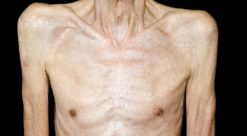
A solid tumour can cause muscle cells in the body to self-destruct. Many cancer patients die from the consequences. Now researchers are discovering more about how cancer cells in a tumour can take control of muscle cell wasting and trigger a chronic, serious condition.

A recent study found that three out of four plastic consumer products contain harmful chemicals. Bioplastics contained toxicants, too.
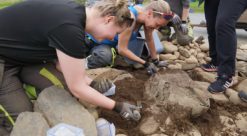
“Vessels like these were imported from the Roman Empire and confirm that this was an area of status and wealth during Roman times,” says archaeologist Merete Moe Henriksen.
Through the Research Centre on Zero Emission Neighbourhoods (FME ZEN) in Smart Cities, NTNU has received funding from the EU to research sustainable plus energy neighbourhoods in Europe. SINTEF and OBOS are partners.
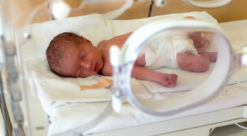
Parents with children in the neonatal intensive care unit want more information, supervision and advice to meet their children’s needs, according to results from a new PhD dissertation.
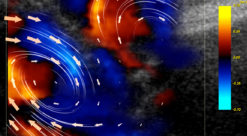
You may not be able to hear them, but they help to diagnose and treat patients every day. In the past 40 years, ultrasound imaging has gone from blurry black-and-white images, to sharp 3D images in real time. And the technology is still developing. Now, artificial intelligence is being tested for aid in interpreting ultrasound images.
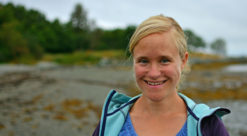
Francesca Verones has been awarded a prestigious grant by the European Research Council of EUR 1 million to study how people affect the oceans.
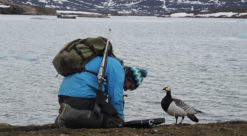
Climate change is the big wild card when it comes to the survival of many Arctic species. A new study shows that climate change will be both good and bad for Svalbard barnacle geese populations — although the balance may tip depending upon the severity of future temperature increases and how other species react.
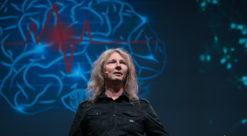
We are approaching the limit for how much more microprocessors can be developed. Gunnar Tufte proposes building computers in a completely new way, inspired by the human brain and nanotechnology.
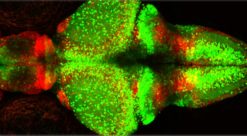
What happens during an epileptic seizure? A recent study suggests that seizures occur after certain defence cells in the brain break down.
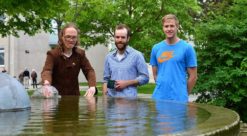
He solved a 127-year-old physics problem on paper and proved that off-centred boat wakes could exist. Five years later, practical experiments proved him right.

Our understanding of how our psyche affects our immune system – and vice versa – has been limited. Until now.
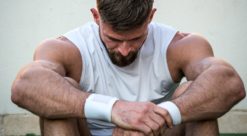
The dreaded condition known as rhabdomyolysis may be much more common after a particularly intense training session than you’d think. But for most people, the only symptom is being slightly more sore than usual.

English loan words are easy to recognize. It’s more challenging to see how English influences Norwegian expressions and grammar.

Combatting global warming will require major changes in land use, a new climate change report says. One important change could be decreasing the amount of land used to produce livestock — which means that people would have to eat less meat.
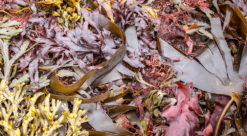
Algae cultivation is popular, but good uses for the raw material are still lacking. Researchers in Norway are set to do something about this, with the goal of fully using this resource.
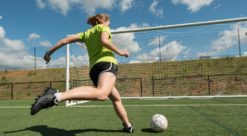
Passion, grit, the right mindset and support from others are what’s needed to rank among the best in a given field. That’s the only way you’ll be able to keep yourself motivated and endure all the practice that’s required.
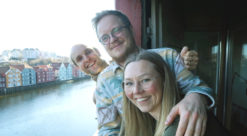
Climate frustration led three former NTNU students to quit their secure and well-paying jobs. Instead, they developed a digital toolbox for the green shift. Now the world is knocking on their door.

A new tool will make it easier and cheaper to train individuals who defend us from computer attacks.
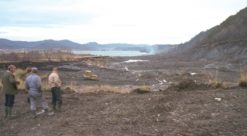
In theory, PoreLab studies porous media. But the research team dreams of being able to predict quick clay landslides as part of their results.
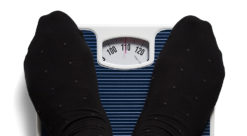
A new study shows that every third Norwegian has a fatty liver. You can get it even if you don’t drink alcohol. If you are out of shape, the probability is much higher.
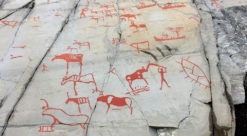
Regular protective treatment of rock carvings and paintings has done a good job protecting this important part of Norway’s cultural heritage. But according to the current schedule, the unique programme will end next year.

Women who experience hypertensive disorders while pregnant are more susceptible to developing cardiovascular disease later in life. But the main reason doesn’t stem from the hypertensive disorder itself.