Norwegian security patent in use at all USA border crossings
Recording and storing millions of fingerprints is a high-risk operation. Scientists are constantly searching for new and better security solutions to protect your information.


Recording and storing millions of fingerprints is a high-risk operation. Scientists are constantly searching for new and better security solutions to protect your information.
Forty-six science superstars will gather in Trondheim this 18-23 June for the Starmus Science Festival, a one-of-a-kind event that mixes cool science seminars with red-hot concerts.
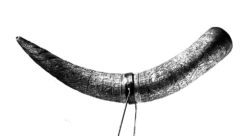
After the Reformation, Norway’s Olav Haraldsson was no longer supposed to be worshipped as a saint. An Icelandic drinking horn offers some clues on how the saint’s status changed.
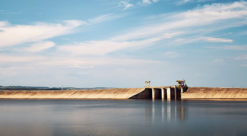
While there is considerable opposition to dams and reservoirs in the Western world, reservoirs built to store water during the rainy season so it can be used during the dry season can save lives and secure values when the rains fail.
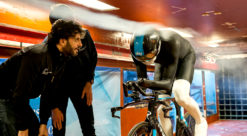
This July, Team Sky rider Chris Froome will try for his fourth victory in the Tour de France. The aerodynamic clothing he’ll likely wear during time trials is being developed at NTNU.
The close relationship between SINTEF and NTNU has catapulted the university to a number one ranking among the world’s universities when it comes to publishing in partnership with a single industry collaborator.

Adolescents who are open to casual sex are more often involved in sexual harassment – both as victims and as perpetrators.

A thought is a thought. It does not reflect reality. New research shows that learning how to ruminate less on thoughts and feelings has a positive effect for individuals with depression.
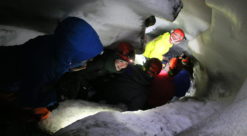
Svalbard’s cold climate means that its glaciers are solid and frozen to the ground. This allows for winter travel into unique ice caves that contain plants and material that froze into the glacial ice as it formed.
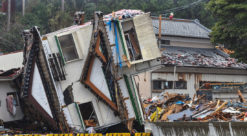
The 11 March 2011 Tohoku-Oki earthquake was the largest and most destructive in the history of Japan. Japanese researchers — and Norwegian partners — are hard at work trying to understand just what made it so devastating.

Rafting, paintball and go-karting on company outings do not improve interactions at work. Strangely enough, these activities can make things worse.
Researchers measured the stress hormone cortisol in 112 toddlers from 85 different childcare centres in six municipalities, approximately five months after they started attending. Children with the longest childcare days (8-9 hours) showed an increase in cortisol during the day.

You’ve heard it a thousand times, that little catchphrase with the magic number encouraging you to eat “five a day” of fruits and vegetables for better health. But it turns out that the real magic number is eight, according to a new comprehensive study just published in the International Journal of Epidemiology.
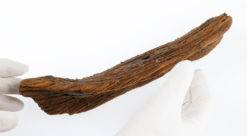
A thousand-year-old toy boat from an abandoned water well gives archaeologists tantalizing clues about the culture that produced the object.

The way to shorten one’s time in purgatory was to obtain indulgences. But they had to be purchased, so only people who were well off could afford them.
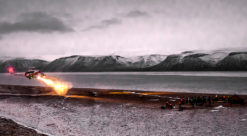
Help is not just a phone call away if you have an accident in the Arctic. That’s why the far northern Norwegian archipelago of Svalbard is establishing an educational and research centre for Arctic safety.
Stephen Hawking will come to Norway this summer as the star speaker at the Starmus Festival, scheduled for 18-23 June in Trondheim.

You might think that polar bears— and the potential for attack— are the biggest danger on the Norwegian island archipelago of Svalbard. But avalanches kill far more people on Svalbard than polar bears ever have.
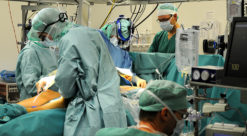
Surgeons often take a blood vessel from your leg to graft onto your heart during a coronary bypass surgery. The practice can lead to scarring in many patients, which in turn can cause another heart attack. A new technique under development may help prevent this problem.
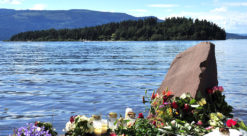
When the unthinkable happens and the unpredictable takes over, crises cannot be handled by the book. What should the police have actually done during the 2011 attack on the Norwegian island of Utøya?
One of the world’s leading membrane manufacturers has signed a licensing agreement with NTNU on a new technology that allows for environmentally friendly CO2 capture.

It’s been a warm winter on Svalbard this year. But this doesn’t apply to the laboratory where Niek Heijkoop works. There it’s a stable -10° Celsius

Online weight loss forums protect participants from public fat shaming, and offer them a place to speak out without being confronted by normal-weight individuals, medical science or the authorities.
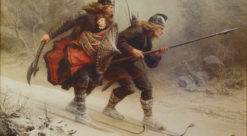
As the world struggles to make progress to limit climate change, researchers are finding ways to adapt to warmer winter temperatures — by developing environmentally friendly ways of producing artificial snow.