What happens when artificial intelligence is used in public administration?
Data-driven public administration changes the public sector in a fundamental way. But what does this mean for you as a citizen?

Data-driven public administration changes the public sector in a fundamental way. But what does this mean for you as a citizen?
Allowing Norwegian farmers to buy and sell excess electricity they generate is good for everyone. Today’s regulations prevent this.

A physical suggestion box doesn’t work in 2023. So why not just create a Facebook group or set up an e-mail address? Because there’s another option, which we’ll tell you more about now.
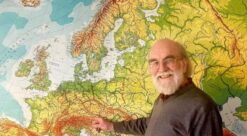
It sounds like a simple question: How many countries are there in Europe? However, the answer is more complicated than you might think.
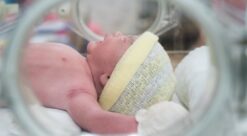
“Doctors should look at the length of pregnancy in patients with respiratory problems,” says researcher Kari Risnes. But if you were born before your due date, you can take some measures yourself to prevent lung infections.
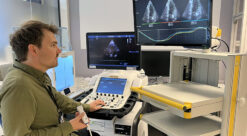
If anything goes wrong with your heart, it is critical to get the right treatment quickly. Artificial intelligence can help with just this – and more lives can be saved.
How does it feel to be a relative of a loved one who is a patient in a hospital at home?

Tonnes of reusable polystyrene ends up as plastic waste when buildings are demolished. Researchers want to see more recycling and reuse.
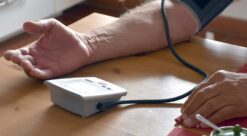
Hypertension affects one billion people and is considered the number one cause of death worldwide. Mass testing of genetic variants can now shed light on the cause of high blood pressure.
Women’s health continues to be given low priority. But a new video provides important information on how to strengthen the pelvic floor after childbirth.
The actions that vehicle drivers perform today will be handed over to machines – just as soon as the technology makes it possible and road users demand that such systems be put in place. This is no simple task, but Norway is far ahead of the curve.

In Norway, girls are much better at reading than boys. But girls and boys perform equally well when using a new teaching method.

The Norwegian government has proposed opening an area of the continental shelf to deep sea mining. NTNU researchers have worked for more than a decade on this issue. They say we have much to learn before Norway can decide if this can become a viable industry.

There is enormous potential in the aquaculture sector to generate circular economy initiatives when it comes to its use of plastics. But can these be made commercially viable? Researchers believe that they can.
In the wake of the shocking revelation from a major Oslo hospital that fear among employees is making corporate whistleblowing difficult, some in the IT sector are promoting the opposite. When something goes wrong, they learn from their mistakes together.
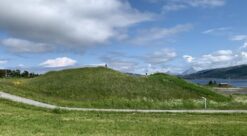
We were through the roof with excitement when the first ship rivet was found, says archaeologist Geir Grønnesby at the NTNU University Museum

Do we discriminate against people with foreign-sounding names? A clever experiment with fictional girls who wanted to play football yields some answers that might surprise you.
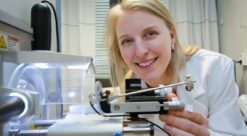
The use of stem cells now makes it possible for us to cultivate so-called organoids, such as tiny versions of a liver, heart or small intestine, in the lab. These micro-organs can then be connected to a microchip that simulates the body’s biological processes. This ‘organ-on-a-chip’ technology opens the door to previously undreamt-of research possibilities.
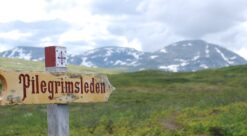
Hundreds of thousands of pilgrims make use of Europe’s many pilgrimage walks every year. However, travellers tend to visit only a few of the attractions along the routes. The EU project “rurAllure” aims to attract travellers to lesser-known sites of interest.

In Palma de Mallorca in Spain, researchers are planning to use VR headsets to encourage resident participation in a community project.

Online abuse of children has increased considerably in recent years. Technological advances and inadequate legal regulation are driving this development, according to a new Norwegian report.
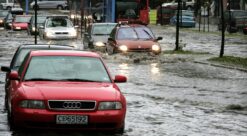
If we are to avoid our cities becoming ‘heat magnets’ one day, and overwhelmed by flooding the next, we have to incorporate wetlands and ditch systems into our urban infrastructure.

Municipalities were given more responsibility for specialist health services in 2012. The changes appear to have resulted in better healthcare for the elderly.
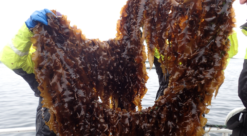
Seaweeds cultivated in the sea off the coast of Trøndelag, Norway will be converted into biocoal and used to improve agricultural land. A new method for carbon capture and storage is now being trialled by Norwegian researchers.