New findings could help develop computers that resemble your brain
Why on earth should you care that physicists have now filmed skyrmion lattices melting? Well, there are actually some very good reasons why.

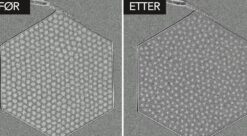
Why on earth should you care that physicists have now filmed skyrmion lattices melting? Well, there are actually some very good reasons why.

Four of five Norwegians use digital maps when they are in the outdoors. In just a few years, our mobile phones have gone from being a practical navigation aid to a virtual compass in your backpack.

Many physicists are searching for a triplet superconductor. Indeed, we could all do with one, although we may not know it yet – or understand why.
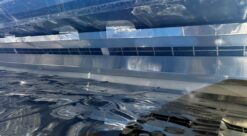
Researchers have developed a solar cell system that uses mirrors to concentrate solar energy. In addition to electricity, it produces heat for a plant that will capture carbon from industrial emissions.
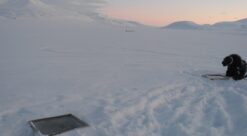
How will a warming Arctic affect plant growth on Svalbard? Researchers encased plant plots in a thick layer of ice during the winter and used little greenhouses to heat up those plots in the summer. The surprise? The plants that got the harshest treatment did just fine.
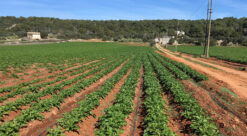
Research shows that allowing natural vegetation to grow back in mountainous areas and on steep slopes and moving production to more fertile areas will both reduce climate emissions and increase biodiversity.

Why are we so happy when our favourite wins, especially against the odds?
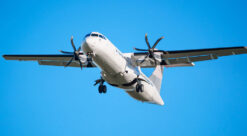
Hybrid cars have been successful. Now the aviation industry is following suit and testing out the combination of electricity and fuel.

Valentine’s Day is upon us again. But what does it really take for couples to stay together for a long time?
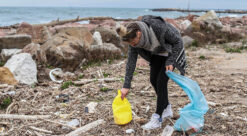
The Kunming-Montreal Global Biodiversity Framework states that plastic pollution must be eliminated by 2030. So why haven’t we enacted measures that make a real difference?
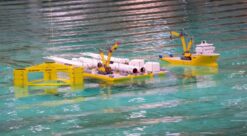
Building a port on land takes time. On water, the job can be done quickly. Hagbart Skage Alsos and his research colleagues at SINTEF are investigating how to build floating ports.
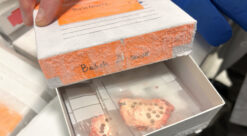
For the first time ever, NTNU researchers have identified new characteristics of aggressive prostate cancer.

Nurses are increasingly overloaded. This is especially true in nursing homes and in home care, as shown by the results of the latest nursing survey.
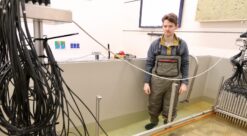
Geologic reservoirs that trapped petroleum for millions of years are now being repurposed to store the greenhouse gas carbon dioxide. New research is improving how we monitor this storage and verify how much CO₂ these reservoirs have stored.

People who commit domestic violence are at risk of repeating their behaviour. Research shows that it is crucial that perpetrators of intimate partner violence are met with understanding, not condemnation.
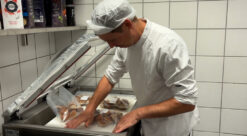
One of Norway’s largest production kitchens makes 2500 meals a day. The focus on food waste, simple tools and identifying deviations shows that it is possible to save 300 meals a month through donations.
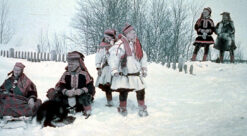
German soldiers’ accounts from Finnmark during World War II often describe the Sami as “noble savages” in a fabulous and foreign landscape.
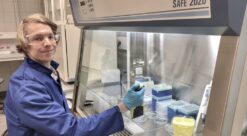
Can bacteria that survive washing and disinfection in food production facilities spread antimicrobial resistance?
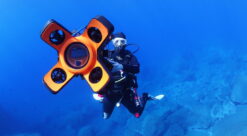
European coastal areas are under increasing pressure. Researchers are investigating ways to reverse this trend and help communities adapt to climate change.
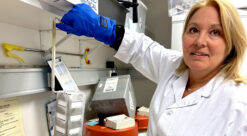
Increasing use of blood tests to detect prostate cancer is leading to overworked doctors. NTNU has now created an AI diagnostic tool that can help lighten the burden.
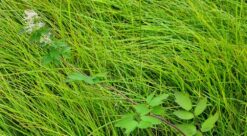
More than 2500 plant species have the potential to invade the Arctic at the expense of the species that belong there. Norway is one of the areas that is particularly at risk.
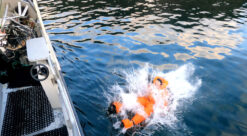
Fishing alone is a dangerous occupation. A new safety alarm could save lives by automatically stopping the boat and alerting the Coastal Radio Service and nearby vessels.
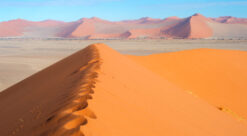
The globe may be running out of sand suitable for concrete. Researchers are therefore testing a possible solution for using desert sand as a material.
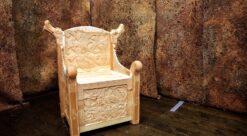
The foundations for the Viking expeditions were laid on farms. Society became more stratified during this period, and carved chairs, owned by wealthy farmers and known as ‘high seats’, were a clear status symbol.