Early testing of schoolchildren has absolutely zero effect
Early testing of schoolchildren has no impact on their educational attainment down the line. Nor do the tests have any effect on pupils’ mental health or how happy they are at school.


Early testing of schoolchildren has no impact on their educational attainment down the line. Nor do the tests have any effect on pupils’ mental health or how happy they are at school.

Ragnhild Langli (70) is the first person in Norway to receive personalized chemotherapy for bowel cancer. She is participating in a research study that is the first of its kind in the world.

A new, national centre will continue the quest to understand how Alzheimer’s and other dementias arise in the brain. The hope is to develop a treatment for dementia diseases.

Premature babies are particularly susceptible to strong sensory impressions and high sound levels from the incubator. Now researchers will look at what can be done to protect children’s hearing and development.

Do your kids play a lot of computer games? Some may end up gaming a little too obsessively. Researchers have identified the most important warning signs.
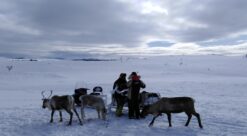
The Norwegian ‘rules of use’ for Sámi reindeer husbandry were intended to help keep reindeer husbandry sustainable and allow for self-governance. But “sustainability” and “self-governance” can mean something completely different for authorities than reindeer herders.
The European Research Council has awarded two grants to NTNU researchers for very different projects related to the environment.

Researchers are now investigating a Viking Age grave with preserved skeletal remains and jewellery. The grave was found at Val in Bjugn, in Trøndelag County. A discovery by a metal detectorist alerted researchers to the find.

Norwegian municipalities are collecting more and more data on how what they do affects the natural world, but do not always know what to do with it. They wade in green facts, but continue to sacrifice the environment, colouring the landscapes grey.

For the first time in Norway, more than three thousand nursing home employees shared what they have witnessed of violence and abuse from visiting relatives and friends.

People all over the world suffer from headaches. More than 1 in 3 people are affected every year. Overuse of painkillers is a contributing factor.

Patients who have had a stroke are prescribed medication to prevent new strokes. Nevertheless, fewer than half achieve the optimal treatment targets.

“You can actually work on your mental health, just like you exercise your body. You can also become a coach for others,” said Professor Steinar Krogstad.

When the first large language models were unleashed, it triggered a headache for authorities around the world as they tried to figure out how to satisfy data centres’ endless demand for electricity.

Mental health problems are keeping an increasing number of Norwegians out of the employment market. Treatment alone is often not enough to get people back to work. Some groups are at greater risk of being away from work for a long time – or even permanently.

Adolescents who are most active on social media are also more often victims of cyberbullying. But the reality is not as simple as that.
The first-ever audited account of the actual amounts of CO2 stored underground by CCS projects globally has been released. It was created by a new international consortium of scientists and industrial partners, including NTNU.

The oceans have to play a role in helping humanity remove carbon dioxide from the atmosphere to curb dangerous climate warming. But are we ready to scale up the technologies that will do the job?

You’ve just bought a new apartment. The developer followed the minimum building code requirements. So shouldn’t everything be in order? Extensive research indicates that the answer is unfortunately no.

Passion projects and more physical activity help more children enjoy school more.
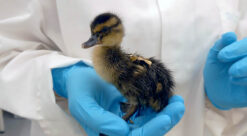
There are many different types of PFAS, also known as ‘forever chemicals’. Maybe it is time to prohibit them all.

By using two propellers that rotate in opposite directions, a ship can use less energy to move forward. New knowledge means that more ships can use the technology, including Hurtigruten’s Sea Zero project for its coastal cruise ships.

Populists use controversial issues to a far greater extent than other issues to promote their political messages. This is deliberate.

There’s no getting around it: downsizing the kind of housing you live in is the best thing you can do for the environment.