Consumer choices for the climate
The gift-giving season is upon us, and perhaps you’re wondering how to give gifts that won’t wreck the climate. Help is on the way.


The gift-giving season is upon us, and perhaps you’re wondering how to give gifts that won’t wreck the climate. Help is on the way.

Computer games designed to make us more environmentally conscious need to be both entertaining and educational. Few game designers are good at both. NTNU researchers are creating a model that can bridge the gap between the two.
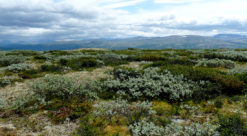
A remote field site in the Norwegian mountains is improving our understanding of carbon cycling in high-latitude alpine areas.
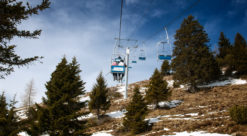
Trondheim: Norwegian researchers believe that it will be possible to make environmentally-friendly snow at above-zero temperatures. Now they have the backing of Europe and the skiing industry in their bid to save the sport from climate change.

SINTEF’s climate change ambassador Nils Røkke is on his way to Brussels looking forward to a new job and new assignments. He has been appointed as Chair of the European Energy Research Alliance (EERA). This in a world in which the threats posed by climate change are increasingly being portrayed as “fake news”.

A series of first-ever maps shows regional-scale differences in carbon footprints in the EU. The maps can help guide local and regional policies designed to cut greenhouse gas emissions.
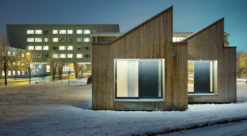
How does technology change people, and how do people change in response to technology? Sixteen people volunteered to live in a high-tech, zero-emission house to help researchers answer those exact questions.
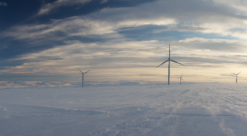
Heavy-duty trucks will soon be driving around in Trondheim, Norway, fuelled by hydrogen created with solar power, and emitting only pure water vapour as “exhaust”. Not only will hydrogen technology revolutionize road transport, it will also enable ships and trains to run emission-free.

State-of-the-art solar cells are efficient – but are even more so when they are kept clean. A cleaning robot developed by Norwegian researchers enables solar panels to deliver at full capacity.
Science has made great strides since Svante Arrhenius, the Swedish Nobel Laureate who in 1896 first determined that carbon dioxide from human activity could warm the planet. The same progress hasn’t been made in increasing the number of women in the sciences.
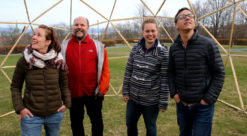
Imagine breathing polluted New Delhi air. It’s a scorching 40 degrees and the humidity is high. But you’re not in New Delhi – you’re in an art installation, during the Starmus festival in Trondheim in June.

Nils Røkke, Director of Sustainability at SINTEF, is the new Chairman of the European Energy Research Alliance.

Japanese researchers have access to the largest scientific vessel ever constructed, one that has a 120 metre tall derrick capable of drilling to 7500 metres below the seafloor. They’re using it to hunt for life deep under the seafloor and explore for mineral deposits at the bottom of the ocean — topics that are of great interest to Norwegian researchers.

Production of electricity is responsible for about a quarter of global greenhouse gas emissions, and demand is poised to rise as underserved populations connect to the grid, and electronics and electric vehicles proliferate. So stopping global warming will require a transformation of electricity production. But it is important to avoid various environmental pitfalls in this transition, researchers say.
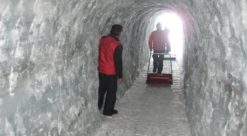
Some of the ice in the Juvfonne glacier in Jotunheimen National Park in central Norway has been dated to be 7600 years old, currently the oldest dated ice on mainland Norway.
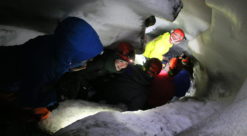
Svalbard’s cold climate means that its glaciers are solid and frozen to the ground. This allows for winter travel into unique ice caves that contain plants and material that froze into the glacial ice as it formed.

It’s been a warm winter on Svalbard this year. But this doesn’t apply to the laboratory where Niek Heijkoop works. There it’s a stable -10° Celsius

As the world struggles to make progress to limit climate change, researchers are finding ways to adapt to warmer winter temperatures — by developing environmentally friendly ways of producing artificial snow.
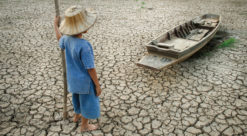
Scientists and policymakers rely on complex computer simulations called Integrated Assessment Models to figure out how to address climate change. But these models need tinkering to make them more accurate.

Combining old and new to achieve reduced energy consumption, a better living environment and architectural success. It’s definitely possible and researchers will show you how.

What happens to people’s comfort level when the heating system in a super-insulated building is simplified by installing only one radiator per floor?
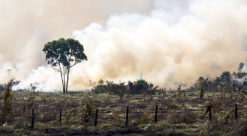
We don’t have to snuff out species when we eat a hamburger or buy a tee-shirt— if we know how our consumption affects endangered and threatened species.

The world will not be able to reach the goals of the Paris Agreement without technology capable of capturing, transporting and storing CO2.
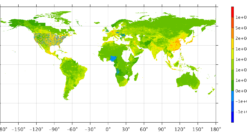
A new model creates global hot spot maps to illuminate how what we buy pollutes the planet and where. The idea is to help governments, industries and individuals target areas for cleanup.