How are the busiest among us dealing with COVID-19?
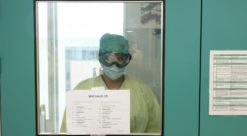
COVID-19 has created an extra workload for people in socially critical professions. How does this added strain affect them and how do they handle it?

COVID-19 has created an extra workload for people in socially critical professions. How does this added strain affect them and how do they handle it?
Temperamental children are at greater risk for developing unhealthy eating habits.

The Norwegian Directorate for Health and Human Affairs recommends more physical activity and less sitting time. But that isn’t the right approach to managing neck and back pain for everyone, according to research from NTNU.
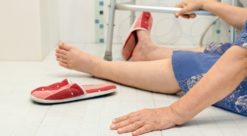
Hip fractures have higher mortality rates if patients are discharged early because the hospital needs the space and capacity.
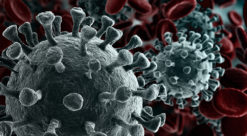
Testing families of four or more people would be an effective way to reduce the spread of the coronavirus infection, according to a data simulation model developed at NTNU. The model has initially been used to determine the best testing strategy for Oslo.
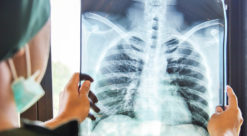
CT screening to detect lung cancer can save lives. The challenge is to find out who should undergo CT scans. A new method more accurately identifies the right individuals in the risk zone.

More than 100 000 Norwegians have atrial fibrillation. They should be actively exercising for their health.

The stresses from home schooling, working at home and corona virus concerns are weighing us down on many levels. Here are some tips on ways to exercise at home that can help us maintain our health both physically and mentally.
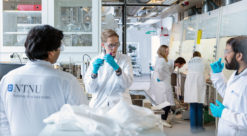
NTNU researchers recently figured out a whole new method for testing people for the coronavirus. The university is now producing tests on a continuous basis, under the auspices of the Norwegian Directorate of Health. Currently 100 000 tests a day are being manufactured, with production soon likely to be scaled up dramatically.
Road dust can be a big problem in the winter, especially in northern climes where the use of studded tyres is allowed. Researchers are now studying how the type of stone used in asphalt affects the amount and harmfulness of dusty particulate matter that gets kicked up as studded tyres chew into the asphalt.

A daily 10-minute training session using an app could reduce migraine attacks for many sufferers, according to researchers.
Norway’s Ministry of Health and Care Services confirmed Friday that it will roll out coronavirus test kits developed by researchers from NTNU and St Olavs Hospital by the last week of April/early May. The kits will more than triple Norway’s testing capacity during the rollout.

Italy’s budget deficit is skyrocketing. Yet people there are not debating the cost of a human life, or whether the shutdown of the country is worth it.
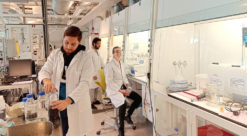
Two weeks ago, doctors at St. Olavs Hospital in Trondheim were running out of reagents needed to do COVID-19 tests. They asked colleagues at NTNU to develop a backup solution. Now, Norway is gearing up to use the new approach to test 150,000 people a week after Easter.
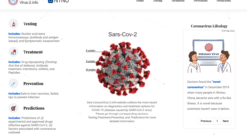
Medical researchers worldwide are racing to find treatments and vaccines to combat the coronavirus pandemic sweeping the globe. A new website offers up-to-date summaries on available and emerging options against COVID-19.
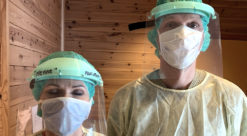
NTNU in Gjøvik has developed a better design for face shields, which are part of the personal protection equipment used by medical professionals. Major production of the new shields – up to 250 per day – is starting on the university’s 3D printers this week.
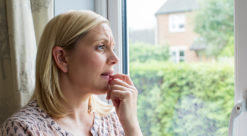
Restlessness, insomnia, ruminating and aching muscles. Here are one professor’s tips for anyone who is struggling with anxiety and fear due to the coronavirus.
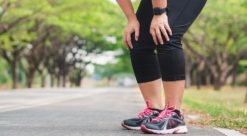
People who followed researchers’ motivational posts on Instagram got more enjoyment out of their training sessions. Just a couple of minutes over the course of four weeks was enough to make a difference.
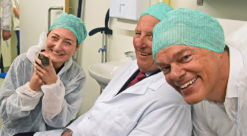
Developing an effective treatment for Alzheimer’s disease is the long-term goal of a new national research centre in Norway. Nobel laureates Edvard Moser and May-Britt Moser will lead the K. G. Jebsen Centre for Alzheimer’s Disease, aimed at determining how Alzheimer’s disease arises in the brain and its early stages of development.

Children who get the least sleep have the greatest risk of developing mental health issues.
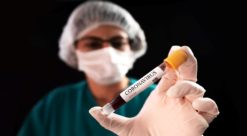
There’s no effective treatment for the coronavirus that causes COVID-19, which was first detected in Wuhan, China. Developing new drugs and vaccines can take years. Existing drugs offer a possible quick response to the potential pandemic.
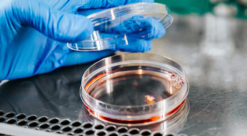
Even the best chef can make mistakes – even when using the recipes (genes) from the “cookbook of life” — DNA. A new discovery as to how cells repair their DNA may have implications for the future drug development.
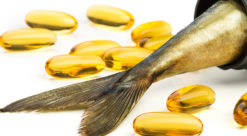
Omega-3 fatty acids are essential components of healthy diets for both humans and fish. The dramatic increase in fish farming worldwide has boosted the demand for omega-3 fatty acids so much that today’s supply can’t meet demand. Reducing waste and finding new sources can help.
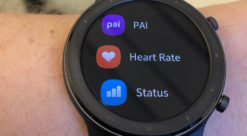
Research from NTNU is now being integrated into millions of smartwatches worldwide. You work on a single training goal, and the fitness tracker tells you if you reach that goal. It may be the key to staying healthy.