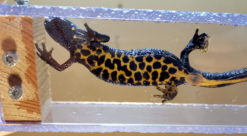
New technology can count endangered salamanders
The stomach patterns of salamanders are as unique as human fingerprints. This feature will be used in an app to record salamander numbers.

The stomach patterns of salamanders are as unique as human fingerprints. This feature will be used in an app to record salamander numbers.

An abrupt halt to oil activities in the North Sea is not the solution to the climate crisis. The way forward is to establish alternatives to oil.
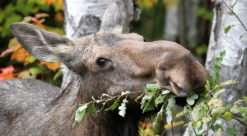
With the warming climate, forests are growing faster than before, and deciduous species are growing the fastest. Recent research illustrates just how much moose foraging limits this growth.
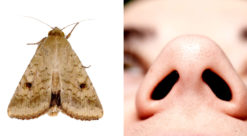
Scientists find remarkable similarities in the olfactory pathways of such diverse creatures as humans and insects.
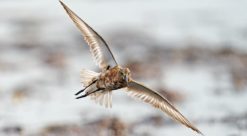
Shorebirds burn a lot of fat during their long migrations. This can release toxic chemicals that accumulate in fat cells.
Code red for humanity, says the IPCC. Fortunately, there’s still a lot we can do, but we have no time to lose, says NTNU climate researcher Edgar Hertwich.

Digital teaching and meeting places can work. But some approaches make students feel more connected and improve results.
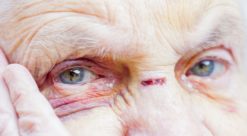
A majority of employees in Norwegian nursing homes have committed abuse or neglect of the elderly, a comprehensive report shows.
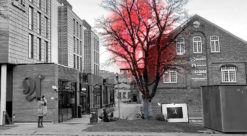
As you walk around the city, nature “pops up” in unexpected places. Like a “lung tree” – a tree that breathes. The Nature in Your Face research project wants to use art to create engagement.
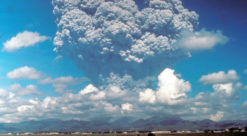
It sounds like something out of a bad science fiction movie — artificially blocking sunlight to keep global warming from overheating the Earth. Nevertheless, a small cadre of researchers is studying the option — so that if humankind ever needs to use it, it will be an informed decision.
All over the world, people are moving out of rural areas, and cities are growing. What will be the impact on resident species that live in these cities? Which will be our new plant and animal neighbours, which will have to leave town, and what does that mean for us humans?
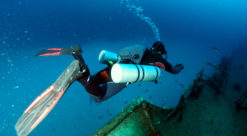
An NTNU researcher has discovered what happens in the genes of divers with decompression sickness. The breakthrough is gaining international attention after more than a century of searching for the causes of divers’ disease.

Bacteria in wild bears become more resistant to antibiotics when human antibiotic use is high.

The UN Climate Panel wants us to stop using fossil fuels. Hydrogen is an alternative – but not without overcoming some obstacles first.

A psychiatrist’s study reviewed more than 200 rape cases and found that the most vulnerable women who were raped received the worst follow-up by the police.
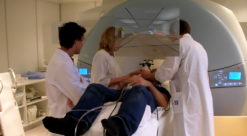
Do you find it easier to remember exactly where something is located rather than remembering exactly what is there? In that case, your experience is in sync with NTNU brain researchers’ new findings about memory.

For generations, children have played blind man’s bluff, hide-and-seek, hopscotch and climbed trees. But in the “olden days,” free play could more often end in injury and death.
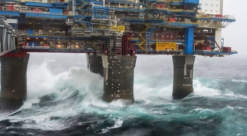
Strong storms can trigger steep, breaking waves that slam into platforms and wind turbines with tremendous force. Scientists at NTNU and SINTEF are studying the behaviour of offshore structures subjected to these kinds of waves. Their goal is to increase safety at sea.
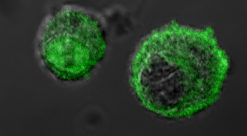
For the first time, researchers have shown how cancer cells reprogram themselves to produce lactic acid and to tolerate the acidic environment that exists around tumours. The finding could lead to a whole new direction for treating cancer.
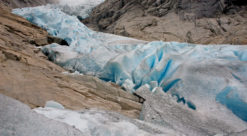
A new report from the Intergovernmental Panel on Climate Change (IPCC) describes with unnerving detail just what can happen if nations fail to limit greenhouse gas emissions. But rapid international action will keep the worst consequences at bay, the panel said.
The cytotoxic drugs used in chemotherapy can themselves contribute to the cancer cells developing resistance to treatment.
Producing silicon results in large carbon dioxide emissions, but recirculating it can remove contaminants more efficiently.
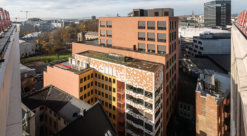
An old building at Tullinløkka in Oslo has set a new standard for reuse, consisting of components from other buildings – like concrete floor dividers from a government building. Building stock in Norway accounts for half of society’s total environmental impact. Thinking in new ways and reusing building components offers multiple gains.
Large cost cuts are achievable for both floating and bottom-fixed wind farms in the future. If we do this correctly, floating wind turbines will be able to compete with bottom-fixed wind turbines by 2030.