An app to help you stay safe
A group of student entrepreneurs has launched a new app that sends an alert to other users in the area if you find yourself in a dangerous situation.


A group of student entrepreneurs has launched a new app that sends an alert to other users in the area if you find yourself in a dangerous situation.
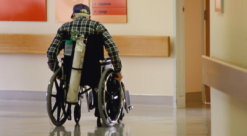
New research has revealed that Norwegian COPD sufferers are prescribed even more sedatives than psychiatric patients. The researchers behind the study believe that this is problematic because the drugs in question are addictive and inhibit lung function.

The British-born Pauline Braathen has given US $5 million to establish a new centre at the Kavli Institute for Systems Neuroscience at NTNU. The Kavli Foundation has matched this donation with NOK 50 million so that the new centre will receive a NOK 100 million grant.

NTNU’s Gunnerus Library in Trondheim contains a number of manuscripts with unknown origins. Using modern technology, researchers aim to find some of these manuscripts’ secrets.
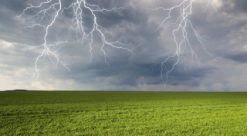
During thunderstorms, when Thor the God of Thunder starts wielding his hammer, researchers know exactly what you should and shouldn’t do if you want to keep safe.
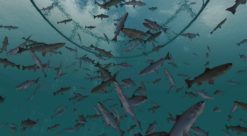
With the help of new 3-D technology, you can dive underwater and swim with farmed salmon.
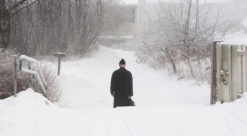
A brand new study of 200 dementia sufferers in Norway reveals that almost all experience greater peace of mind and increased levels of physical activity using GPS devices.
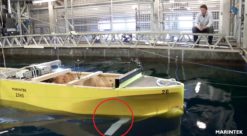
If testing goes well, an invention that helps save fuel in ships may soon be in production, with the support of the British industry.
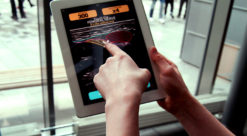
Ultrasound is coming into ever more widespread use, and an app that trains health personnel to interpret ultrasound images has just been developed.
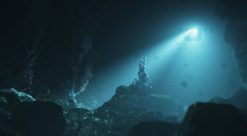
NTNU researchers are delving deep to investigate the seabed and opportunities for deep sea mining to extract precious metals that lie several thousand metres deep.
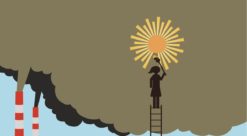
Norway’s first full-scale facility for CO2 capture may be built at Norcem’s cement factory in Brevik. Four technologies are being tested.
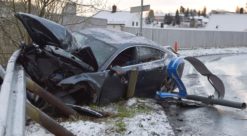
To you and me, this might look like a disaster. But Norwegian ski star Petter Northug’s car crash was actually pretty ideal. The materials in the car and guard rail acted just the way they were designed to in order to save the lives of passengers in the car.
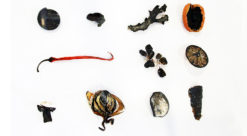
You won’t see any paintings at the exhibition by the first International MFA graduates in Trondheim. But the exhibit offers a lot else, including food and healing.
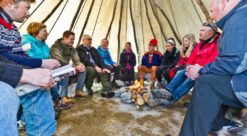
From next summer cruise tourists taking excursions in Norway to sample Sami culture can look forward to an even more pleasant experience in the traditional ‘lavvo’ tents.

Researchers believe that children with autism or ADHD can benefit from technologies originally developed for the elderly.
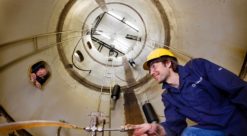
Oil droplets are providing clues about environmental impacts following oil discharges What really happens to the oil that ends up in the sea during a discharge, and how can we minimise the damage?

A new report reveals that 76 percent of children and adolescents who live in Norwegian child welfare institutions have serious psychiatric diagnoses. Only 38 percent report that they receive appropriate psychiatric help. One youngster was moved 25 times under the direction of Norway’s Child Welfare Services.
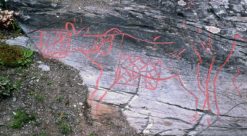
Only a few of the Stone Age rock carvings in Norway depict animals in a naturalistic way. Four of them are located around the Trondheimsfjord.
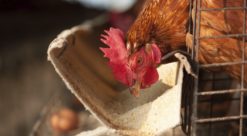
Three million egg-laying hens are destroyed each year. Researchers believe that this practice is inadequately sustainable and want to see the hens exploited for food, oils and proteins.

Computer games can help improve instruction. Pupils learn more. Teachers get a better overview of what and how well their students are learning.

Substantial revenues from natural resources bring opportunities, but also problems, in developing countries. A new research project will look at best practices in resource management.
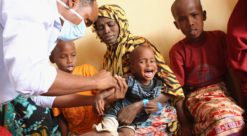
The health of people all over the world is dependent on a slew of different variables, so interdisciplinary work is vital to professionals in global health. Twenty-two European countries, the USA and South Africa are all taking part in a comprehensive Norwegian global health survey.
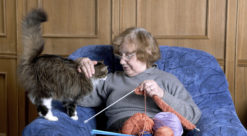
Sixteen elderly people in a Norwegian municipality have been testing an automatic drug dispenser at home in their living rooms. Results include increased feelings of empowerment, time saved by the home care services, and fewer medication errors.
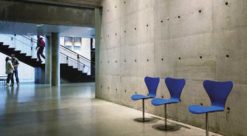
Smooth and shiny. And without big pores. So much for the ideal concrete wall.