Experiments show that an “unknown” enzyme fights inflammation
An enzyme that normally repairs damaged DNA may be the key to a new treatment for inflammatory diseases.
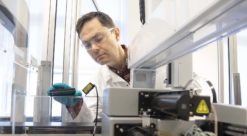
An enzyme that normally repairs damaged DNA may be the key to a new treatment for inflammatory diseases.
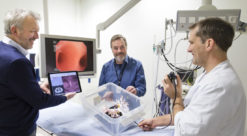
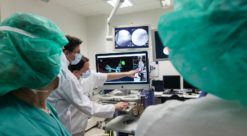
The team behind a new medical navigation system which makes it easier to take biopsy samples from the lungs recently received an international innovation award during Innovation Expo 2018 in Rotterdam.
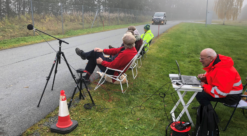
Electric cars are good for the environment – but not for people who cannot see. They have problems detecting the silent vehicles. However, Norwegian research scientists are working on a solution.
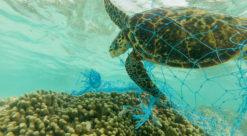
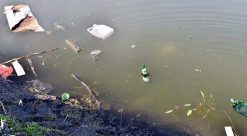
A small device, developed in Norway, will now be used in the battle against environmentally-unfriendly ghost fishing caused by lost or forgotten fishing gear.
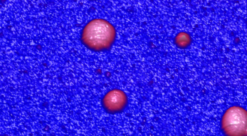
Exosomes are natural nanoscopic particles released by most cell types, and are currently the focus of research because they represent a possible tool for the diagnosis of Alzheimer’s. These particles are not so easy to isolate, and nanotechnology may help in this process.
How is the travel pattern of a family affected by the delivery of foods to the door? And does this make them more environmentally friendly? Researchers will now find the answer.

An international team of researchers has recently succeeded in getting several autonomous vessels and underwater vehicles to communicate and work together as part of one and the same operation.

In order to maintain the leading position of Norwegian solar cell manufacture on the global stage, we need sensors that can see what humans can’t.

Capturing the greenhouse gas CO2 from industrial processes such as cement manufacture is a demanding and therefore expensive exercise. However, by introducing a renewable powered heat pump in the capture system, the energy required to capture CO2 is reduced by three quarters.
In the innovative EU project GoJelly, researchers are working to solve the microplastic challenge by using products from nature itself.
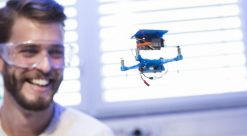
Research scientists have been gazing into their crystal balls. These are the technological trends that will affect the transport systems of the future.
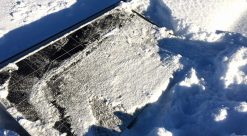
Experiments in SINTEF’s climate lab demonstrate that solar cells work very effectively in Norway in spite of the rain and cold. But there is one thing that owners should be aware of if they want to get the most from the sun’s energy.
According to a new research report, most plastic fragments end up on the ocean floor.
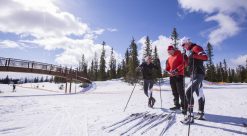
Norwegian cross-country skiing is applying science to analyse how its elite athletes exploit their strengths during training and competition. The aims of this sensor-based research are to give skiers valuable advice about training and help them find the perfect pair of skis.
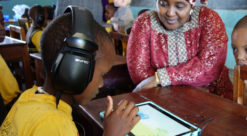
A headset and a little electronics might be all it takes to enable nine-year-old Sharleen, who has hearing difficulties, to get an education and a life free of poverty. She is now getting help from Norwegian researchers.
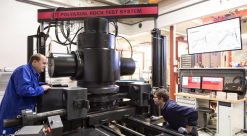
This ten-tonne test rig has been custom-designed by Norwegian researchers and built under contract by American engineers. It has finally been installed at SINTEF after eight years of planning and construction. This mammoth of a device, nicknamed the “Polyax Rocker” is now set to re-create with ultra-high precision the geological stresses acting on oil reservoirs.

According to new research, the recipe for success relies on three ingredients being permanently in place.

Yes. As long as it is handled properly, new research reveals.

“Customer journeys” have become a popular method to increase customer focus and improve service quality in many branches of industry. But research shows that the method doesn’t always work as expected – and confusion surrounds the meaning of the concept itself.
This is confirmed by the international journal Ultrasound in Medicine and Biology.
Each year, 40,000 diesel-fuelled lorries pass through the gates of Yara’s fertiliser manufacturing plant in Porsgrunn, Norway. But not for long.
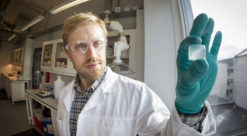
A Norwegian-Swiss research team has succeeded in growing cartilage tissue cells using algae. Moreover, the new cells can reduce joint inflammation. This news gives hope for people suffering from arthrosis, also known as osteoarthritis.

SINTEF’s climate change ambassador Nils Røkke is on his way to Brussels looking forward to a new job and new assignments. He has been appointed as Chair of the European Energy Research Alliance (EERA). This in a world in which the threats posed by climate change are increasingly being portrayed as “fake news”.

Heavy-duty trucks will soon be driving around in Trondheim, Norway, fuelled by hydrogen created with solar power, and emitting only pure water vapour as “exhaust”. Not only will hydrogen technology revolutionize road transport, it will also enable ships and trains to run emission-free.
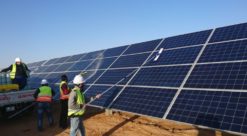
State-of-the-art solar cells are efficient – but are even more so when they are kept clean. A cleaning robot developed by Norwegian researchers enables solar panels to deliver at full capacity.
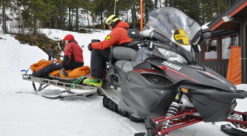
What is the best form of first aid for a cold, injured body? Mountain medicine researchers are now co-operating to find the answer. At present there is actually no “best practice” for treating this type of patients.
The Norwegian government has just agreed that the fraction of biofuels in petrol and diesel is to be raised from 5.5 to 7 percent next year. Within 2020, this fraction should be up to 20 percent. However, can biofuels be considered as a good environmental action?

The world will not be able to reach the goals of the Paris Agreement without technology capable of capturing, transporting and storing CO2.
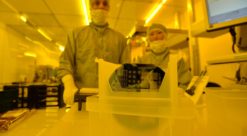
A team of Norwegian, French and Australian researchers is the first in the world to succeed in quantifying the effects of radiation on individual cancer cells. This means that radiation therapies can now be tailored to individual tumours and thus be more effective.
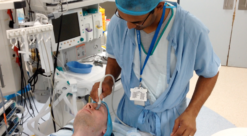
An anatomical discovery, combined with Norwegian ultrasound technology, is about to save lives and prevent brain damage.
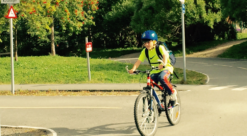
The answer is “not very” if we’re to believe the results of research trials carried out last year involving 59 children.
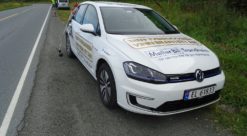
Research shows that fitting tyres with very low rolling resistance, combined with the right road surfacing, can provide just as much noise reduction as traditional noise barriers.