When the Chinese giant awakes
When China sets its sights on a goal, the country can change at a blindingly rapid pace. Now the country is focused on innovation and technological innovations, with renewable energy at the forefront.

When China sets its sights on a goal, the country can change at a blindingly rapid pace. Now the country is focused on innovation and technological innovations, with renewable energy at the forefront.
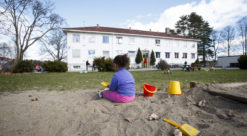
When someone’s life is suddenly turned upside down, a volunteer’s helping hand can mean a lot.

Inmates are issued a starter pack of prison clothes upon arrival. Many would rather use their own clothes as a way to reclaim some power for themselves.

Church art from the Middle Ages reflects the dramatic societal changes that were underway during this period. Artists changed the way they depicted Christ from a regal figure with a crown of gold to a suffering Christ with a crown of thorns.
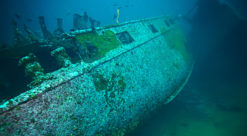
An estimated three million shipwrecks lie in seabed graveyards around the world – with as many as 1000 of them around Svalbard. Each of them has their own unique story — one that’s made much more accessible with new technology.
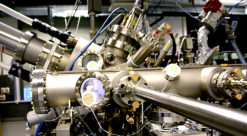
Impossibly small, accurate lasers could pave the way for new medical applications and electronics.
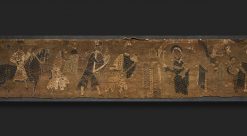
Norwegian churches in the Middle Ages were decorated with embroidered tapestries that told Bible stories almost like a comic series. The Høylandet tapestry is the only one of its kind that has survived the march of time.

You’ve seen the pictures and the products: Japanese teenage girls in a pastel little-girl world, and children and adults who love Hello Kitty products. They’re all part of the Japanese kawaii phenomenon, which actually started several hundred years ago.
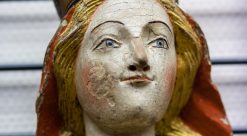
A Madonna figure from Grong municipality is one of the best preserved and special church sculptures in Norway from the Middle Ages. She looks like a sweet, friendly girl who’s been asked to model for the sculpture.

One of Scandinavia’s finest collections of church art from the Middle Ages lay hidden and forgotten in Norwegian churches for centuries. Indeed, this long forgetting is precisely what preserved the unique church art.
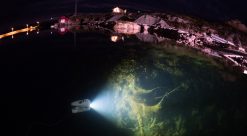
The mysteries below the ocean’s surface have triggered human exploration and imagination for centuries. New marine robotics now make it possible to explore what goes on in the ocean depths.
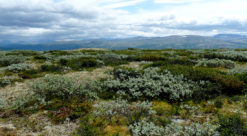
A remote field site in the Norwegian mountains is improving our understanding of carbon cycling in high-latitude alpine areas.
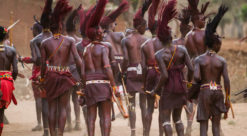
They live side by side with the Maasai people and maintain a culture where rituals and music play an important role. The Sonjo people’s harvest ceremony is their most central ritual.
Plastic trash is a rapidly growing environmental problem. But a biodegradable and natural material could replace plastic packaging and eliminate this problem.

Predators and people have lived side by side since time immemorial in the Serengeti National Park region in Tanzania. But strong population growth is leading to greater conflicts.
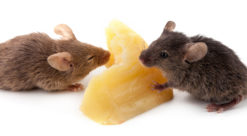
A new approach to cancer treatment combines ultrasound, bubbles and nanoparticles with chemotherapy. In an experiment, the treatment has cured cancer in mice.
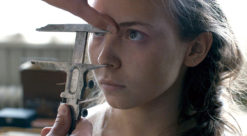
The verdict is in: the film Sámi Blood has won the grand jury prize at the Seattle International Film Festival. It’s the latest in a slew of awards the film has garnered. Film researcher Monica Mecsei predicts it will be highly important for Sámi filmmaking and identity.

The Birken ski festival, the Great Trial of Strength cycling event and the Norseman Xtreme Triathlon are considered to be real tests of manhood today. But a few hundred years ago, the minuet was how men displayed their skills and strength.
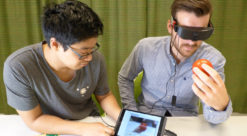
A scientist and a student team have developed the Colorophone system, which translates colour into sound.
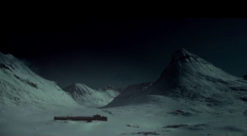
Norwegians generally have a good relationship with nature. But if you’ve seen any Norwegian horror movies, you might have a different impression. An important characteristic of these films is that the Norwegian landscape is fully developed as an element of the horror.
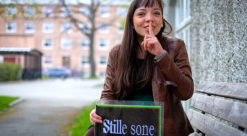
Silence is not an empty space. It has its own purpose, both in psychotherapy and in music. Olga Lehmann is working to build a theory of silence.
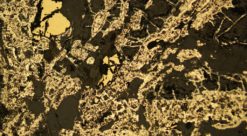
The deep sea contains mineral riches that offers a new frontier for research and exploration — and a new way to employ Norway’s deep sea expertise.
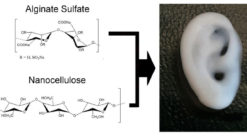
Scientists are using alginate from seaweed to try to get cells to form new body parts.
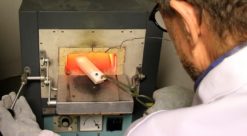
Scientists striving to recreate the 500-year-old technique of mint masters found their solution in a boiled calf’s head and good beer.
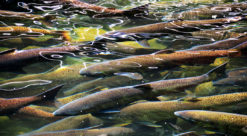
Long-lasting stress in farmed salmon makes them more susceptible to diseases. Researchers have now found a simple and reliable method for measuring stress in fish so that it is easier to take action if needed.

Many elderly are open to using welfare technology for rehabilitation, but health care workers are sceptical, and many municipalities are shying away.

The HBO hit series “Game of Thrones” is driven by an incredibly dedicated and creative fan base that has build a multimedia universe around the TV series and original books. One researcher believes that fans will have helped tone down the amount of violence against women in season six of the TV series.

There’s no mercy to be found in the Viking film “Trace”— and the threats come at you in the Vikings’ own language.
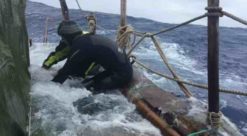
Kon-Tiki2-rafts were delayed by headwinds far out in the Pacific, and in the end, the expedition had to be abandoned.
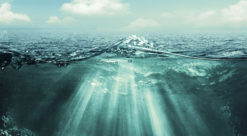
Given that 70 percent of the Earth’s surface consists of water, the oceans will be the new arenas for more economic development in the future. NTNU is exploring the ocean depths using new technologies.

The Kon-Tiki2 expedition aims to both reinforce and challenge Heyerdahl’s theories – and NTNU will gather unique research material from the major oceans that the expedition crosses
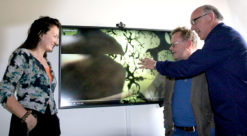
Composer Bertil Palmar Johansen calls the rats Gjertrud and Hjørdis “rock-and-roll rats” because they’re so cool. They also star in a new art video about neurological research. The music to the video is built on the sound of brain cell signals from May-Britt Moser’s rats.