Seaweed and kelp are more than food
Algae cultivation is popular, but good uses for the raw material are still lacking. Researchers in Norway are set to do something about this, with the goal of fully using this resource.
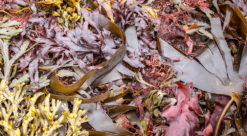
Algae cultivation is popular, but good uses for the raw material are still lacking. Researchers in Norway are set to do something about this, with the goal of fully using this resource.

Passion, grit, the right mindset and support from others are what’s needed to rank among the best in a given field. That’s the only way you’ll be able to keep yourself motivated and endure all the practice that’s required.

A new tool will make it easier and cheaper to train individuals who defend us from computer attacks.
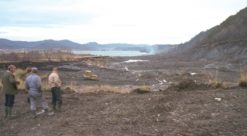
In theory, PoreLab studies porous media. But the research team dreams of being able to predict quick clay landslides as part of their results.

Women who experience hypertensive disorders while pregnant are more susceptible to developing cardiovascular disease later in life. But the main reason doesn’t stem from the hypertensive disorder itself.
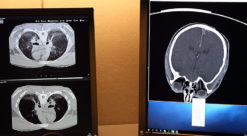
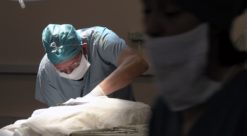
Sometimes it’s hard to know what a person has actually died from. But post-mortem CT scans may provide a useful tool.
A new method can help doctors in planning liver cancer operations.
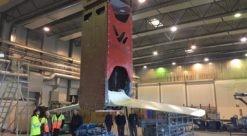
The boat wings started as an unfinished idea in Eirik Bøckmann’s head. Now they’re being mounted on a ferry in the Faroe Islands.

Lifestyle changes can reduce our greenhouse gas emissions and help protect nature. While some actions offer great potential, some aren’t as effective as we think and may even require more land and water, such as shifting to renewable energy.

Renewable energy is fine, but often it’s needed at times other than when the wind is blowing or the sun makes an appearance. The energy needs to be stored – and a new method is on the horizon.
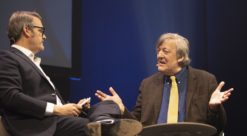
“We may be a mere 20 years away from creating artificial life,” says Stephen Fry. He warns that these new life forms won’t see any need to keep us, and may instead look at us as pests.
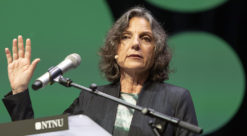
“Human beings are destroying the nature that we are all a part of,” says the winner of the Gunnerus Award in Sustainability Science, Professor Sandra M. Díaz.

Better opportunities for women mean that the threat of overcrowding the planet may not be as dramatic as people fear. The population may well decline in a few decades.

“I am a doctor who reveals idiots as a hobby,” says Ben Goldacre. If so, it’s become a pretty comprehensive hobby.

How can we defend ourselves against false information? NTNU researchers provide some tips and tackle the problem during The Big Challenge Science Festival this week.
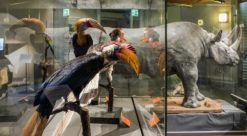
We can’t take care of the Earth’s species unless we know what species exist. A collaborative project that will help us know more is being launched in Trondheim during The Big Challenge science festival.

Meltdown and Spectre attack computers. No efficient protection has been found. Until now.
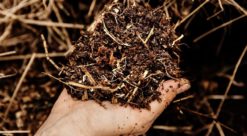
Now you can learn how to compost food scraps from a Michelin restaurant. Restaurant Credo folks in Trondheim will be showing off their artistry at the FUTURUM exhibit, part of NTNU’s science festival The Big Challenge.

Migrants are doing well generally, but experience higher rates of depressive symptoms than the population at large in some European countries. One country stands out as an exception.

The world’s best-known doctor is coming to the Big Challenge to talk about the world’s biggest challenge, and one that thousands of scientists are trying to figure out: what makes us sick? Norway is among the challenge participants.
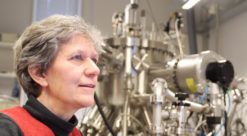
Fibre optic research can give us better medical equipment, improved environmental monitoring, more media channels – and maybe better solar panels.

When women distinguish between sex and the relational and emotional aspects of a relationship, this determines how often couples in long-term relationships have sex. Passion plays a significant role.
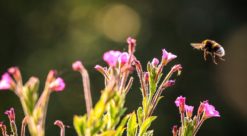
Many insect species are struggling. But all of us can help them, whether we live in an apartment or in a house with a garden.

In a new study, women said they acted a little more interested in sex than they really were. Men are the ones who apparently play cool most often.
Researchers at NTNU’s Kavli Institute for Systems Neuroscience have found specialized brain cells that help us navigate in space.

Norway conserves archaeological finds from 1537, but not when they’re from 1538 or later. That means we know less about people’s everyday lives during the last 481 years.
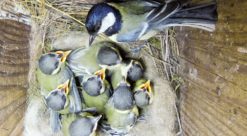
Several fish species can change sex as needed. Other species adapt to their surroundings by living long lives — or by living shorter lives and having lots of offspring. The ability of animals and plants to change can sometimes manifest in apparently extreme ways.

Metformin significantly reduces the risk of late miscarriages and preterm births for women with PCOS. But the drug does not work to prevent gestational diabetes, according to a large Nordic study from NTNU and St. Olavs hospital.
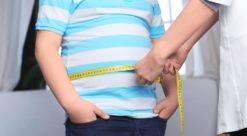
Metformin has several benefits when the mother has PCOS. But children are at greater risk for obesity later in life.
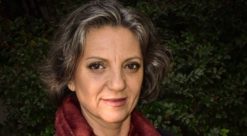
Ecology professor Sandra Myrna Díaz is the winner of the 2019 Gunnerus Award in Sustainability Science.

Perhaps the US president has a point. Are European NATO countries simply piggybacking on US defence efforts?

Data from 1.2 million people reveal how tobacco and alcohol use may be linked to your genes and to various diseases.