Impossible to prevent children from ingesting microplastics
Little research has been done on how nano- and microplastics affect children. Researchers are surveying what we actually know and offer some useful tips to parents.

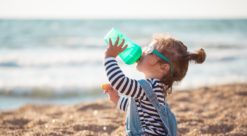
Little research has been done on how nano- and microplastics affect children. Researchers are surveying what we actually know and offer some useful tips to parents.
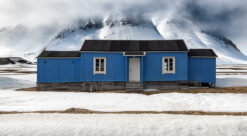
The cultural heritage of Svalbard is unique. It reflects human life and activity in a harsh and fragile environment. Researchers are now working to preserve it for posterity.
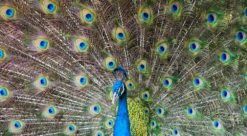
Dye pigments are often toxic, so researchers around the world have long been looking for effective ways to make non-toxic, recyclable and sustainable colours instead. The answer lies in nanotechnology and nature’s own methods.

More than half of the individuals who suffer a stroke subsequently struggle with concentration and problem solving. Cognitive impairment following a stroke doesn’t go away. The problem has been overlooked, according to a major research project.
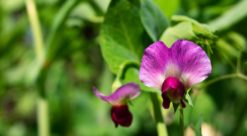
When temperatures rise, it affects the plants that agriculture and we depend on. Now we know more about how plants resist drought.

Plastic consumer products contain chemicals that may promote the development of overweight and obesity.
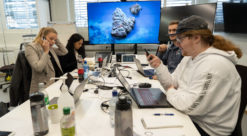
Unauthorized people who break into an organization’s computer system can create a serious crisis. It’s critical that businesses, organizations and governments practise for possible attacks. The Norwegian Cyber Range at NTNU offers full-scale simulations of handling cyber and information security incidents.

The world is crying out for rare minerals for the manufacture of electric cars, wind turbines and other technologies that we simply need more of. But how can we guarantee access to these resources without threatening the natural world and mankind as we know it?
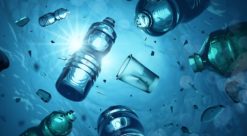
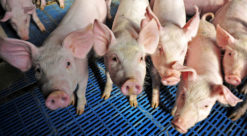
Plastic contains thousands of chemicals. Until now, we haven’t known if these leach into the environment to any great extent. Now we know that they do.
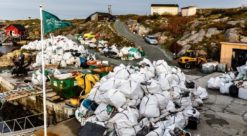
Mausund and the Froan Nature Reserve are located in an archipelago far out to sea along the Trøndelag county coast, but they are not exactly pristine. About 25 per cent of the soil in the area contains plastic.
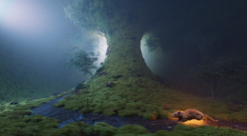
Researchers have gained a first insight into how the brain structures higher-level information. By extracting and analysing data from a neural network of grid cells, they found that the collective neural activity is shaped like the surface of a doughnut. The study, from NTNU’s Kavli Institute for Systems Neuroscience and collaborators, is published in Nature.
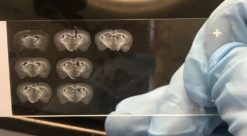
New findings show how experiments with animals can provide helpful information to understand Alzheimer’s and learn how we can better fight the disease.
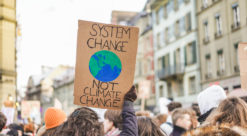
NTNU Associate Professor Jason Hearst has been awarded an ERC Starting Grant from the European Research Council (ERC). He will investigate how turbulence affects the ocean’s ability to absorb CO2.
NTNU researcher Marius Korsnes has been awarded an ERC Starting Grant from the European Research Council (ERC) . He will explore the concept of “sufficiency” when it comes to urban, sustainable food.
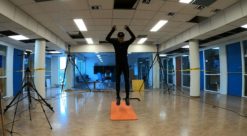
How well do your neat little earbuds fit, and how good is the sound quality as you move around? SINTEF researchers are looking into these questions with the help of an artificial ear and a ‘jogging’ robot.
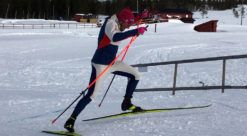
Cross-country skiers push themselves to their performance limits in competition. Yet most of their training takes place at low intensity. How does that work?

Depression is one of the most common mental disorders in adolescence and is found in children as young as kindergarten age. Unfortunately, the disorder often lasts into adulthood, but an NTNU study gives cause for optimism.

Patients with morbid obesity experienced improvement in their quality of life and distinctly fewer episodes of overeating after ten weeks with a new treatment method developed at NTNU.
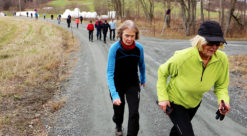
“I’m too old to train! It’s too late to start now.” Think again!
Researchers at NTNU have surveyed how a mother’s immune system changes during the course of pregnancy. This knowledge can help detect disease and complications, and give the foetus a better start in life.
Universities want to recruit more women into technology fields. More men complete their studies then, too. The measures are working but need to be sustained over the long-term.
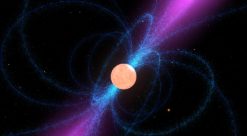
Neutron stars are the little siblings of black holes and show some of the most extreme phenomena in the universe. The European Research Council (ERC) is giving Professor Manuel Linares EUR 2 million to hunt them down.
Increases in economic growth contribute to one-for-one increases in carbon emissions. Energy system decarbonization and economic productivity gains are the most effective carbon emissions mitigation mechanisms for sustainable economic development.
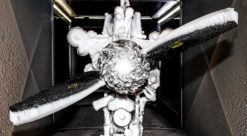
An airplane with significant ice build-up on its wings or propellers will sooner or later crash. Researchers at NTNU have come up with several findings that could enable drones to de-ice their wings automatically.