New clues from old bones: Some Vikings were much more violent than others
An investigation into Viking skeletons reveals a hidden story of violence, power, and the surprising differences between neighbouring Viking societies.


An investigation into Viking skeletons reveals a hidden story of violence, power, and the surprising differences between neighbouring Viking societies.
Quantum technology makes it possible to solve far more complex computational challenges than conventional computers can, including in areas such as material development, medicine and optimization.
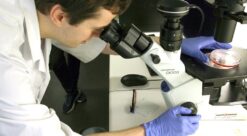
There is still no approved general cure for enterovirus infections, but Norwegian trials appear promising.
Did you know that CO₂ is a gas that behaves in a special way? Transporting this greenhouse gas poses a challenge for pipelines.

Research shows that despite frequent evaluations, a lot remains unknown about the quality of municipal health and care services.
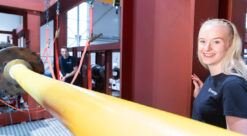
Imagine that the wires to your house not only have to withstand high electrical current flow, weather and wind, but also salt water, ocean currents, temperature changes and large movements. This is the big challenge in connecting large, electrical structures at sea to the power grid.
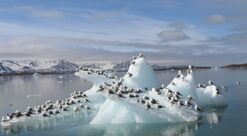
Norwegian seabirds are struggling. Svalbard seabirds have mercury levels above the threshold for deleterious effects on reproduction, researchers have found.
Such storage will be crucial if we are to halt climate change, which is already costing us enormous sums of money and causing suffering for humans and animals.

The lifetime of some Norwegian appliances, like washing machines and ovens, has in fact decreased over the last decades, a new study says. But the reason is most probably due to consumer preferences and not because of “planned obsolescence.”

We need to think more about the interaction between architecture, pedagogy and different forms of learning when we plan new schools, researchers say.
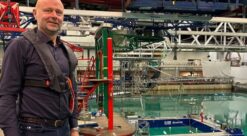
Using well-known offshore technology from the oil industry, along with a completely new idea, the founders of Farmocean-subsea want to create equipment for aquaculture at sea. Way out at sea.
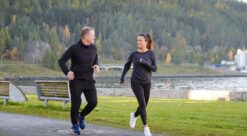
Micro workouts are all the talk right now: researchers have found that effective physical activity in small doses provides great health benefits – both for the individual and society as a whole.
Norwegian hydropower provides stability in the power market, but a more even power consumption in Norwegian building stock could have an impact on the electricity production of hydropower, a new SINTEF study shows.
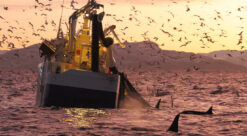
The world needs more of the valuable nutrients found in fish viscera, liver and roe. Yet, much of this raw material is being thrown back into the sea. There are good reasons to stop this wasteful practice.
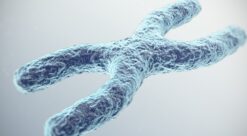
When your cells are about to divide, your genetic material folds into an X-shape. Why and how?

Tests show that it is possible to cut up to 33 percent of energy consumption using smart heating controllers. The system is based on multiple factors, including future electricity prices and weather data.
Insidious bacteria could cause trouble for the sprinkler wave that is now rolling in across Norway if the tiny organisms are not taken seriously.

If electric vehicles were lighter, they would also be more energy efficient. Of course researchers are eager to make that happen. With aluminium.
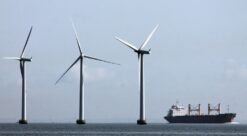
Constructing offshore wind turbines is both costly and challenging, but researchers are working to make offshore wind more profitable and secure.
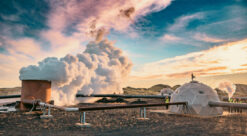
Far below the earth’s surface is an energy source with huge and perpetual potential: geothermal heat. But the forces in its scorching and inhospitable depths must be tamed. Now scientists know what that will take.
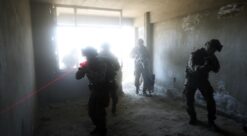
Researchers have investigated the mental health of all of Norway’s Lebanon and Afghanistan veterans. One factor determines whether they struggle after having killed another person.

How climate-friendly is the urban development in your municipality? A new tool helps planners compare alternatives.
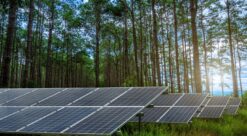
It’s easy to oppose solar parks when you hear that 60 solar plants are equivalent in area to over 5000 football pitches, as recently reported by NRK. This analogy draws attention away from other important aspects of the debate.
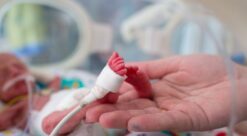
Poorer gross motor skills, such as the ability to walk quickly, run, or jump, may explain some of the correlation between being born prematurely and the tendency to engage less in physical activity.