Witchcraft trials in Norway ended in the 18th century
When it came to the Sámi people, a persistent fight continued against what was termed the art of witchcraft, and missionaries took over from the judicial system.

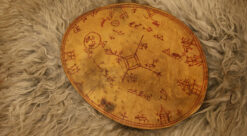
When it came to the Sámi people, a persistent fight continued against what was termed the art of witchcraft, and missionaries took over from the judicial system.
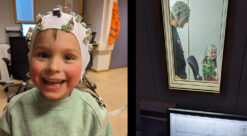
A test that shows how good or bad we are at perceiving the rhythm of language can predict the ability to acquire language. The test results may also help us understand individual differences in brain biology.

High metal prices can drive up the costs of electric car batteries, which will reduce their adoption. Car manufacturers are already responding to this by shifting to different technologies.

Researchers have found more than 16,000 different chemicals in plastics. A new report shows that about a quarter of these chemicals can be hazardous to health and the environment.

A new method that aims to help people develop grit looks promising.

It’s okay to exercise when you are breastfeeding. High-intensity exercise releases a hormone that is good for your child’s metabolism

Far more female infants than male infants died in Europe from 1700–1950. Researchers have been investigating why.

Elderly people living in rural areas in Norway have higher mortality rates if they are discharged to a municipality that has too many patients and not enough caregivers to provide services.
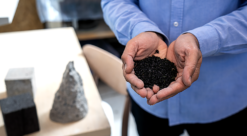
Rubber granules from artificial grass pitches will be phased out, but what do we do with the thousands of tonnes of microplastics that are left? NTNU research shows that they can be used in the production of concrete.
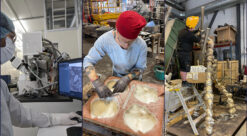
A playful artist duo invited scientists to take part in a collaboration, and they were more than willing to oblige. This is how an intestinal bacterium from Bergen and a 1200-year-old wooden splinter became public art.

Medieval Norwegians felt King Magnus VI’s Code of the Realm was fair when it was introduced as one of the first laws of its kind in Europe. For more than 500 years, this law has helped give Norwegian people a relatively high level of trust in their judicial system.
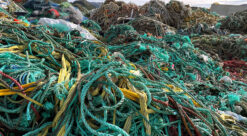
For the first time, researchers have investigated how ropes and fishing lines are handled by the Norwegian commercial fishing industry. The fishing fleet loses almost 400 tonnes of rope in Norwegian waters every year.

Researchers find the most depression and the least adaptability in poorer areas that are home to a larger proportion of minorities.
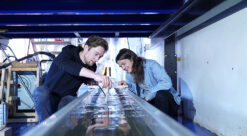
Shooting sound waves through water can remove dissolved gas that results from hydropower production in rivers. This gas can harm fish. Researchers are now ready to test techniques to reduce the risk in real hydropower plants.

Do you really know why your partner gets jealous? We understand a surprising amount about other people’s jealousy, but we understand our own sex best.

The world’s largest electric car manufacturer and the Swedish trade union movement are at loggerheads. Could Tesla owner Elon Musk have more to gain than he realizes by joining Nordic unions?
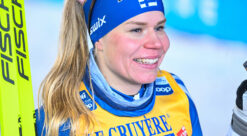
Elite sports women who want to have children face a number of dilemmas: how will motherhood affect their performance and body? Finances? Family life? Researchers have taken a closer look.
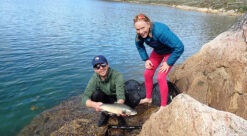
Greenland’s glaciers are melting and the surrounding seawater is getting warmer. How are arctic char coping with climate change? Scientists are in the process of figuring it out.
Norway’s law on mining seabed minerals is too unclear, the knowledge base too flimsy, and the Storting’s White Paper on seabed mining does not hold water.
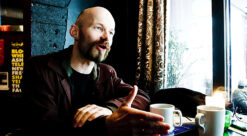
Lectures continue to dominate university teaching, but especially when it comes to big introductory courses, more group work and alternative assignments, such as making podcasts, can have a positive effect.

The vast majority of us cradle babies in the crook of our left arm. Researchers think they know why.
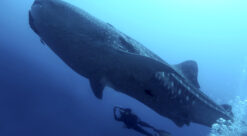
The transition to a greener, renewable economy will require large amounts of minerals, and society has to get them from somewhere. Norwegian politicians have reached an agreement approving deep sea mining, in a proposal that has reaped both cheers and frustration from scientists and activists alike. Here’s what our scientists think.

Researchers in Trondheim are developing a new medicine for diabetics who have to have daily injections of insulin. The key is a hormone that causes the smallest blood vessels to relax on the inside.
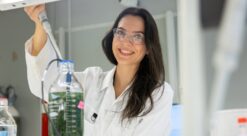
Norway already exports large amounts of valuable alginate, but new research findings can make this industry even larger and more sustainable.