Autonomous vessels need to be more afraid of dying
Could the Helge Ingstad maritime accident have been avoided if the Royal Norwegian Navy’s warships had been equipped with artificial intelligence?

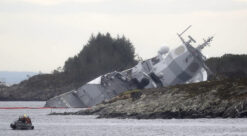
Could the Helge Ingstad maritime accident have been avoided if the Royal Norwegian Navy’s warships had been equipped with artificial intelligence?
Is it possible to build greenhouses on the moon without transporting any materials from Earth? Researchers at NTNU Social Research and SINTEF believe it is, and are assisting the European Space Agency (ESA).
Industry needs a lot of pure oxygen. New materials that are affordable and robust can provide us with cheaper and more sustainable oxygen production.
Magnons, Bose-Einstein condensates and very bright people.
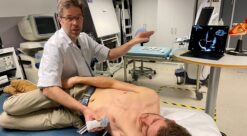
Portable ultrasound devices can bring high technology imaging to your doctor’s office, to emergency vehicles, and to lesser-developed countries. A new AI tool helps make these devices easier for a wider range of health professionals to use.
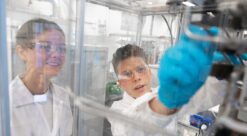
In the future, your apple core may end up fuelling a Boeing. New research could help make the production of aviation fuel from biomass more efficient.

Lonely people are more likely to take medication for depression, psychosis and other mental health disorders.

Is teacher-led play really play? New students don’t necessarily think so. One researcher believes that more free play in school could improve classroom dynamics and strengthen relationships.
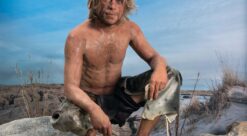
4000 years ago, a 25-year-old man died on the island of Hitra. Now he has been given a new lease of life at NTNU University Museum.

Researchers found no evidence that the use of social media has a negative impact on social skills, but children with social anxiety may be at risk.

Young people who have adverse childhood experiences are at greater risk of poor dental health. This is important knowledge for dental health services, according to new research.

Can the way snow sparkles give us better avalanche warnings and safer autonomous cars?

Plastic food packaging can contain chemicals that affect your hormones, metabolism and the transmission of signals in your body.

If you are a student living on a loan in the United States, you are less likely to get good grades than your debt-free fellow students. The bigger your student loan, the poorer you perform.
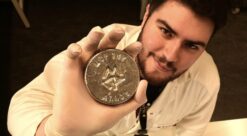
Companies can’t simply walk away from old oil and gas wells. They have to be capped in a way that protects the environment and prevents leaks. A new approach to today’s solution could be better for the environment and cheaper, too.
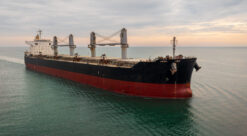
International shipping does not want to be a climate bad guy and is aiming to be emission-free by 2050. A new tool designed by researchers in Trondheim can help shipowners who are searching for green solutions.

Professor Jane M. Reid has received NOK 29 million in EU funding to investigate how animals adapt to rapid environmental change.

The EU is funding NTNU professor Ingrid Bouwer Utne’s work to make robots and autonomous systems understand situations better when there is imminent danger and give operators insight into what they are actually ‘thinking’.
A method based on CT (computed tomography) – a type of imaging that is widely used in hospitals – can help improve our understanding of CO2 storage, batteries, and processes in the body such as nutrient uptake.
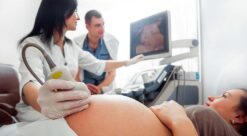
Health care providers who provide prenatal care need to know more about the underlying causes of obesity, says researcher Heidi Sandsæter. She has interviewed 14 pregnant women with obesity about their childhood, body and weight.

How do you spread a message about climate change? According to an international study involving 59,000 participants, some tactics may actually reduce support.
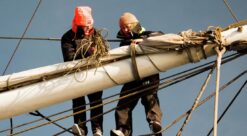
Life on board a tall ship can be cramped, cold and demanding, but according to one researcher, it also sheds light on what gives life purpose and meaning.
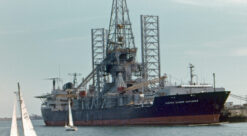
The American eccentric billionaire, Howard Hughes, wasn’t afraid to make expensive investments in new technologies. So when he announced in 1972 that he was going to build a giant ship to mine manganese nodules from the depths of the Pacific Ocean, few were surprised. But the ship had a very different – and top secret – mission.
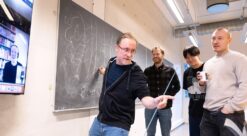
Calculations that previously took a year can now be performed in just 10 days by computers connected in a special way.
