Earth’s population could shrink soon
Better opportunities for women mean that the threat of overcrowding the planet may not be as dramatic as people fear. The population may well decline in a few decades.

Better opportunities for women mean that the threat of overcrowding the planet may not be as dramatic as people fear. The population may well decline in a few decades.

“I am a doctor who reveals idiots as a hobby,” says Ben Goldacre. If so, it’s become a pretty comprehensive hobby.

How can we defend ourselves against false information? NTNU researchers provide some tips and tackle the problem during The Big Challenge Science Festival this week.

The American whistleblower Edward Snowden paints a frightening vision of the world we live in, where abuses of power extend far beyond the reaches of law and affect us all.
We can’t take care of the Earth’s species unless we know what species exist. A collaborative project that will help us know more is being launched in Trondheim during The Big Challenge science festival.

A recently developed app with an in-built “enzyme calculator” reduces stomach pains and intestinal problems among patients with cystic fibrosis – a disease of the lungs and intestinal tract.
We need to cut both global and local emissions from shipping. The picture is complex, but research is showing that there are many ways to meet this goal.
Some medical research data never get published because they don’t fit in with the pharmaceutical industry’s desired results. Profiled researcher and social commentator Ben Goldacre will shed some light on this very topic when he takes part in NTNU’s The Big Challenge science festival in Trondheim in June.
Ecologist Daniel H. Janzen has spent virtually all of his half-century career trying to catalogue and understand the creatures in a patch of dry tropical forest in northwestern Costa Rica. Little did he realize his efforts would evolve into building a sea-to-summit conservation area — and a drive to inventory all million species in the country in partnership with the Costa Rican government.

Meltdown and Spectre attack computers. No efficient protection has been found. Until now.
We’ve changed our name to Norwegian SciTech News — so readers know immediately what they will find here.
We need batteries that can store more energy. Algae may be a solution.
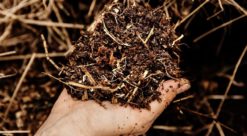
Now you can learn how to compost food scraps from a Michelin restaurant. Restaurant Credo folks in Trondheim will be showing off their artistry at the FUTURUM exhibit, part of NTNU’s science festival The Big Challenge.

Migrants are doing well generally, but experience higher rates of depressive symptoms than the population at large in some European countries. One country stands out as an exception.

The most successful winter Olympian ever opened nearly two decades of training logs to researchers to shed light on how she achieved her goals. Now researchers have looked at two methods she used for her high-intensity training sessions to see how they compare.
India is one of the largest food producers in the world. The food industry has huge growth, increasing its contribution to world food trade every year. The paradox is that millions go hungry while tonnes of food is lost every year, writes researcher Maitri Thakur in this blog.
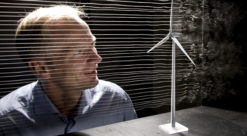
John Olav Tande at SINTEF is appointed Norway’s Mission Innovation Champion for his innovative research and contribution in dissemination. The award was established by Bill Gates and among others former president Obama during the climate summit meeting in Paris, COP 21.
We can do a lot to save the climate by switching from coal to natural gas. And we can shelve concerns about the negative climate impact of methane emissions from gas production, say researchers.
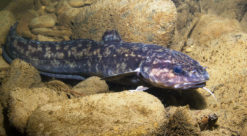
The discharge of pharmaceutical drugs is a major problem around the world, but a new study of the freshwater fish burbot shows that there is hope.

The world’s best-known doctor is coming to the Big Challenge to talk about the world’s biggest challenge, and one that thousands of scientists are trying to figure out: what makes us sick? Norway is among the challenge participants.
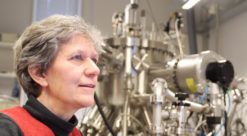
Fibre optic research can give us better medical equipment, improved environmental monitoring, more media channels – and maybe better solar panels.

When women distinguish between sex and the relational and emotional aspects of a relationship, this determines how often couples in long-term relationships have sex. Passion plays a significant role.
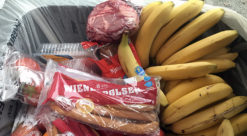
Grocery stores throw out 75 000 tons of food annually. By adding date tagging to the barcode, food waste could be dramatically reduced, say two NTNU students.
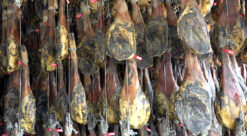
Black Iberian pigs rooting for acorns under an idyllic grove of trees in a sunny landscape. This is the myth of the Spanish Ibérico ham.
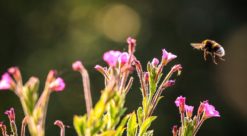
Many insect species are struggling. But all of us can help them, whether we live in an apartment or in a house with a garden.

People who choose to emigrate are those with the best education, new research shows. This flies in the face of popular opinion.

The higher a person’s BMI, the greater the chance of getting psoriasis. But researchers are still uncertain as to why.
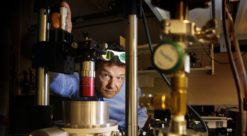
Ultraviolet light is used to kill bacteria and viruses, but UV lamps contain toxic mercury. A newly developed nanomaterial is changing that.
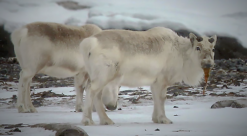
The arctic archipelago of Svalbard is already experiencing dramatic effects from climate change. A new study shows how these changes can force wild reindeer to graze on seaweed, a strategy that increases their likelihood of survival— and is recorded in their poop.

Textbooks and media can give the impression that the periodic table was the work of one man, but did you know that many of the contributors behind nature’s most important system were women?

The richly decorated portal at Urnes stave church has often been interpreted in light of paganism. That’s wrong, according to a new stave church study.

Inspecting ship tanks and storage spaces underwater is a challenging task for humans. A start-up company that originated at NTNU is manufacturing autonomous drones that can take over the job – and do it more cheaply.