Robots – our new underwater “astronauts”
Soon it may be easier to design, plan and carry out infrastructure operations in deep water. The EU project called “SWARMs” aims to achieve this by integrating autonomous vehicles such as ROVs and AUVs.

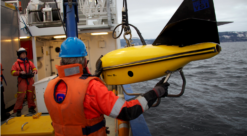
Soon it may be easier to design, plan and carry out infrastructure operations in deep water. The EU project called “SWARMs” aims to achieve this by integrating autonomous vehicles such as ROVs and AUVs.
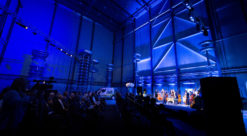
Imagine a power generation laboratory housing a generator equivalent to a 40 kilometre-long line of AA batteries connected in series. Well, now it’s here – and was formally opened by His Royal Highness Crown Prince Haakon on 2 September.
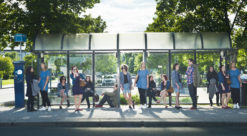
Soon you won’t have to worry about how to pay your bus and train fares. All you need is your mobile phone or a bank card.
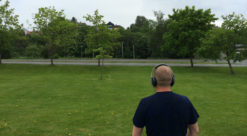
They’re going to build a new road right outside your living room window. The authorities have sent you a ‘noise map’, but what you really need is to hear what the traffic noise will sound like. Well, soon you can.
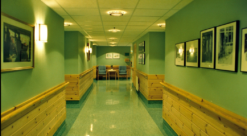
Norway is evaluating innovative housing options for dementia sufferers. Perhaps small serviced housing projects and dementia ‘villages’ will provide a more normal life than nursing homes and institutions?

Norwegian manufacturers of agricultural technology are now getting active support from researchers. Such companies will benefit from new applications and exposure to a global market.

A brand new study of 200 dementia sufferers in Norway reveals that almost all experience greater peace of mind and increased levels of physical activity using GPS devices.

Unemployed people who have spent long periods on benefit become passive, and surrender responsibility for their situation to others. Research is now being carried out to develop a system to help them obtain a sense of empowerment.
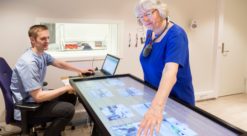
More than 20 per cent of people with hearing aids use their devices for less than one hour a day because of problems they encounter with tuning the settings. But now users can participate in fine-tuning their devices themselves.
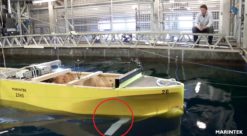
If testing goes well, an invention that helps save fuel in ships may soon be in production, with the support of the British industry.

Norway’s first full-scale facility for CO2 capture may be built at Norcem’s cement factory in Brevik. Four technologies are being tested.
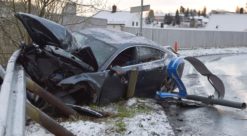
To you and me, this might look like a disaster. But Norwegian ski star Petter Northug’s car crash was actually pretty ideal. The materials in the car and guard rail acted just the way they were designed to in order to save the lives of passengers in the car.

Norway has a particular vested interest and responsibility to develop CO2 capture and storage (CCS), believes Nils A. Røkke. Without CCS, the world will be unable to achieve the aim of limiting the global temperature increase to two degrees, says SINTEF’s Director of Climate Technology Research.

Researchers believe that children with autism or ADHD can benefit from technologies originally developed for the elderly.

Consumers may soon have a guarantee for the quality of meat they’re paying for.
A 3D camera developed in Norway may be the first in the world that can film in all directions.
People suffering from cystic fibrosis (CF) are unable to absorb sufficient fats and proteins from the food they eat. But an app is on the way that will help them control their illness.

Surveys will reveal what peace agreements following civil wars ought to contain in order to be respected.
Ordinary nails can reinforce oil wells. There’s no quicker or cheaper way.
Electronics installed in Norwegian oil pipelines have been tested both at sea and in transport vessel reeling simulations. All that now remains is to install them offshore.
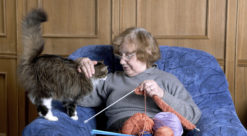
Sixteen elderly people in a Norwegian municipality have been testing an automatic drug dispenser at home in their living rooms. Results include increased feelings of empowerment, time saved by the home care services, and fewer medication errors.

Smooth and shiny. And without big pores. So much for the ideal concrete wall.
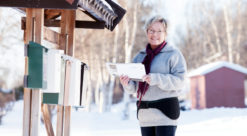
Are you well used to wearing studded shoes in winter? If so, you’re probably ready for yet another step towards tackling the eternally icy winter streets.
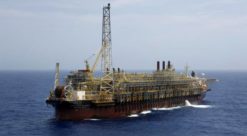
More than 90 percent of Brazil’s petroleum reserves are found in deep water or ultra-deep water areas offshore. Researchers at SINTEF’s Brazil office are using advanced modelling and testing, including neural networks, to improve the lifespan and safety of a key component used to exploit these deep water reserves.