Beautiful, but blacklisted
If you have this beautiful flower in your garden, you should uproot it before the seed pods explode, releasing thousands of seeds. It spreads like the black plague.


If you have this beautiful flower in your garden, you should uproot it before the seed pods explode, releasing thousands of seeds. It spreads like the black plague.
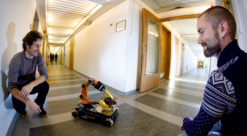
People can easily find their way around a room or in the outdoors – but a robot has no idea.
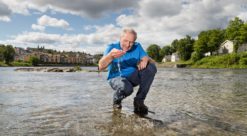
They damage our ability to reproduce, and they pollute the natural environment. Yet chemicals known as hormone mimics can be found in consumer goods. Eventually they end up in our water. But we now have a way of capturing them.
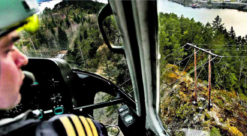
A Norwegian, satellite-based system aims to ensure that helicopters and light aircraft are prevented from colliding with power lines and other obstacles.
This research subject is being monitored by sensors both in and outside his body. The data will provide us with a new understanding of the physical challenges facing industrial workers in the Arctic.
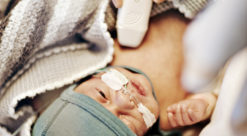
A new kind of ultrasound technology easily shows how blood flows through the heart in foetuses, newborns and children. It’s a tool that can save lives.

Contract workers in Norway often face the worst and most unpredictable working conditions. But good management and support from colleagues makes these workers more robust.

Researchers have found a novel approach to treating gastric cancer – using Botox.
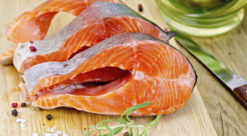
Hundreds of tonnes of food are thrown away in Norway every year. Supercooling could keep more fish out of the trash, and even extend the grilling season.
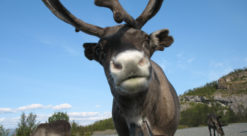
The reindeer is a species that has done well for itself. There are nearly 3 million animals across large areas of the northernmost parts of the world. But where did Scandinavian reindeer actually come from?
They are the companies you’ve never heard of, but they help grease the wheels of international trade.
NTNU is one of Europe’s top research centres on carbon capture and storage.

Øyvind Brandtsegg has composed a piece that plays for seven consecutive years based on how gigantic antennas on the Earth rotate to find the most powerful stars in space.
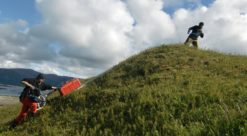
Have you ever seen a researcher pushing a cart up and down a hill, or back and forth on a field? Then you might have seen a modern archaeologist at work.
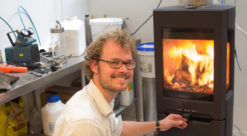
Have you ever used a water boiler to make yourself a cup of tea, but boiled enough water for two cups? Then you wasted energy. But good design can help.
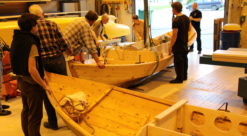
Are older, classical boat designs really better? High-tech testing in the Ship Towing Tank at the Norwegian Marine Technology Research Institute in Trondheim pits a 16th century classical rowboat against its newer, easier-to-build cousin.

With more and more Norwegian households owning one or even two electric cars requiring charging overnight, how will we manage without sacrificing our hot morning shower and fresh bread for breakfast?

Norwegian houses can no longer have the same design in western as in eastern Norway. Building designs must adapt to local climate variations, say researchers.
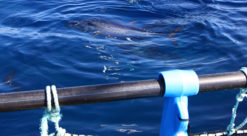
The start-feed for “baby” tuna now being produced in Trondheim has given a Norwegian aquaculture company complete faith in the possibility of mass-producing one of the world’s most valuable fish species.
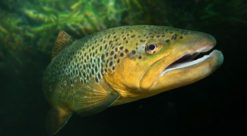
Armed with special acoustic tags, a team of researchers is following 50 individual fish for as long as seven months to learn more about their life – and death — in Norwegian fjords.

According to a Norwegian study, ‘likes’ on Facebook are providing a new type of humanitarian support and social responsibility.

The endangered African wild dog is increasingly coming into conflict with humans, partly because it is difficult to fence them out. But an unusual approach may offer hope.
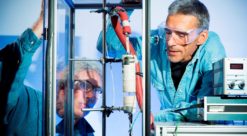
What happens inside chemical reactors and furnaces has always been a well-kept secret. Until now.
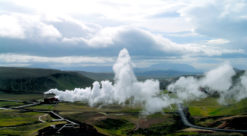
Capturing green energy from deep in the Earth will bring competitive electricity and district heating – with help from Norway.
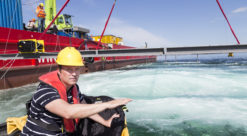
Oil and gas companies are worried about gas discharges at the sea bed. Recent field experiments can now quantify the volumes of gas reaching the sea surface and how they spread in the atmosphere.
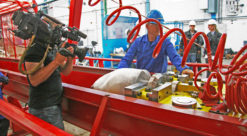
Not since the Titanic has a block of ice been quite so famous. In early June, Discovery Channel Canada came to NTNU’s Structural Impact Laboratory (SIMLab) to watch ice researchers from NTNU’s Sustainable Arctic Marine and Coastal Technology programme use a giant machine to simulate what happens when a ship slams into an iceberg.
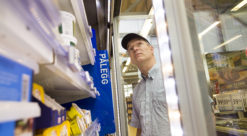
A Trondheim supermarket gets by with just over two-thirds of the electricity used by similar stores.
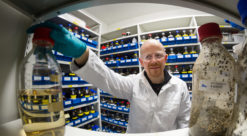
Researchers in Trondheim have achieved surprising results by exploiting nature’s own ability to clean up after oil spills.
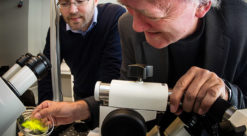
A conversation between two physicists in a Paris café led to the invention of a novel form of capsules that could be used in medicine, food, household products, cosmetics and paints. Their find has just been published in the latest issue of Nature Communications.

Scientists regularly use computer models to understand complex problems, from predicting the weather to designing boats and automobiles. Now they are also using this approach to better understand the human body — including the causes behind high blood pressure.
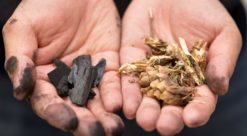
When the forestry machines have finished extracting timber, what is left are tops and branches – waste which cannot be used. However, according to researchers, it is possible to turn these heaps of lopwood into high-quality charcoal.
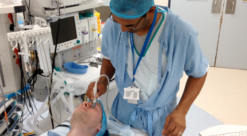
Norwegian researchers have installed a system that uses 3D ultrasound and image guidance in one of Africa’s biggest children’s hospitals. This could make it easier to treat brain diseases in children.