NTNU researchers recently figured out a whole new method for testing people for the coronavirus. The university is now producing tests on a continuous basis, under the auspices of the Norwegian Directorate of Health. Currently 100 000 tests a day are being manufactured, with production soon likely to be scaled up dramatically.
Norway’s Ministry of Health and Care Services confirmed Friday that it will roll out coronavirus test kits developed by researchers from NTNU and St Olavs Hospital by the last week of April/early May. The kits will more than triple Norway’s testing capacity during the rollout.
Two weeks ago, doctors at St. Olavs Hospital in Trondheim were running out of reagents needed to do COVID-19 tests. They asked colleagues at NTNU to develop a backup solution. Now, Norway is gearing up to use the new approach to test 150,000 people a week after Easter.
Restlessness, insomnia, ruminating and aching muscles. Here are one professor’s tips for anyone who is struggling with anxiety and fear due to the coronavirus.
Developing an effective treatment for Alzheimer’s disease is the long-term goal of a new national research centre in Norway. Nobel laureates Edvard Moser and May-Britt Moser will lead the K. G. Jebsen Centre for Alzheimer’s Disease, aimed at determining how Alzheimer’s disease arises in the brain and its early stages of development.
There’s no effective treatment for the coronavirus that causes COVID-19, which was first detected in Wuhan, China. Developing new drugs and vaccines can take years. Existing drugs offer a possible quick response to the potential pandemic.
Even the best chef can make mistakes – even when using the recipes (genes) from the “cookbook of life” — DNA. A new discovery as to how cells repair their DNA may have implications for the future drug development.
Robot technology is flourishing in multiple sectors of society, including the retail, health care, industry and education sectors. However, are the perspectives of minority groups, such as the LGBTQ+ community, considered in robot and AI development?
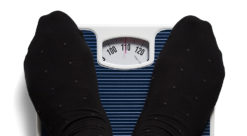
NTNU’s Fitness Calculator was developed in 2013. It was able to reveal your body’s real age and how long you could expect to live. Now it turns out that it can tell you much more about your health.
Nearly 40 million people were living with HIV in 2017, the UN says, with just over half taking antiretroviral therapy. These drugs have cut AIDS-related deaths by more than half since the 2004 peak, but the disease cannot be cured. A new mechanism uncovered by a Norwegian research group could improve the chances of developing one.
We create mental maps as we move around. But these maps can be distorted if the surroundings change. That makes it more difficult to remember where something was.
Cholesterol crystals form from “bad” cholesterol and are found in plaques that line blood vessels. When these plaques rupture, they can cause heart attacks or strokes. New research suggests that cholesterol crystals in plaques can actually trigger strokes and heart attacks.
Can weightlessness stop cancer from growing? One of the nine research projects that has been given the go-ahead for the new China Space Station scheduled for 2022 is designed to answer this exact question.
A solid tumour can cause muscle cells in the body to self-destruct. Many cancer patients die from the consequences. Now researchers are discovering more about how cancer cells in a tumour can take control of muscle cell wasting and trigger a chronic, serious condition.
Parents with children in the neonatal intensive care unit want more information, supervision and advice to meet their children’s needs, according to results from a new PhD dissertation.
You may not be able to hear them, but they help to diagnose and treat patients every day. In the past 40 years, ultrasound imaging has gone from blurry black-and-white images, to sharp 3D images in real time. And the technology is still developing. Now, artificial intelligence is being tested for aid in interpreting ultrasound images.
The dreaded condition known as rhabdomyolysis may be much more common after a particularly intense training session than you’d think. But for most people, the only symptom is being slightly more sore than usual.
A new study shows that every third Norwegian has a fatty liver. You can get it even if you don’t drink alcohol. If you are out of shape, the probability is much higher.
The Privacy Statement is about how this website collects and uses visitor information. The statement contains information that you are entitled to when collecting information from our website, and general information about how we treat personal data.The legal owner of the website is the processing officer for the processing of personal data. It is voluntary for those who visit the web sites to provide personal information regarding services such as receiving newsletters and using the sharing and tip services. The treatment basis is the consent of the individual, unless otherwise specified.
1. Web analytics and cookies (cookies)
As an important part of the effort to create a user-friendly website, we look at the user pattern of those who visit the site. To analyze the information, we use the Google Analytics analysis tool.Google Analytics uses cookies (small text files that the site stores on the user's computer), which registers the users' IP address and provides information about the individual user's online movements. Examples of what the statistics give us answers to are; how many people visit different pages, how long the visit lasts, what websites users come from and what browsers are used. None of the cookies allow us to link information about your use of the site to you as an individual.The information collected by Google Analytics is stored on Google servers in the U.S.. The information received is subject to the Google Privacy Policy.An IP address is defined as a personal information because it can be traced back to a particular hardware and thus to an individual. We use Google Analytics's tracking code to anonymize the IP address before the information is stored and processed by Google. Thus, the stored IP address can not be used to identify the individual user.
2. Search
If the webpage has search function, it stores information about what keywords users use in Google Analytics. The purpose of the storage is to improve our information service. The search usage pattern is stored in aggregate form. Only the keyword is saved and they can not be linked to other information about the users, such as the IP addresses.
3. Share / Tips service
The "Share with others" feature can be used to forward links to the site by email, or to share the content of social networking. Tips for tips are not logged with us, but only used to add the tips to the community. However, we can not guarantee that the online community does not log this information. All such services should therefore be used wisely. If you use the email feature, we only use the provided email addresses to resend the message without any form of storage.
4. Newsletter
The website can send out newsletters by email if you have registered to receive this. In order for us to be able to send e-mail, you must register an e-mail address. Mailchimp is the data processor for the newsletter. The e-mail address is stored in a separate database, not shared with others and deleted when you unsubscribe. The e-mail address will also be deleted if we receive feedback that it is not active.
5. Registration, form
The website may have a form for registration, contact form or other form. These forms are available to the public to perform the tasks they are supposed to do.Registration form is for visitors to sign up or register.Contact form is for visitors to easily send a message to the website's contact person.We ask for the name of the sender and contact information for this. Personal information we receive is not used for purposes other than responding to the inquiry.The form is sent as email via Mailgun as a third party solution. The entire submission will be stored at Mailgun for 24 hours. Between 24 hours and 30 days, only mailheader is stored before the submission is deleted after 30 days. The reason for this storage is to confirm whether emails are sent from the website and forwarded to the correct recipient.Once the email is received by the recipient, it is up to the recipient to determine the data processing needs of the email.
6. Page and service functionality
Cookies are used in the operation and presentation of data from websites. Such cookies may contain language code information for languages selected by the user. There may be cookies with information supporting the load balancing of the system, ensuring all users the best possible experience. For services that require login or search, cookies can be used to ensure that the service presents data to the right recipient.