Less sleep reduces positive feelings
Sleep deprivation makes us feel less happy, active, attentive and purposeful, according to a new sleep study from NTNU.


Sleep deprivation makes us feel less happy, active, attentive and purposeful, according to a new sleep study from NTNU.

Maturing and reproducing early hardly has any downsides. If you’re a wild boar, that is.
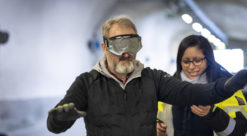
Research conducted as part of the project EvacSound demonstrates that auditory guidance using sound beacons is an effective aid during the evacuation of smoke-filled road tunnels. This is good news. It is a fact that vehicle drivers and passengers cannot normally expect to be rescued by the emergency services during such accidents.

In the aftermath of a crisis, it is always easy to see how the crisis could have been better handled, and then we put new measures into place. But do these measures set us up to solve the next crisis – the one we don’t yet know about?

The Norwegian Directorate for Health and Human Affairs recommends more physical activity and less sitting time. But that isn’t the right approach to managing neck and back pain for everyone, according to research from NTNU.
Low oil prices have fueled the debate about which industries Norway should develop and live on in the future. In the government’s revised national budget, the extraction of seabed minerals emerges as a clear investment area.

We all know what friction is — but it turns out to be very difficult to describe. Researchers have simplified a commonly used, century-old model for use at the nanoscale — by making it more complicated.
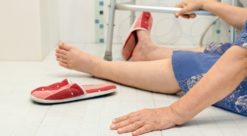
Hip fractures have higher mortality rates if patients are discharged early because the hospital needs the space and capacity.
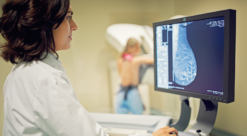
Imagine that we could instruct our bodies to make the drugs they need themselves. The gene technology that makes this possible is called mRNA therapy, which may become a major tool in the treatment of multiple diseases. Norwegian researchers are currently helping to develop a drug of this kind to treat the most aggressive form of breast cancer.
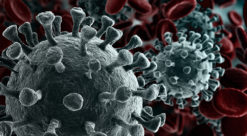
Testing families of four or more people would be an effective way to reduce the spread of the coronavirus infection, according to a data simulation model developed at NTNU. The model has initially been used to determine the best testing strategy for Oslo.
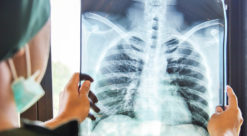
CT screening to detect lung cancer can save lives. The challenge is to find out who should undergo CT scans. A new method more accurately identifies the right individuals in the risk zone.

We are meeting as never before – online. Particularly in connection with our jobs this may present challenges, but it can also be very productive. Here is some advice from researchers for smart meetings in the virtual environment.

It took seven years, countless beetle penis field investigations, and hours upon hours on hands and knees in coastal wetlands. This is the story of all the research that has to happen before a new species can finally get its official name.

More than 100 000 Norwegians have atrial fibrillation. They should be actively exercising for their health.

The stresses from home schooling, working at home and corona virus concerns are weighing us down on many levels. Here are some tips on ways to exercise at home that can help us maintain our health both physically and mentally.

A unanimous group of research scientists are convinced that kelp may share many of the applications of soya and oil, and that they can also be used to capture CO2. Seaweeds can contribute towards climate-friendly solutions in all sorts of contexts. New know-how about seaweed farming is currently accelerating industrialisation of the sector.
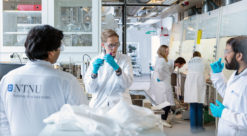
NTNU researchers recently figured out a whole new method for testing people for the coronavirus. The university is now producing tests on a continuous basis, under the auspices of the Norwegian Directorate of Health. Currently 100 000 tests a day are being manufactured, with production soon likely to be scaled up dramatically.

A daily 10-minute training session using an app could reduce migraine attacks for many sufferers, according to researchers.

Boys need to burn for something to succeed. Maybe that’s why they often do less well at school than girls.

Researchers believe that plastic refuse can be used as fuel in cement factories in Asia. If this works, it may provide a solution to two of the planet’s biggest environmental problems – plastic in the oceans and high levels of coal consumption.

With some practice, you can learn to recognize some of the most common birds in northern Europe by their songs.

Newly developed technology has given robots the ability to learn new skills, enabling them to perform complex tasks and work alongside humans. This innovation can benefit many crucial societal functions, such as food production

Children’s health declines the longer they live in refugee camps. Many adults are also struggling, with seven out of ten feeling like they have no future.
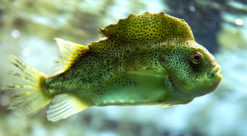
Research shows that even fish farmers have doubts as to whether using cleaner fish is an effective delousing method. “Fish farmers tell us that they want a ban on the use of certain species. They’re also very critical of wild-caught cleaner fish being transported,” says researcher Kristine Størkersen. She is one of the scientists who have been helping the Norwegian Food Safety Authority gain an overview of the situation.