A whistleblower’s tale
The American whistleblower Edward Snowden paints a frightening vision of the world we live in, where abuses of power extend far beyond the reaches of law and affect us all.

The American whistleblower Edward Snowden paints a frightening vision of the world we live in, where abuses of power extend far beyond the reaches of law and affect us all.
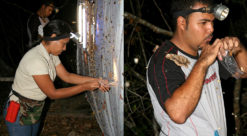
Ecologist Daniel H. Janzen has spent virtually all of his half-century career trying to catalogue and understand the creatures in a patch of dry tropical forest in northwestern Costa Rica. Little did he realize his efforts would evolve into building a sea-to-summit conservation area — and a drive to inventory all million species in the country in partnership with the Costa Rican government.
We’ve changed our name to Norwegian SciTech News — so readers know immediately what they will find here.

The most successful winter Olympian ever opened nearly two decades of training logs to researchers to shed light on how she achieved her goals. Now researchers have looked at two methods she used for her high-intensity training sessions to see how they compare.
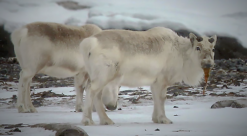
The arctic archipelago of Svalbard is already experiencing dramatic effects from climate change. A new study shows how these changes can force wild reindeer to graze on seaweed, a strategy that increases their likelihood of survival— and is recorded in their poop.
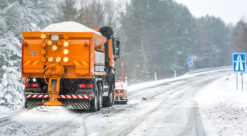
It’s springtime in much of the northern hemisphere, although spring snowstorms are still possible. When that happens, salt trucks and ploughs help make roads safe. But road salt can be bad for the environment, and can rust cars, bicycles and other metal. New research shows that salt use can be safely — and substantially — cut in certain circumstances.
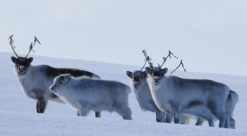
Climate change is increasing the likelihood of extreme winter rain events in the Arctic. These kinds of winter storms on Norway’s Svalbard archipelago can cause a thick cap of ice to cover the forage that reindeer eat. You’d think that more frequent rain-on-snow events would spell the end for these arctic animals — but you’d be wrong.
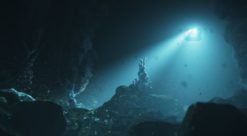
For the first time ever, researchers have been able to peek deep into the mantle of the Earth under an ultraslow mid-ocean ridge, where they have been able to observe mantle melting and growth of the Earth’s crust.
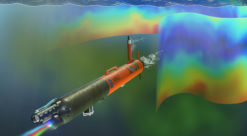
Phytoplankton form the base of the marine food chain but are notoriously difficult for scientists to account for — a little like trying to identify and count motes of dust in the air. A truly independent underwater vehicle shows it can do the job.
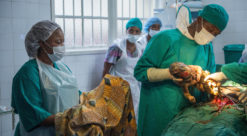
Sierra Leone has few doctors and even fewer surgeons to serve its seven million people. Since 2011, a non-profit group called CapaCare has been training community health officers to perform basic lifesaving surgeries. A new study shows the programme is working well when it comes to the most common surgery in the country — Caesarean sections.
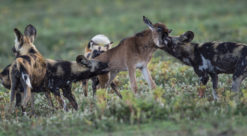
Twenty-five years ago, African wild dogs (Lycaon pictus) disappeared from Serengeti National Park. A firestorm of debate followed when one researcher claimed that handling by scientists was the cause. New research refutes that claim and offers another explanation.
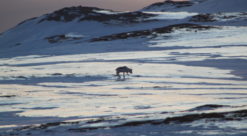
Climate change in the Arctic means more winter rain, and consequently more rain falling on snow. The result can be a buildup of ice under the snow, which can wreak havoc with arctic ecosystems.

Norwegian breweries have been producing commercial Christmas beer over the last several centuries. Today’s variety of craft-brewed Christmas beers are among the most important for Norwegian breweries, says NTNU beer enthusiast Anders Christensen.
Listen to headliners such as Edward Snowden, Ben Goldacre and the musician Sting. Festival passes go on sale from Friday 7 December.
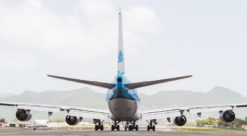
As much as 20 per cent of jet fuel burned in Norway in 2030 could be biofuel made from the country’s forest residues. This alone could cut greenhouse gas emissions from Norway’s aviation sector by 17 per cent.
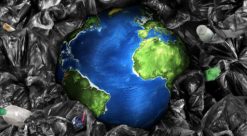
Our carbon emissions are much higher than are needed for us to have happy, healthy lives. But cutting these emissions requires us to think differently about how we measure growth and progress.

Even the most basic moves in life, like getting out of bed in the morning, require far more coordination than one might think. Neuroscientists may have just uncovered key aspects of how the brain controls body posture during these kinds of everyday movements.
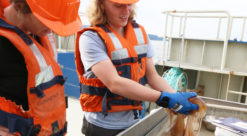
The oceans are teeming with ever-increasing numbers of jellyfish. These squishy sea creatures can ruin fishing and discourage tourists. But one research group wants to turn this nuisance into pay dirt.
Lakes choked with algae and marine “dead zones” result from too many nutrients in the water. The traditional culprit is agriculture, which relies on fertilizer to boost plant growth. But the production of consumer goods, like clothing, is also a major — and growing — contributor.

Marit Bjørgen was a world-class athlete at the top of her career — and then she decided to have a baby. How did that change her ability to train — and her performance afterwards?
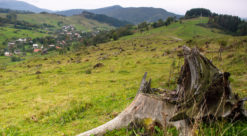
Global climate change is already affecting the globe, as demonstrated by the shrinking polar ice cap, melting glaciers and cities in the grips of longer, more intense heat waves. Now a team of researchers has conducted a radical thought experiment on how extreme land use changes could influence future climate.
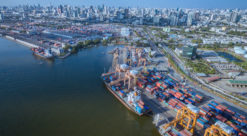
A new database gives researchers — and potentially policymakers — the ability to see how global trade affects environmental impacts.
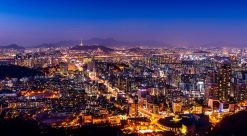
Many see cities as the new front lines of the climate change fight. Identifying the mayors and city councils in cities with the biggest carbon footprints, and the most power to make big changes, could mobilize a wave of reinforcements.
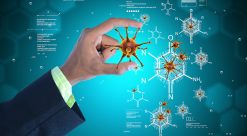
Broad-spectrum antiviral drugs work against a range of viral diseases, but developing them can be costly and time consuming. Testing existing anti-viral drugs for their ability to combat multiple viral infections can help.
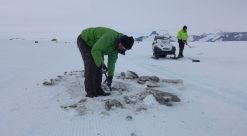
When your airport runway is located at 72 degrees south latitude and more than 4000 kilometres from the nearest major city, it better be in tiptop shape. But in Antarctica, where most runways are made of snow or ice, holes can be a big problem.

When companies like Cambridge Analytica use our data for political and commercial interests, it raises concerns about privacy and the integrity of democratic politics. But what exactly do our social media posts say about what we really think?
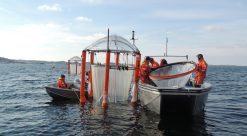
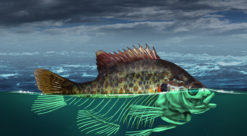
Excess CO2 in the atmosphere is making the oceans more acidic. Some studies show that’s bad news for fish, including commercially important species. But not all fish respond the same way.
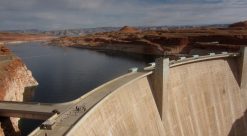
One of the key ways to combat global climate change is to boost the world’s use of renewable energy. But even green energy has its environmental costs. A new approach describes just how hydropower measures up when it comes to land use effects.

May-Britt Moser and Edvard I. Moser have been awarded Norway’s Grand Cross of the Order of St. Olav.
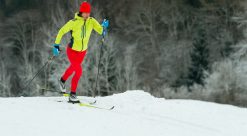
If you want to be as fast or as strong as the world’s most decorated female winter Olympian ever, you’ll have to train a lot — more than 900 hours a year. But don’t worry — most of that training will be low intensity.
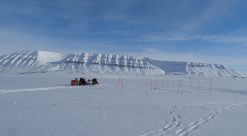
Global warming and political decisions are opening the Arctic and its frosty seas to increased development. But what will happen if that expansion results in oil spills in the frozen ocean?
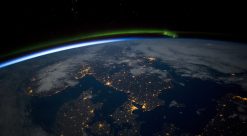
We know that tiny marine creatures in the Arctic respond to weak light from the Moon or the northern lights during the polar night. Now researchers have learned that artificial light from research vessels can also have a negative effect.